

Tesco Steel & Engineering manufactures SS 316 Condensate Pots (condensate chambers / seal pots) for instrument impulse lines on steam, boiler feed, and high-temperature process services. Protects DP transmitters and pressure gauges from direct steam contact. Maintains a stable, known liquid head for accurate measurement. Flanged or threaded connections · Custom volumes · SS 316 / CS / Monel · ISO 9001:2015 certified.
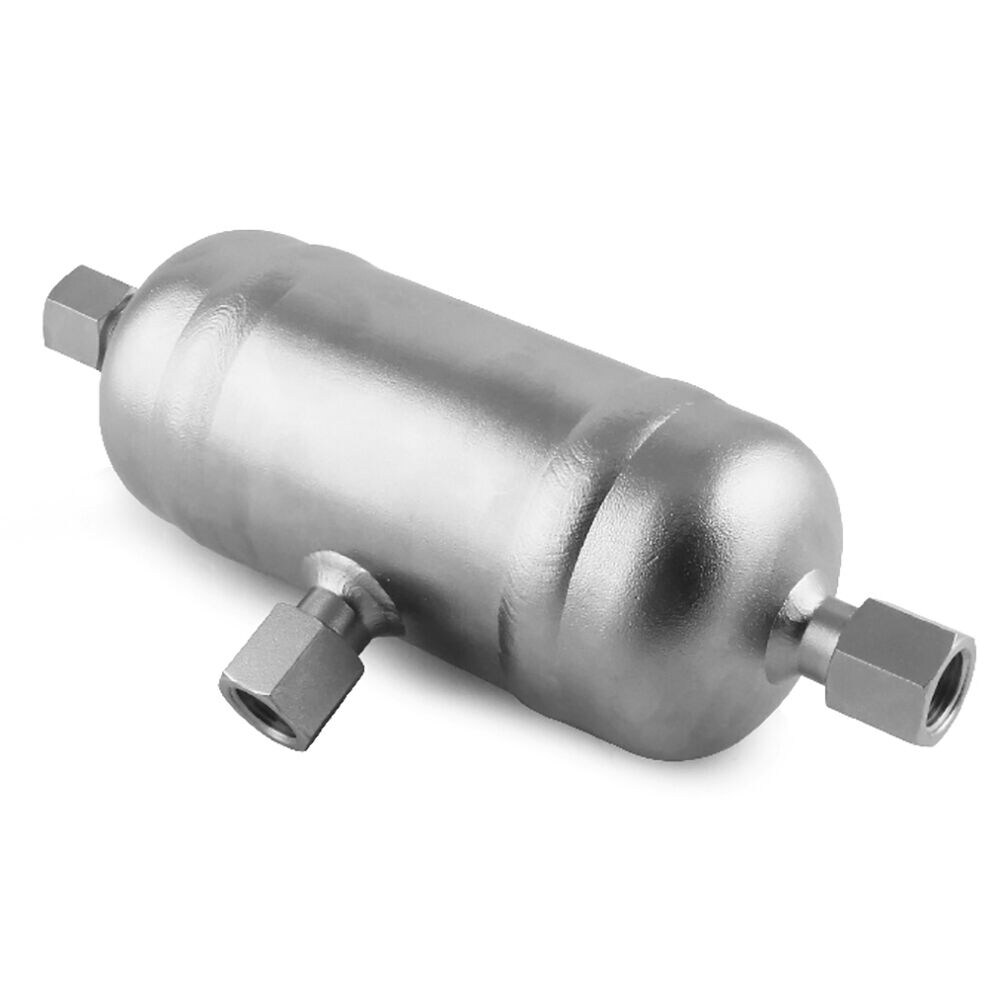
A condensate pot (also called a condensate chamber, seal pot, or condensate vessel) is a small vertical pressure vessel installed in the instrument impulse line between a steam or high-temperature process tap and a pressure instrument — a differential pressure (DP) transmitter, pressure gauge, or pressure switch. Steam entering the pot from the process line condenses inside the chamber and maintains a permanent column of liquid above the instrument connection.
This liquid column serves two critical functions: it protects the instrument from direct contact with hot process steam or fluid — which would otherwise thermally damage the instrument's diaphragm, fill fluid, electronics, and seals — and it provides a stable, known liquid head of constant height above the instrument connection, eliminating measurement error caused by variable steam condensation in the impulse line itself. Without a condensate pot on steam service, the height of condensate in the impulse line varies unpredictably as steam condenses and re-evaporates, introducing a continuously changing and unknown zero error into the measurement.
Three failure mechanisms make condensate pots essential — not optional — on steam and high-temperature condensate impulse lines:
Pressure transmitters are rated to a maximum process temperature of 85–120°C at the connection point. Steam at 10 bar saturates at 180°C; at 40 bar, at 250°C. Direct steam contact destroys the transmitter diaphragm, damages the fill fluid, and fails the electronics. A condensate pot keeps the instrument connection at or below the local ambient temperature — steam condenses before reaching the instrument port, and the cooled liquid column is the only fluid the instrument sees.
If there is no pot, steam condenses in the impulse tube at variable rates depending on ambient temperature, insulation condition, and process load. The height of liquid in the impulse tube changes continuously, adding and subtracting a variable liquid head from the measurement signal. This creates a zero that drifts unpredictably and cannot be compensated by transmitter calibration. A condensate pot fixes the liquid column height at the pot overflow level — the column is constant regardless of condensation rate in the tube below the pot.
Intermittent condensation and flash re-evaporation inside an impulse line without a pot generates two-phase slug flow — alternating slugs of liquid and steam that create large pressure pulses. These pulses appear as measurement noise, cause transmitter overpressure trips, and generate false high-level or high-flow alarms. The condensate pot absorbs these pressure transients in its liquid volume, presenting a smooth, dampened signal to the transmitter.
The condensate pot is mounted vertically, with the process (steam) connection at the top and the instrument connection at the bottom. Steam enters through the top connection and immediately contacts the cooler walls of the pot body, condensing into liquid. The liquid accumulates and fills the pot body. When the liquid level reaches the overflow/fill level — set by the position of the fill/equalise connection or by the pot volume — any additional condensate runs back down the impulse tube toward the process tap.
The result is a permanently full chamber of cool condensate above the instrument connection. The height of this condensate column — from the bottom instrument connection to the top of the pot — is fixed and known. This constant head is factored into the transmitter zero calibration once at commissioning and thereafter remains stable throughout operation regardless of process conditions.
| Type | Process Connection | Instrument Connection | Application |
|---|---|---|---|
| Standard Threaded | 1/2" NPT or BSP (top) | 1/2" NPT or BSP (bottom) | Standard steam and condensate impulse lines; gauge pressure and DP measurement |
| Flanged Process | 1/2" 150# or 300# RF flange (top) | 1/2" NPT or BSP (bottom) | Applications with flanged process taps; high-vibration service; easy removal without disturbing impulse piping |
| DP Pair (HP + LP) | Two pots, matched fill volumes | Two 1/2" NPT/BSP connections | Steam drum level and boiler feed flow DP measurement — both pots supplied as a matched pair with equal geometry |
| Large Volume | 1/2"–1" NPT/BSP or flanged | 1/2" NPT/BSP | High-condensation-rate services; process connections with high heat input; applications requiring longer refill intervals |
| Drainable / Cleanable | Top process connection | Bottom instrument connection + side drain plug | Services with periodic solids or scale deposits; boiler blowdown impulse lines requiring periodic pot drain and flush |
| Body Material | SS 316 (standard); SS 304; Carbon Steel (A105); Monel 400; Inconel 600 |
| Process Connection | 1/2" NPT (ASME B1.20.1); 1/2" BSP; 1/2" or 3/4" 150#/300# RF Flange (ASME B16.5) |
| Instrument Connection | 1/2" NPT or 1/2" BSP (bottom) |
| Drain / Vent | 1/4" NPT plug (body side); additional vent/fill plug on request |
| Working Pressure | Up to 150 bar (SS 316); up to 250 bar (Carbon Steel A105) |
| Working Temperature | -196°C to +450°C (SS 316); up to +500°C (Carbon Steel) |
| Body Volume | Standard: 50 cc, 100 cc, 150 cc; custom volumes on request |
| Body Dimensions | OD 38–60 mm × height 80–150 mm (varies by volume and connection size) |
| End Closure | Welded end caps (standard); flanged end caps for inspection access (on request) |
| Surface Finish | Passivated (SS); shot-blasted and primer-coated (CS); electropolished on request |
| Testing | Hydrostatic shell test to 1.5× design pressure; dimensional check; MTC review |
| Quality Certification | ISO 9001:2015; EN 10204 3.1 MTCs available; PMI testing on request; NACE MR0175 on request |
| Instrument Protection Method | How It Works | Best For | Limitations |
|---|---|---|---|
| Condensate Pot | Process condensate fills pot; stable liquid column protects instrument | Steam, boiler feed water, hot clean condensate; DP level on steam drums | Not suitable for viscous, slurry, or crystallising media; requires initial filling and periodic level verification |
| Chemical Seal (Diaphragm Seal) | Inert fill fluid behind flexible diaphragm isolates instrument from process | Viscous, slurry, crystallising, or corrosive media where condensate pot would plug or corrode | Higher cost; fill fluid viscosity adds measurement lag; temperature limits on fill fluid |
| Impulse Tube (No Protection) | Direct process connection to instrument | Clean, cool liquids below instrument temperature limits; non-steam service | Not suitable for steam or high-temperature fluids; instrument damage risk; variable condensate zero error |
| Heat Traced Impulse Line | Electric or steam trace prevents condensation/freezing in impulse line | Cold service where impulse lines would freeze; viscous fluids requiring heat to flow | Does not protect instrument from high-temperature steam; requires trace heating infrastructure |
By keeping the transmitter connection temperature below 120°C at all times, condensate pots extend instrument service life from months (direct steam contact) to decades. The cost of one condensate pot is typically less than 5% of the transmitter it protects — it is the most cost-effective instrument protection measure available for steam service.
A fixed, known condensate column height eliminates the variable zero error caused by unpredictable condensate levels in bare impulse tubes. Once the zero is set at commissioning, it remains stable indefinitely — no periodic re-zeroing required due to changing condensate column height.
Condensate pots operate entirely passively — there are no moving parts, no power requirement, no fill fluid to replenish, and no maintenance interval beyond the standard shutdown inspection. Steam condensation replenishes the pot fill level automatically and continuously during normal operation.
Boiler condensate contains dissolved oxygen, CO₂, and treatment chemicals that aggressively corrode carbon steel. SS 316 resists boiler water corrosion, preventing pot body thinning, pitting, and connection port corrosion that would introduce particulates into the impulse line and affect measurement. SS 316 is the standard material of construction for condensate pots in power generation and process plant instrument systems.
Standard 50–150 cc volumes cover the majority of applications. High-condensation-rate services, large-bore impulse lines, or applications with long refill intervals between shutdowns are accommodated with custom larger volumes. Flanged process connections, 3/4" NPT connections, and special body lengths are manufactured to order.
For steam drum level and boiler applications using differential pressure measurement, condensate pots are supplied as geometrically matched HP and LP pairs — same body volume, same overflow level, same connection geometry. Matched pairs eliminate systematic zero error caused by different condensate column heights on the HP and LP sides of the DP transmitter.
▶ What is a condensate pot?
A condensate pot (condensate chamber / seal pot) is a small vertical pressure vessel installed in the instrument impulse line between a steam or high-temperature process tap and a pressure instrument. Steam entering the pot condenses and fills the chamber with liquid. This liquid column protects the instrument from direct contact with hot steam or process fluid and provides a stable, known liquid head for accurate pressure or differential pressure measurement.
▶ Why is a condensate pot required on steam service?
Without a condensate pot, steam would damage the instrument thermally (steam at 180–300°C vs instrument limit of 85–120°C), create variable measurement error (unpredictable condensate column height in the impulse tube), and generate pressure spikes from two-phase slug flow. A condensate pot eliminates all three problems by maintaining a permanent, cool, stable liquid column between the process and the instrument.
▶ How does a condensate pot work for DP level measurement?
Two condensate pots are used — one on the HP (bottom) tap and one on the LP (top) tap. Both are filled to the same overflow level before commissioning, establishing equal liquid columns on both DP transmitter legs. The transmitter then measures only the true process differential — not contributions from unequal condensate columns. During operation, both pots maintain their fill level by natural condensation, keeping the reference columns constant.
▶ What is the difference between a condensate pot and a chemical seal?
A condensate pot uses the process fluid itself (steam condensate) as the fill liquid — it is passive and self-replenishing. A chemical seal uses a separate inert fill fluid behind a flexible diaphragm. Chemical seals are used for viscous, slurry, or crystallising media where a condensate pot would plug. Condensate pots are simpler, cheaper, and preferred for steam and clean condensate service.
▶ What materials are condensate pots made from?
SS 316 is the standard material — it resists boiler water chemistry (dissolved oxygen, CO₂, treatment chemicals) and steam condensate corrosion. SS 304 is used for non-corrosive condensate. Carbon Steel A105 is used for high-pressure steam applications above 150 bar. Monel 400 and Inconel 600 are available for aggressive chemical or high-temperature service. EN 10204 3.1 MTCs available on request.
▶ What connections are standard on a condensate pot?
Standard: 1/2" NPT or 1/2" BSP process connection at the top; 1/2" NPT or BSP instrument connection at the bottom; 1/4" NPT drain/vent plug on the body side. Flanged process connections (1/2" 150# or 300# RF) are available. Fill and equalise connections are provided on request for DP pair applications.
▶ What is the working pressure and temperature range?
SS 316 condensate pots: up to 150 bar at ambient, derated to 100 bar at 400°C. Carbon steel (A105): up to 250 bar. Working temperature: -196°C to +450°C (SS 316); up to +500°C (CS). Confirm the specific rating with the design datasheet for high-pressure boiler applications above 100 bar.
▶ How do I commission a condensate pot correctly?
Fill both HP and LP pots to their design fill level with demineralised water or clean condensate before opening any process isolation valves. Vent impulse lines to remove trapped air. Slowly open process isolations to allow steam to enter and establish stable condensate columns. Wait 15–30 minutes for steady state, then zero the DP transmitter with both process valves open and equalising valve closed. Never open process isolations before filling — direct steam entry damages the transmitter.
SS 316 · Carbon Steel · Monel · 1/2" NPT / BSP · Flanged · Standard & Custom Volumes · DP Matched Pairs · ISO 9001:2015 · EN 10204 3.1 MTCs available
✉ Email Quote 📞 WhatsApp