

Tesco Steel & Engineering manufactures forged turbines — turbine wheels, discs, rotors, and blades produced by the forging process and then finished by CNC machining. Forging refines the grain structure and removes internal voids, giving higher strength, fatigue resistance, and durability than cast or plate-cut parts — essential for the high speeds, temperatures, and stresses turbines see. Made in stainless, carbon, and alloy steel, Inconel, Monel, and Hastelloy (304/316/321/310, Inconel 600/601/625/800, Monel 400/K500, and more). ISO 9001:2015 certified. Made in India.
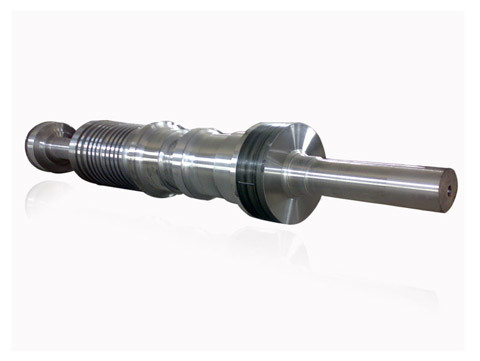
Forged Turbine Component
Forged turbines are a forged-component / special-products line. Tesco Steel & Engineering manufactures them to drawing alongside forged rings and other forgings — see our special products range.
| Property | Forged Turbine | Cast / Plate Part |
|---|---|---|
| Grain structure | Refined, worked, grain-flow follows the shape | As-cast / cut; random grain |
| Internal soundness | Voids & porosity closed by forging | Possible porosity / shrinkage |
| Strength & toughness | Higher | Lower |
| Fatigue life | Superior under cyclic load | Reduced |
| Best for | High-speed, high-stress, high-temp turbines | Lower-duty / complex shapes |
| Component | Description |
|---|---|
| Turbine Wheel / Disc | Forged disc carrying the blades, taking the centrifugal load |
| Rotor / Shaft | Forged rotating shaft assembly |
| Turbine Blades / Buckets | Forged aerofoil blades for the working fluid |
| Hub / Impeller | Forged hub or impeller for pumps/compressors |
| Nozzle / Diaphragm Rings | Forged stationary rings (see forged rings) |
| Material | Properties | Typical Use |
|---|---|---|
| Stainless Steel (304/316/321/310) | Corrosion & oxidation resistant | General & corrosive-service turbines |
| Carbon & Alloy Steel | High strength (e.g. Cr-Mo, 12Cr) | Steam-turbine wheels & rotors |
| Inconel 600 / 601 / 625 / 718 | Excellent high-temperature strength | Gas-turbine & hot-section components |
| Monel 400 / K500 | Excellent in marine & reducing media | Marine & corrosive turbines/pumps |
| Incoloy / Hastelloy | High-temp & aggressive-media resistance | Severe-service turbine parts |
Forging refines the grain and closes porosity, giving higher strength, toughness, and fatigue life for high-speed service.
Precision CNC machining produces the exact turbine wheel, disc, rotor, or blade geometry from the forging.
SS, carbon & alloy steel, Inconel, Monel, Incoloy, and Hastelloy for high-temperature and corrosive duty.
Dimensional, NDT (UT/DP), and material checks with balancing of rotating parts for reliable performance.
Nickel-alloy forgings for the temperatures and oxidation of gas- and steam-turbine hot sections.
Full material traceability and EN 10204 3.1 material test certificates on request.
| Industry | Typical Use | Why Forged Turbine |
|---|---|---|
| Power Generation | Steam & gas-turbine wheels, discs, rotors | High strength & fatigue life at temperature |
| Oil & Gas | Turbo-machinery & compressor wheels | Inconel/Monel for sour & high-temp duty |
| Aerospace & Defence | Turbine & rotating components | High strength-to-weight; nickel alloys |
| Marine & Shipbuilding | Turbine & pump rotors | Monel/SS corrosion resistance |
| Petrochemical | Turbo-expanders & compressors | Alloy forgings for severe service |
| Hydro & Pumps | Impellers & runner components | Forged strength & durability |
| Steel & Cement | Blowers & process turbines | High-temp, abrasion-tolerant alloys |
| Renewables | Turbine rotating parts | Reliable, certified forgings |
Q1. What are forged turbines?
Forged turbines are turbine components — wheels, discs, rotors, hubs, and blades — made by forging the metal and then CNC machining it to final shape. Forging refines the grain and closes internal voids, giving much higher strength, toughness, and fatigue resistance than cast or plate-cut parts, which is essential for high-speed, high-temperature turbine service.
Q2. Why are turbine components forged rather than cast?
Forging works the metal, refining and aligning the grain flow with the part and closing porosity, so a forged turbine wheel or disc is stronger, tougher, and far more fatigue-resistant than a casting. Turbines see high centrifugal and cyclic loads at temperature, where this reliability is critical, so high-duty rotating parts are forged.
Q3. What turbine components do you forge?
Turbine wheels and discs, rotors and shafts, blades/buckets, hubs and impellers, and nozzle/diaphragm rings. They are forged to a near-net shape and then CNC-machined to the final turbine profile per the customer's drawing.
Q4. What materials are forged turbines made from?
Stainless steels (304/316/321/310), carbon and alloy steels (including Cr-Mo and 12Cr turbine grades), Inconel (600/601/625/718), Monel (400/K500), Incoloy, and Hastelloy. The grade is chosen for the operating temperature, fluid, and stresses — for example nickel alloys for hot gas-turbine sections.
Q5. Are forged turbine parts heat-treated and tested?
Yes. After forging they are heat-treated to develop the required mechanical properties, CNC-machined, and then inspected with dimensional checks, NDT (ultrasonic/dye-penetrant), and mechanical/material testing. Rotating parts are balanced. Certification (EN 10204 3.1) is supplied on request.
Q6. Can you make forged turbines to our drawing?
Yes. We manufacture forged turbine components entirely to the customer's drawing — geometry, tolerances, material, heat-treat condition, testing, and balancing. Provide the drawing and operating duty (speed, temperature, fluid, loads) for a recommendation and quote.
Q7. What sizes can be forged?
A wide range of sizes is possible depending on the component and alloy, from smaller wheels and impellers to large discs and rotors, using open- or closed-die forging followed by CNC machining. Send your drawing and we will confirm feasibility for the size and material.
Q8. Do forged turbines come with material certification?
Yes. Forged turbine components are supplied with full material traceability and EN 10204 3.1 material test certificates on request, along with the dimensional, NDT, and mechanical test reports specified for the part.