Threaded Flanges — ASME B16.5 & DIN Screwed Flange Manufacturer
Tesco Steel & Engineering manufactures threaded (screwed) flanges — the flange joint that needs no welding arc: the tapped bore screws directly onto male-threaded pipe, the thread carries the joint, PTFE or compound seals it, and a seal weld closes it permanently where specifications ask. Made per ASME B16.5 in ½″–4″ NB standard (larger to order), Classes 150–2500, with NPT threads standard and BSPT / BSPP to order — gauged before dispatch — plus the DIN 2565 / DIN 2566 and BS 4504 patterns of the European tradition. The honest boundaries are stated on this page, not discovered in service: small bore is the pattern's home, vibration and thermal cycling are its enemies, and the thread is a built-in crevice — where those bite, the socket weld and weld neck benches take over. Every material family threads alike: from A105 and LF2 through the stainless wing, duplex, Monel, Inconel, Incoloy, Alloy 20, Hastelloy and copper-nickel — the full range table below links every grade. Facings: RF / FF / RTJ per the face types guide. Every lot with EN 10204 3.1/3.2 MTC. ISO 9001:2015, made in Mumbai, India — exported to 50+ countries.
ASME B16.5 · Classes 150–2500½″–4″ NB — Small Bore, HonestlyNPT Standard · BSPT / BSPP to OrderNo Welding Needed · Seal Weld OptionalDIN 2565 / 2566 · BS 4504 PatternsA105 to Hastelloy — Every FamilyThreads Gauged Before DispatchEN 10204 3.1 / 3.2 · ISO 9001:2015
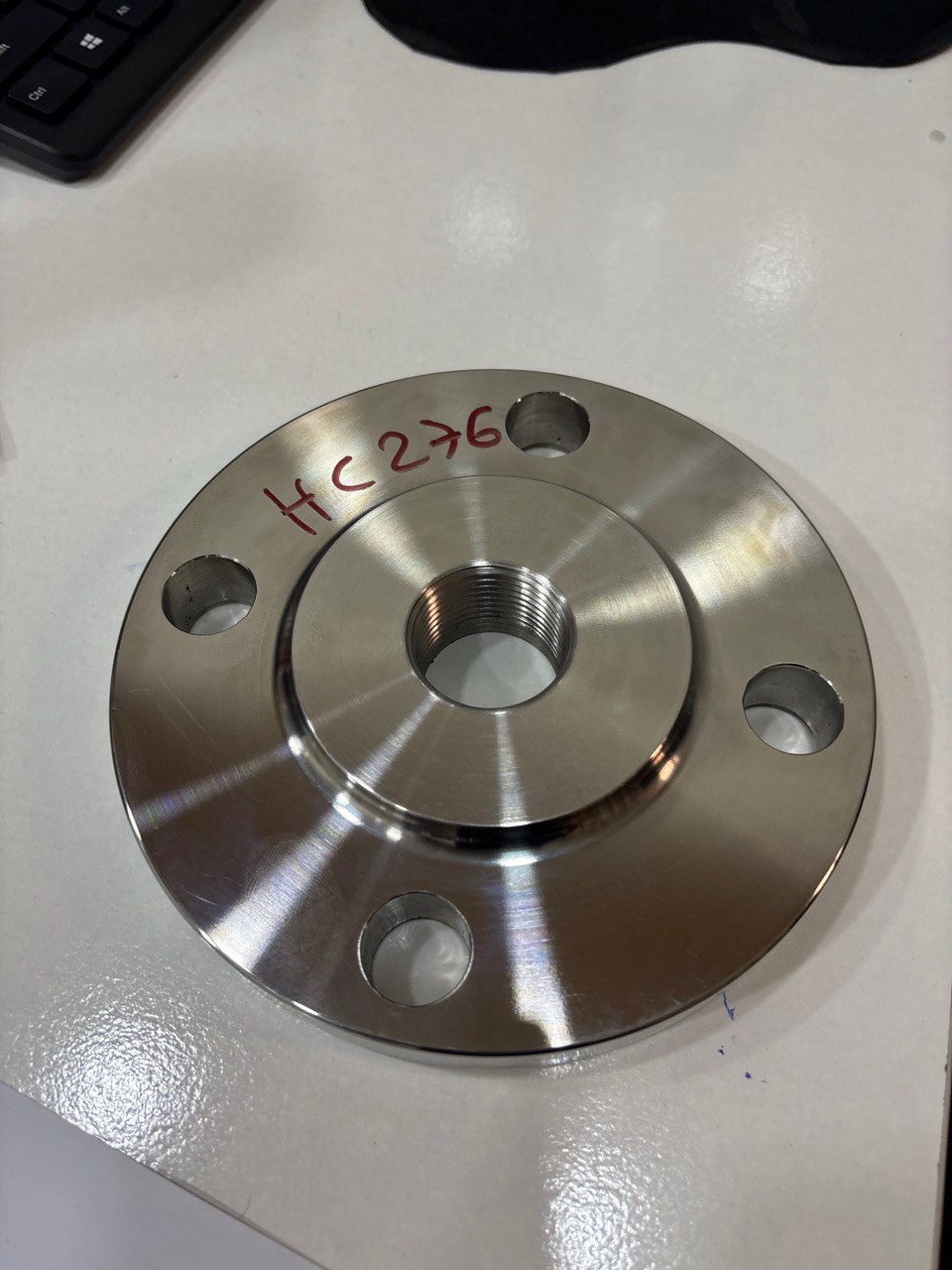
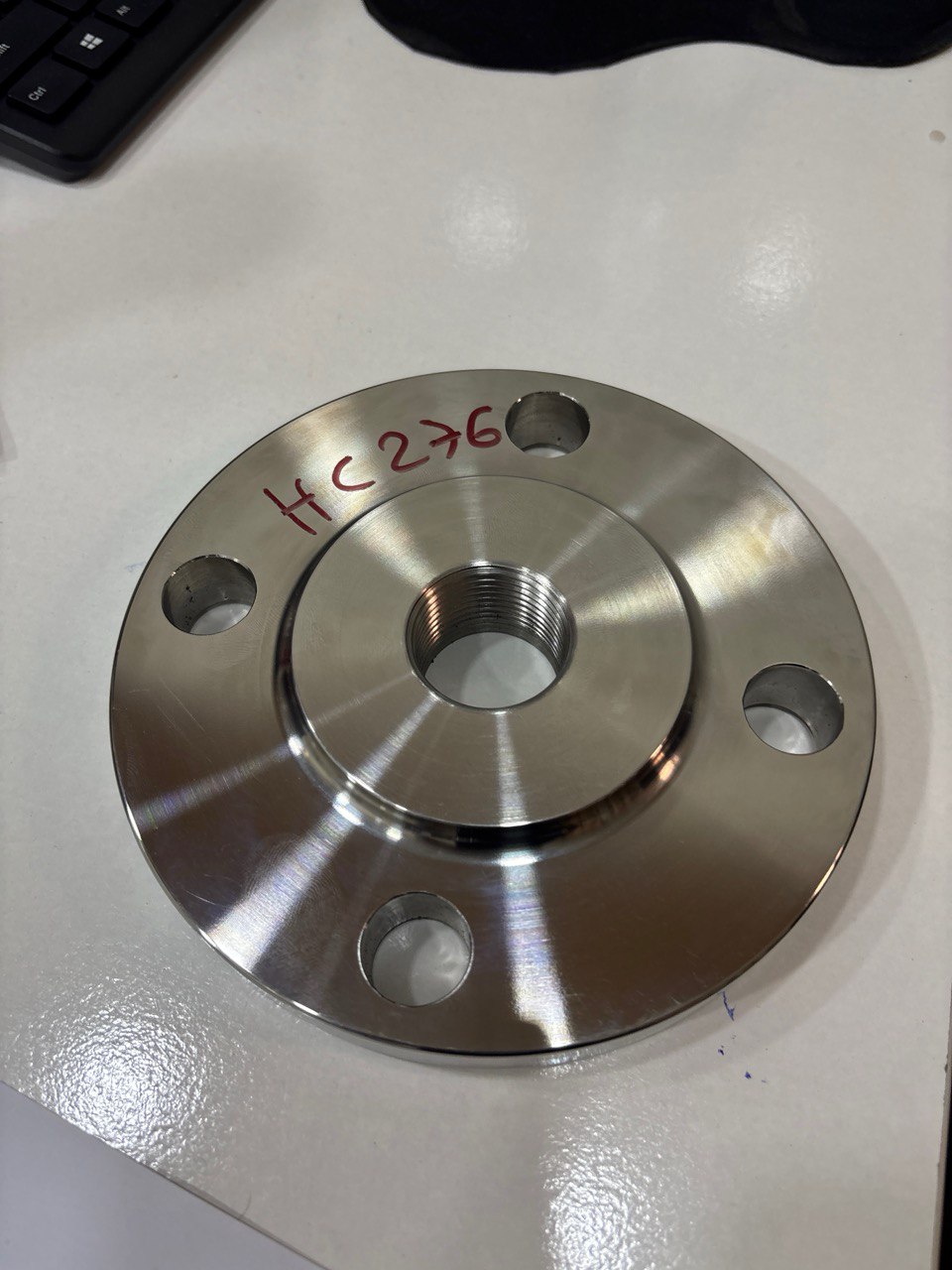
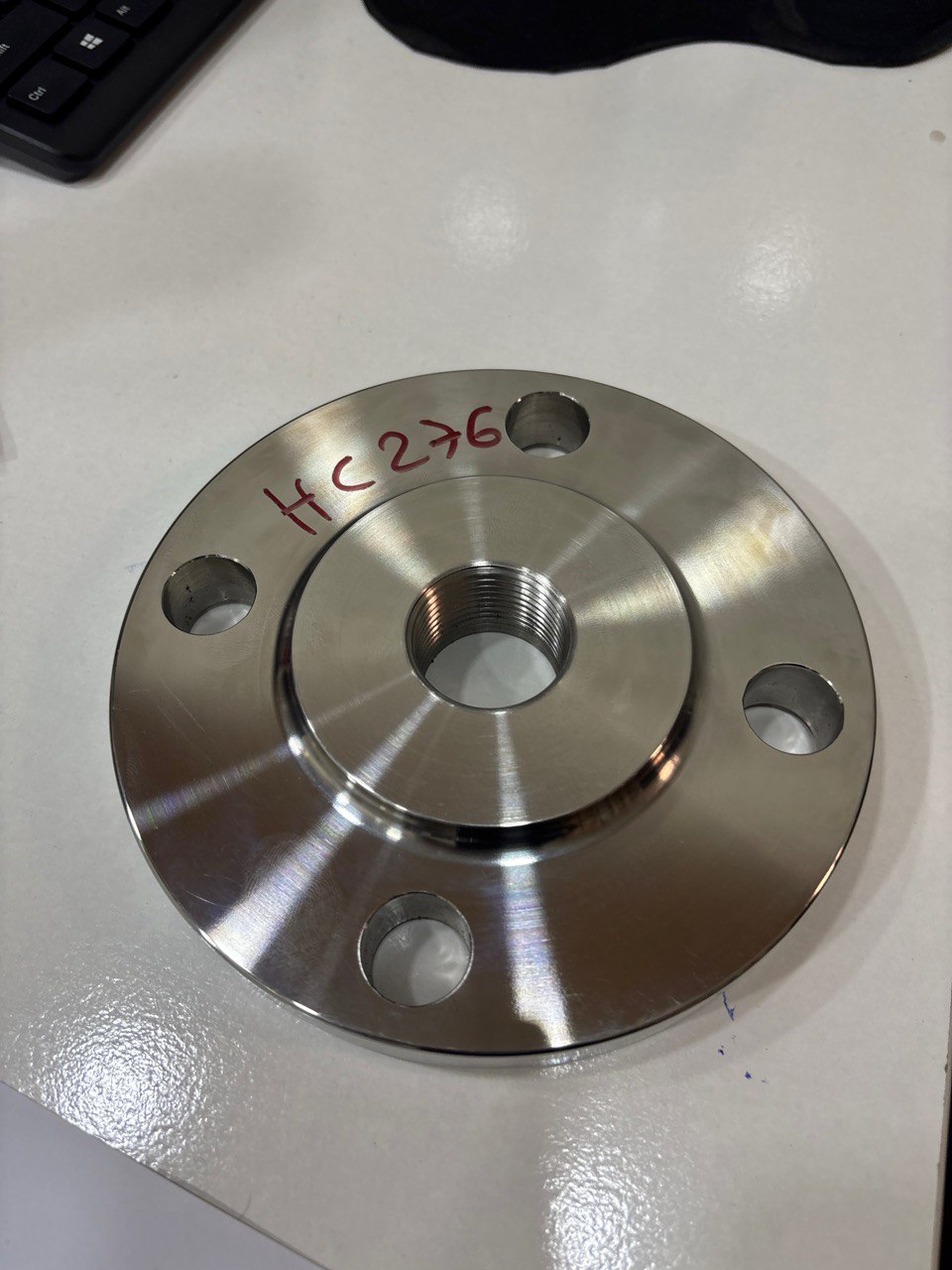
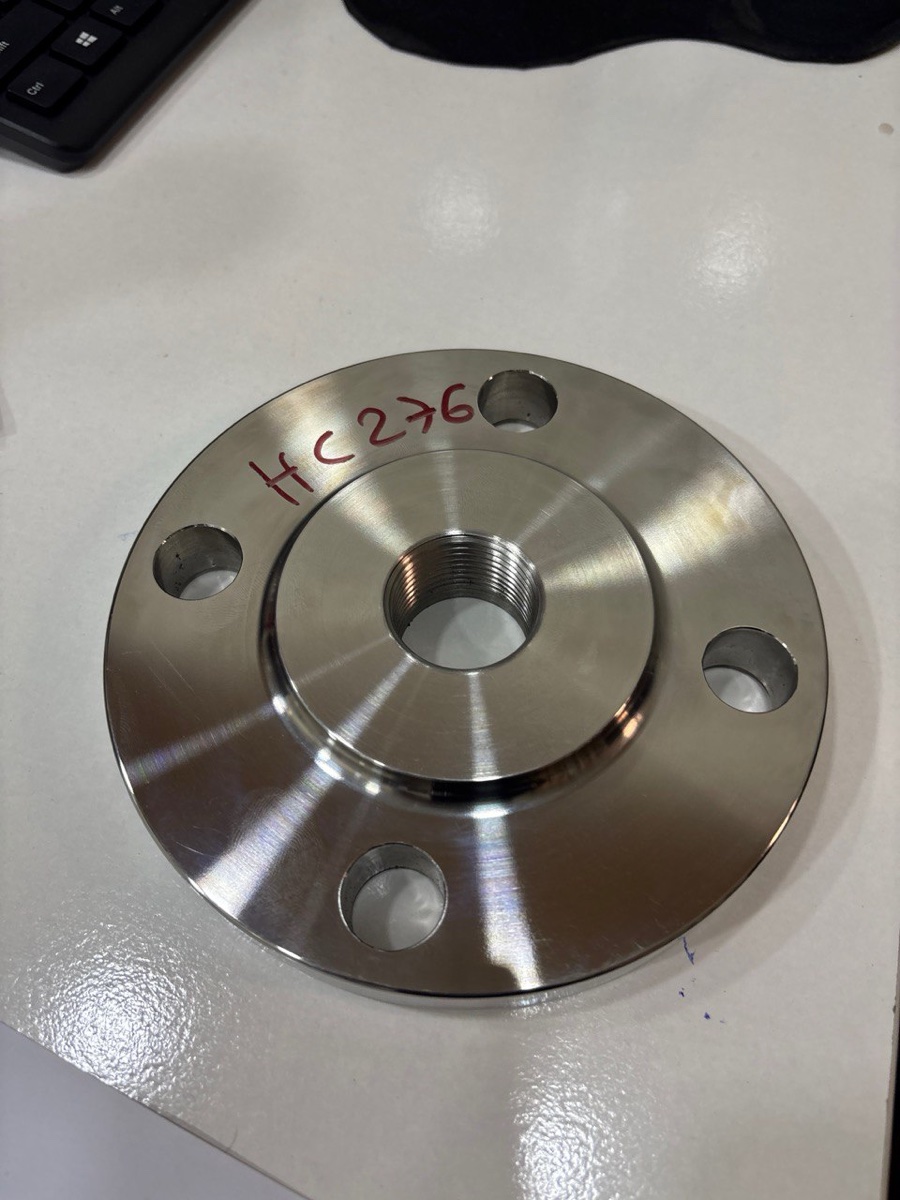
Threaded (Screwed) Flanges — Manufactured at Our Mumbai Works
What is a Threaded (Screwed) Flange?
The no-welding joint. A threaded flange has a tapped bore that screws directly onto male-threaded pipe — no arc, no heat-affected zone, no weld procedure: the thread carries the mechanical joint, PTFE or pipe compound seals the helical path, and a seal weld closes it permanently where specified. Installed with hand tools where welding is unwelcome or impossible — flammable atmospheres, galvanised systems, utility air and water, instrument connections — and demountable for maintenance. Per ASME B16.5, ½″–4″ NB standard, Classes 150–2500, NPT standard / BSPT to order; DIN 2565/2566 and BS 4504 alongside. EN 10204 3.1 on every lot.
The absolute rule: NPT and BSPT are visually similar and mechanically incompatible — an NPT flange on a BSPT pipe will start, bind and leak. Name the thread standard on every enquiry; we tap all three and gauge every thread before dispatch.
What the Threaded Pattern Buys
No Arc, No Permit, No Procedure
Installation with hand tools — the joint for flammable atmospheres, live plants where hot work is forbidden, and sites without welding.
The Galvanised System's Only Flange
Welding destroys zinc coatings; threading preserves them — galvanised utility and fire-water systems thread by necessity, not preference.
Demountable by Design
Wrench it off as easily as on — instrument connections, strainers and equipment that maintenance revisits keep the threaded joint for exactly this.
Every Material, Same Geometry
The pattern is a geometry, not a metallurgy — A105 to Hastelloy taps alike, and every grade page on this site has a threaded sibling.
When NOT to Use Threaded Flanges — The Honest Boundaries
Four boundaries, stated plainly.Vibration and cyclic service: threads are stress concentrators and taper joints work loose — pump discharge and reciprocating machinery belong to welded flanges. Thermal cycling: repeated expansion relaxes the thread seal — cycling steam and hot-oil duty is welded territory. Crevice-sensitive corrosion: the thread is a built-in crevice, and in chloride-bearing wet service the stainless bench's crevice warnings apply inside every thread root — corrosive-service specifications either forbid threads or require seal welding. And severe service by code: ASME B31.3 restricts threaded joints in Category M and high-pressure fluid service. Inside its honest territory — utility, instrument, low-cycle, benign-fluid small bore — the pattern serves for decades.
How Our Threaded Flanges Are Manufactured
1
Material — certified forgings in the ordered grade, kept segregated by family on the shelf; heat number traceability from bar to finished flange.
2
Machining — flange body to ASME B16.5 (or DIN/BS pattern) dimensions: OD, thickness, hub and bolt circle drilled to class.
3
Threading — the bore tapped NPT per B1.20.1 (standard), BSPT per ISO 7-1 or BSPP per ISO 228-1 to order, with thread length and engagement per the standard.
4
Gauging — every thread checked with L1 ring/plug gauges before dispatch; gauging records available against the certificate.
5
Facing & marking — RF serrations, flat face or RTJ groove per B16.20; PMI on alloy grades; marked with grade, size, class and heat number.
6
Certification & packing — EN 10204 3.1 MTC (3.2 witnessed on request); threads protected with plastic plugs, packed sea-worthy.
Where Threaded Flanges Are Used
The pattern's honest territory: compressed air, water and utility services across every industry, galvanised fire-water and building systems, instrument and gauge connections, sampling points and strainer stations, low-pressure gas distribution, hazardous-area installations where hot work is forbidden, temporary and rental piping that assembles and disassembles, and the small-bore corners of chemical, marine and power plants where a welding procedure would cost more than the line. Production and supply below:
Process fluid, higher cycling, ‘welded’ specifications
The rule: the two patterns share sizes, classes and materials — the line specification, not availability, should make the choice; the socket weld hub argues its own side.
How to Specify & Order a Threaded Flange
Six elements — the thread standard is the line that must never be assumed:
1
Size & standard — e.g. 1″ NB ASME B16.5, or the DIN/BS pattern with DN and PN.
2
Pressure class — 150#–2500# (or PN rating).
3
Thread standard — NPT (our default), BSPT or BSPP — matching the pipe's threading, always stated.
4
Facing — RF (the default), FF or RTJ with ring number.
5
Material grade — A105, LF2, an A182 grade or any nickel-bench designation — with the service named where it helps the grade check (and the crevice honesty considered in wet chloride duty).
6
Certification & commercials — EN 10204 3.1 / 3.2, gauging records if required; quantity, seal-welding intent and destination to sales@tescosteel.com or the inquiry form.
Example: “Threaded Flange RF, 1″ NB, ASME B16.5 Class 300, NPT per B1.20.1, ASTM A105, galvanised air header take-offs, EN 10204 3.1 — 40 pcs.” Quotations normally within 24 hours with price, unit weight and delivery.
Threaded Flanges — Frequently Asked Questions
What is a threaded flange (screwed flange)?
A threaded flange — screwed flange in older usage — is a flange whose bore is tapped with an internal pipe thread, so it screws directly onto the male-threaded end of a pipe: no welding arc, no heat-affected zone, no weld procedure. The thread carries the mechanical joint and transmits the pressure load; PTFE tape or pipe compound seals the helical leak path; and where a specification wants belt-and-braces, a small seal weld closes the joint permanently. The pattern's virtues follow directly: installation with hand tools where welding is unwelcome or impossible — flammable atmospheres, galvanised systems that welding would ruin, air and utility services, instrument connections — and easy disassembly for maintenance. Manufactured per ASME B16.5 in ½" to 4" NB as standard (larger to order), Classes 150 to 2500, NPT threads standard and BSPT to order, in every material family this site carries, with EN 10204 3.1/3.2 certification on every lot.
What is the difference between NPT, BSPT and BSP parallel threads?
Three thread systems that must never be mixed. NPT (National Pipe Taper, per ASME B1.20.1) is the American standard and our default: a 60° thread form on a 1-in-16 taper, sealing on the thread flanks as the taper tightens — the system the B16.5 world assumes. BSPT (British Standard Pipe Taper, per ISO 7-1) uses a 55° Whitworth form on the same taper: visually similar, mechanically incompatible — an NPT flange on a BSPT pipe will start, bind and leak. BSP parallel (BSPP) is the same 55° form with no taper, sealing on a washer or O-ring at the face rather than on the threads — common on European hydraulic and instrument equipment. The specification rule is absolute: name the thread standard on every enquiry, because the flange must match the pipe's threading, not the buyer's habit. We tap NPT as standard, BSPT and BSPP to order, and gauge every thread before dispatch — with gauging records available against the certificate.
What is the maximum size for a threaded flange per ASME B16.5?
The standard covers threaded flanges across its size range, but the honest engineering answer is smaller than the paper one: threaded joints belong to small bore. We supply ½" to 4" NB as the standard range — the sizes where threads cut cleanly, wrench torque is achievable and the joint serves reliably — with larger sizes machined to order where a specification genuinely calls for them. The physics behind the habit: as diameter grows, the thread's leak path lengthens, the torque needed to seat a taper thread climbs beyond practical wrenching, and the pipe-wall thinning at the thread root takes a proportionally bigger bite from the pressure boundary. Above 2"-3" NB most piping codes and practices steer to welded joints for exactly these reasons, and the B31.3-style restrictions on threaded joints in severe service apply regardless of size. Small bore is not a limitation of our machining — it is where the threaded pattern honestly belongs.
Where should threaded flanges NOT be used?
Four boundaries, stated plainly. Severe cyclic and vibrating service first: threads are stress concentrators, and vibration works taper joints loose — pump discharge piping, reciprocating machinery and pulsating lines belong to welded flanges. Large temperature swings second: the flange and pipe expand at the joint, and repeated thermal cycling relaxes the thread seal — steam and hot-oil systems that cycle are welded territory. Crevice-sensitive corrosion duty third: the thread is a built-in crevice, and in chloride-bearing wet service the stainless bench's crevice-corrosion warnings apply at full force inside every thread root — which is why corrosive-service specifications either forbid threads or require seal welding. And severe service by code fourth: ASME B31.3 restricts threaded joints in Category M and high-pressure fluid service, and flammable or toxic duty commonly limits them by company standard. Inside its honest territory — utility, instrument, low-cycle, benign-fluid small bore — the pattern serves for decades; the boundaries are the specification.
What sealant is used with threaded flanges — and can they be seal welded?
Two answers, often combined. For the thread seal: PTFE tape is the utility standard — wrapped with the thread direction, two to three turns, keeping the first thread bare so tape cannot enter the line — while anaerobic pipe compounds and paste sealants serve where temperature, chemicals or vibration exceed tape's comfort; on oxygen service, only oxygen-compatible compounds are permitted, and on stainless and nickel alloys nickel-bearing anti-seize doubles as galling protection. For permanence: a seal weld — a small fillet closing the exposed thread end — converts the joint from mechanical-plus-sealant to permanently tight, and specifications for flammable, toxic or crevice-sensitive service commonly require it. The honest note on seal welding: it sacrifices the pattern's demountability, and the weld must be made before the line is pressurised, with the thread engagement carrying the strength and the weld carrying only the seal. Both practices are standard on our supply — state the service and the specification follows.
What face types are available on threaded flanges?
The same three facings as the welded bench, machined on the same equipment. Raised face (RF) is the default — the 1.6-3.2 μm AARH serrated-spiral finish gripping a standard gasket, per ASME B16.5's facing rules. Flat face (FF) serves cast-iron and non-metallic mating equipment, where a raised face would bend the brittle counter-flange — common on utility and pump connections exactly where threaded flanges live. Ring type joint (RTJ) appears on the high-pressure end of the range where a specification carries threaded connections into Class 900 and above — machined per B16.20 with the groove in the same corrosion-resistant material as the flange. The full facing story — every ASME and EN 1092-1 face type with photographs — is on our Flange Face Types guide, and the DIN threaded patterns carry their own facing conventions as the DIN FAQ describes.
What is the pressure-temperature rating of a Class 150 carbon steel threaded flange?
The same B16.5 rating as any other Class 150 flange in the same material — the class system does not discount the threaded pattern. For A105 carbon steel (material group 1.1), Class 150 rates roughly 19.6 bar at 38°C, declining along the group's curve to roughly 5.5 bar at 425°C — with the threaded-specific honesty that most users cap threaded service well below the top of that curve, because thermal cycling at temperature is exactly the duty the previous FAQs warn against. Higher classes follow the same logic: a Class 300 threaded flange carries the group's Class 300 curve, and the B16.5 tables govern all the way to Class 2500. The practical reading for the pattern's real habitat — utility air, water, gas and instrument service at modest temperature — is that the flange rating almost never governs: the threaded joint's own good practice does, and the class is chosen to match the line specification rather than the physics.
What materials are threaded flanges made in?
Every family on this site's bench, because the threaded pattern is a geometry, not a metallurgy. Carbon steel A105 is the volume standard, with A350 LF2 carrying the impact-tested low-temperature duty. The A182 alloy steels — F5, F9, F11, F22, F91 — serve refinery utility connections in matching chrome-moly systems. The stainless wing runs from 304/304L and 316/316L through the stabilised 321/347, the H grades, 310, 317L and 904L. Duplex F51 and the super duplex F53/F55 twins serve where strength meets chloride — with the crevice honesty of the where-not-to-use FAQ applying doubly. And the nickel bench threads as readily as it forges: Monel 400 and K-500, Nickel 200/201, Inconel 600/601/625, Incoloy 800/825, Alloy 20, Hastelloy C-276 and C-22, and the copper-nickel pair. Every grade page on this site has a threaded sibling — the full range table on this page links them — and PMI, heat-number marking and EN 10204 certification travel with every material equally.
What are DIN 2565 and DIN 2566 threaded flanges?
The German-tradition screwed flanges, still specified across European-heritage plants and marine equipment. DIN 2565 covers threaded flanges for PN6 duty and DIN 2566 for PN16 — both with Whitworth pipe threads (the BSP family) rather than NPT, both dimensioned to the DIN flange tables rather than B16.5, and both typically supplied with the DIN facing forms their mating equipment expects. The successor European framework is EN 1092-1, whose threaded type (Type 13) carries the same tradition forward, and BS 4504 threaded patterns serve the British-heritage equivalent. The practical rule is the thread FAQ's, doubled: a DIN threaded flange differs from its ASME cousin in thread form, drilling and facing all at once, so the drawing or standard must be named on the enquiry — 'threaded flange, DN50 PN16 DIN 2566' is a complete specification, and we machine the DIN and BS patterns alongside the ASME range with the same certification.
What is the difference between a threaded flange and a socket weld flange?
Both are small-bore patterns; the joint decides. A socket weld flange receives plain-end pipe into a machined socket and is sealed by an external fillet weld — a welded, permanent, crevice-managed joint with the strength of fusion, at the cost of a welding procedure, a qualified welder and the famous 1/16" expansion gap discipline its own page describes. A threaded flange needs no arc at all: threading the pipe and wrenching the joint is the whole installation — faster, cheaper, demountable, and possible where welding is forbidden — at the cost of the thread's leak path, its stress concentration and its crevice. The split in practice: threaded wins utility services, galvanised systems (welding destroys the coating), instrument work and hazardous-area installation; socket weld wins process fluid, higher cycling and anywhere the specification says 'welded'. The two patterns share sizes, classes and materials, so the line specification — not availability — should make the choice.
How much does a threaded flange weigh?
Essentially the same as the equivalent slip-on or socket weld flange of the same size and class — the tapped bore removes only grams. Representative Class 150 carbon steel figures: ½" NB roughly 0.4 kg, 1" roughly 0.8 kg, 2" roughly 2.2 kg, 3" roughly 4 kg, 4" roughly 6 kg — climbing steeply with class: a 2" Class 1500 threaded flange weighs several times its Class 150 cousin. Exact unit weights depend on class, facing and bore, and matter for freight on export orders: our quotations state the unit and consignment weight per line item, and the site's flange weight chart carries the full reference tables. For the nickel-alloy range the same geometry weighs slightly more per piece (density above steel's for the copper-nickel and nickel families), and the certificate's material price, not the kilograms, dominates the commercial arithmetic.
What details are needed to get an accurate threaded flange quotation?
Six elements plus commercial terms: (1) size and dimensional standard — e.g. 1" NB ASME B16.5, or the DIN/BS pattern with its DN and PN; (2) pressure class — 150 to 2500 (or PN rating); (3) thread standard — NPT (our default), BSPT or BSPP: the one line that must never be assumed, as the thread FAQ explains; (4) facing — RF (the default), FF or RTJ with ring number; (5) material grade with its specification — A105, A350 LF2, an A182 grade, or any of the nickel-bench designations, with the service named where it helps the grade check; (6) certification — EN 10204 3.1 (our standard) or 3.2 witnessed, with thread gauging records where required. Add quantity, seal-welding intent if known (it can inform thread engagement checks) and destination; quotations normally return within 24 hours with price, unit weight and delivery.
Who manufactures threaded flanges in India?
Tesco Steel & Engineering is an ISO 9001:2015 certified flange manufacturer based in Mumbai, India, producing threaded (screwed) flanges per ASME B16.5 from ½" to 4" NB standard (larger to order) in Classes 150-2500, plus DIN 2565/2566 and BS 4504 patterns — each machined from certified forgings with the thread tapped NPT, BSPT or BSPP to order, gauged before dispatch with records available, faced RF, FF or RTJ, PMI-checked on alloy grades, and marked with grade, size, class and heat number. The full material range threads alike: A105 and LF2 carbon steels, the A182 alloy and stainless grades, duplex and super duplex, Monel, Nickel 200/201, Inconel, Incoloy, Alloy 20, Hastelloy and copper-nickel — every grade with its own page on this site. Supplied with EN 10204 3.1/3.2 certification alongside the complete flange range — weld neck, socket weld, slip-on, blind, long weld neck and lap joint. Exported to more than 50 countries.