Syphon Gauge Cock Manufacturer
TES-LOK Syphon Gauge Cock — combined syphon tube and gauge isolation valve in a single compact body. Protects steam pressure gauges from direct steam contact while enabling in-service gauge isolation and replacement. SS 316 · Brass · NPT · BSPT · BSPP · Up to 6,000 PSI · ISO 9001:2015 certified.
ISO 9001:2015 Certified
Up to 400 °C
Up to 6,000 PSI
NPT · BSPT · BSPP
Syphon + Isolation in One
SS 316 · Brass · Monel
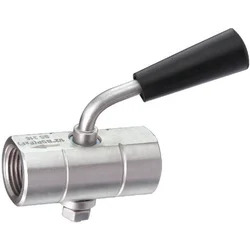
Syphon Gauge Cock
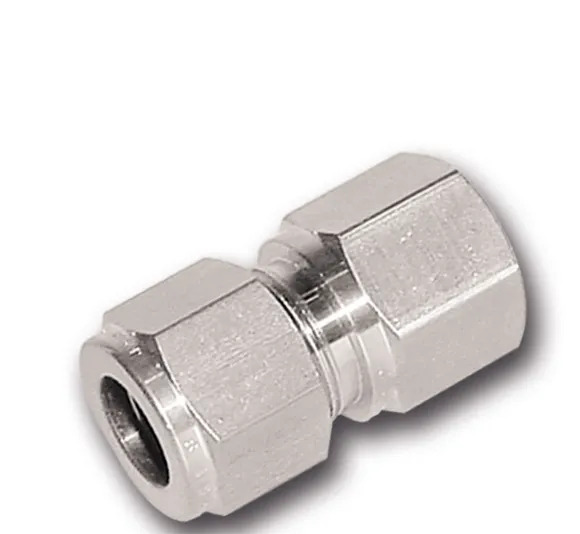
Gauge Connector
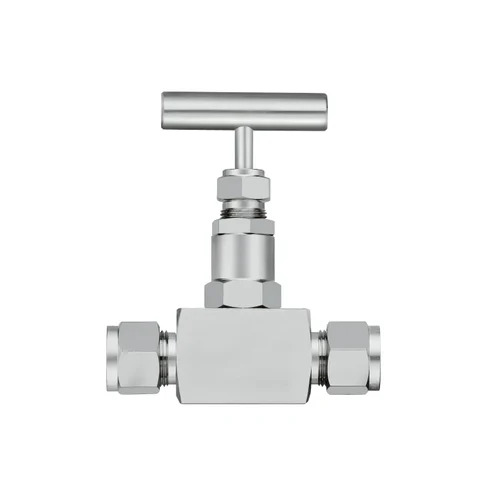
Needle Valve Assembly
Tesco Steel & Engineering manufactures TES-LOK Syphon Gauge Cocks — a dedicated instrument valve that integrates a syphon condensate trap and a gauge isolation cock into a single precision-machined body. On steam lines, every pressure gauge requires both a syphon (to protect the bourdon tube from steam heat) and an isolation valve (to allow gauge removal or calibration without shutting down the process). The syphon gauge cock fulfils both functions in one compact unit, eliminating the need for a separate syphon tube and needle valve in series, reducing the number of threaded joints in the gauge train, and minimising potential leak points. TES-LOK syphon gauge cocks are manufactured in SS 316 and Brass with NPT, BSPT, and BSPP end connections, rated to 6,000 PSI, and certified to ISO 9001:2015.
What is a Syphon Gauge Cock?
Combined Function — Syphon + Isolation Valve: A syphon gauge cock is a single-body fitting that combines two essential elements of a steam gauge installation: (1) a built-in syphon loop or condensate chamber that prevents steam from reaching the gauge bourdon tube; and (2) a tapered plug cock or needle valve mechanism that allows the gauge to be isolated from the process, bled down, and removed for calibration or replacement while the steam line remains fully pressurised. In a standard gauge train, these are separate items screwed together. A syphon gauge cock replaces both with one fitting and two connection points instead of four, significantly reducing the risk of threaded-joint steam leaks.
Syphon Gauge Cock Types — Selection Guide
| Type | Syphon Geometry | Valve Mechanism | Best For | Typical Size |
|---|
| U-Type Syphon Gauge Cock |
Integrated U-loop / pigtail condensate trap below valve body |
Tapered plug cock or needle valve |
LP/MP steam gauge panels; standard plant utility steam |
1/4" to 1/2" NPT/BSPT |
| Coil-Type Syphon Gauge Cock |
Integrated coil (3–4 turns) below valve body |
Needle valve or globe valve |
HP/superheated steam; power plant; turbine inlet gauges |
1/4" to 1/2" NPT/BSPT |
| Straight-Body Gauge Cock (with external syphon) |
No integrated syphon — used with separate syphon tube upstream |
Plug cock or needle valve |
Retrofitting isolation valve to existing syphon installations |
1/4" to 3/4" NPT/BSPT/BSPP |
| Three-Way Gauge Cock |
Integrated condensate pocket; three-port valve |
Three-way plug cock |
Gauge calibration — vents gauge to atmosphere for zeroing while isolating from process |
1/4" to 1/2" NPT/BSPT |
Syphon Gauge Cock vs Separate Syphon + Needle Valve
| Feature | Syphon Gauge Cock (Combined) | Separate Syphon Tube + Needle Valve |
|---|
| Threaded joints in gauge train |
2 joints (process boss → syphon cock body; cock body → gauge) |
4 joints (process boss → syphon in; syphon out → needle valve in; needle valve out → gauge) |
| Potential leak points |
Fewer — 2 threaded connections only |
More — 4 threaded connections + intermediate nipple joints |
| Overall assembly length |
Compact — one body, shorter overall height |
Longer — syphon + nipples + valve stacked in series |
| Installation time |
Faster — two make-up joints, no intermediate components |
Slower — four joints, alignment of multiple fittings required |
| Gauge isolation capability |
Yes — built-in valve |
Yes — separate needle valve provides isolation |
| Syphon condensate volume |
Moderate (U-loop type) to high (coil type) |
Variable — depends on separate syphon tube type selected |
| Maintenance access |
Single component to inspect or replace |
Multiple components — each may need individual attention |
| Cost |
Slightly higher per unit — combined function |
Lower per part — but total BOM cost (syphon + nipple + needle valve) is similar or higher |
Available Thread Forms & End Connections
| Thread Standard | Designation | Seal Mechanism | Applicable Connection |
|---|
| NPT |
ASME B1.20.1 — 60° tapered |
Thread interference; PTFE tape (2–3 wraps) |
US/Indian process gauges; most common plant standard |
| BSPT |
BS 21 / ISO 7 — 55° tapered |
Thread interference; PTFE tape (2–3 wraps) |
European/Asian gauges with tapered BSP port |
| BSPP (BSP) |
BS 2779 / ISO 228 — parallel |
Dowty bonded seal in mating socket |
European parallel-socket gauges; Swagelok-pattern accessories |
BSPP Sealant Warning:
BSPP (parallel BSP) threads on the gauge cock body seal on the face, not on the thread taper. Never apply PTFE tape to BSPP threads. Always use a Dowty bonded seal (metal-backed rubber washer, EN ISO 1179-1) in the mating socket. Applying PTFE tape to a parallel thread gives a false tight feel — the joint will weep under steam pressure. NPT and BSPT connections (both tapered) require 2–3 wraps of PTFE tape clockwise from the second thread.
Standard Size Range
| Process Connection Size | Gauge Connection Size | NPT | BSPT | BSPP | Pressure Rating (SS) |
|---|
| 1/4" | 1/4" | ✓ | ✓ | ✓ | 6,000 PSI |
| 3/8" | 1/4" | ✓ | ✓ | ✓ | 4,500 PSI |
| 1/2" | 1/4" | ✓ | ✓ | ✓ | 3,500 PSI |
| 1/2" | 1/2" | ✓ | ✓ | ✓ | 3,500 PSI |
| Custom (reducing / same size) | Per spec | ✓ | ✓ | ✓ | Per calculation |
Material & Technical Specifications
| Parameter | Details |
|---|
| Brand | TES-LOK (Tesco Steel & Engineering) |
| Product Type | Syphon Gauge Cock — combined syphon + isolation valve in single body |
| Valve Mechanism | Tapered plug cock or needle valve (fully open / fully closed) |
| Connection Size | 1/4" to 1/2" NPT / BSPT / BSPP; custom sizes on request |
| Material — SS | SS 304 (ASTM A276), SS 316 (ASTM A276), SS 316L |
| Material — Brass | ASTM B283 — C36000 free-machining brass |
| Material — High Alloy | Monel 400 (ASTM B164), Inconel 600 (ASTM B166) — on request |
| PTFE Ferrule / Packing Standard | ASTM D1710 / ASTM D3294 (PTFE valve packing and ferrules) |
| Pressure Rating — SS | Up to 6,000 PSI (413 bar) at ambient; de-rated per ASME B31.3 at temperature |
| Pressure Rating — Brass | Up to 1,000 PSI for low-pressure steam applications |
| Working Temperature | –50 °C to +400 °C (material and packing dependent) |
| Valve Packing | PTFE or graphite packing; PTFE standard; graphite for >260 °C service |
| End-to-End Standards | DIN 16282 (syphon elements), ASME B16.14 (threaded fittings), BS 6212 (gauge accessories) |
| Quality Standard | ISO 9001:2015 certified manufacturing |
| Certifications Available | EN 10204 3.1 MTR, PMI, Hydrostatic test certificate, NACE MR0175 |
| Compatible Instruments | All standard bourdon tube pressure gauges (NPT / BSPT / BSPP bottom entry) |
Gauge Cock Operating Positions
| Handle / Stem Position | Process Port | Gauge Port | Bleed Port (if 3-way) | Use |
|---|
| Open (In-line) |
Open |
Open |
Closed |
Normal operating position — process pressure transmitted through syphon condensate to gauge |
| Closed (Isolated) |
Open |
Closed |
Closed |
Gauge isolated from process — gauge can be removed while process remains live |
| Bleed / Vent (3-way only) |
Closed |
Open to bleed port |
Open |
Gauge bled to zero pressure — safe for gauge removal; used for calibration zeroing |
Installation Procedure
Assembly Order: The syphon gauge cock installs with the process connection (syphon inlet) threaded into the process boss or root valve, and the gauge outlet threaded into the pressure gauge's bottom connection. The valve body must be oriented with the syphon loop/coil below the valve port to maintain the condensate trap by gravity. Always pre-fill the syphon section before opening the process valve.
1
Confirm valve is fully closed: Before any assembly, ensure the gauge cock handle is turned to the fully closed (isolated) position. This prevents steam admission to the gauge during installation.
2
Verify thread form: Check syphon gauge cock thread standard (NPT / BSPT / BSPP) against the process boss and the gauge bottom connection. Never mix NPT and BSPT — 60° vs 55° flank angles cause cross-threading and potential fitting failure under steam pressure.
3
Apply sealant to process-side thread: NPT / BSPT: apply 2–3 wraps of PTFE tape clockwise from the second thread. BSPP: fit a Dowty bonded seal in the process boss socket. Leave the gauge-side port bare until after pre-filling.
4
Mount syphon gauge cock on process connection: Thread the process port into the boss or root valve — 1½ to 2 turns past handtight for tapered threads, or to Dowty torque specification for BSPP. Orient the body so the syphon loop/coil hangs vertically below the valve.
5
Pre-fill the syphon section with water: With the valve closed and gauge port open, fill the syphon chamber completely with clean water through the gauge port using a syringe. Confirm water is visible at the top of the gauge port before connecting the gauge.
6
Connect the pressure gauge: Apply sealant to the gauge-side thread and screw on the pressure gauge. Tighten to manufacturer's torque. Connect immediately after pre-filling to retain the condensate charge.
7
Open the isolation valve slowly: Turn the gauge cock handle to the open position gradually — never snap open quickly. Allow 1–3 minutes for condensate level to stabilise and gauge reading to steady before logging the reading.
8
Gauge isolation for maintenance: To remove the gauge while process is live: close the gauge cock fully → confirm gauge reading drops to zero → apply sealant to gauge-side thread → unscrew gauge. Re-fill syphon section before fitting the replacement gauge, then re-open valve slowly.
Do Not Open Under Differential Pressure:
When a gauge cock has been in the closed position with the process side pressurised and the gauge side at zero, the condensate in the syphon section may have partially drained. Always re-fill the syphon through the gauge port before reopening the cock to steam. Opening the valve with an empty syphon section on the gauge side will send a steam surge directly into the bourdon tube — destroying the gauge instantly.
Why Choose TES-LOK Syphon Gauge Cocks
2 Connections Instead of 4
Replaces separate syphon + needle valve with one body. Only two threaded make-up joints in the entire gauge train — halving the number of potential steam leak points.
In-Service Gauge Replacement
Built-in isolation valve allows gauges to be swapped, calibrated, or zero-checked while the steam line stays pressurised — no process shutdown, no hot-work permit needed for gauge change.
Steam Protection Built In
The integrated syphon condensate trap is always in the circuit — there is no risk of inadvertently installing a gauge on steam without syphon protection, which can happen with separately sourced components.
Compact Gauge Train
Shorter overall height than a syphon tube + nipple + needle valve assembly. Reduces moment arm on the gauge boss — less vibration-induced stress on gauge connection bosses and instrument nozzles.
ISO 9001:2015 Certified
Fully traceable manufacturing — EN 10204 3.1 material test reports, PMI, and hydrostatic test certificates available. Meets EPC contractor and owner-inspector documentation requirements.
Universal Thread Compatibility
NPT, BSPT, and BSPP thread forms in all sizes — compatible with Swagelok, Parker A-LOK, Ham-Let, and Hoke gauge accessories. Same thread standards, no adaptors required.
Applications
| Industry / Facility | Application | Recommended Material |
|---|
| Power Generation | Steam drum pressure gauge isolation, turbine inlet gauge train, boiler auxiliary steam gauges | SS 316 |
| Oil & Gas Refineries | Process steam gauge isolation on reboilers, steam injection headers, steam trap monitoring gauges | SS 316 |
| Petrochemical Plants | Steam-traced line gauge isolation, heat exchanger steam-side gauges, column overhead steam pressure points | SS 316L |
| HVAC & Building Services | Steam heating main gauges, boiler room gauge panels, hospital steam system instruments | Brass (LP steam) |
| Pharmaceutical | Clean steam autoclave gauge isolation, SIP/CIP steam pressure point isolation | SS 316L electropolished |
| Textile & Dyeing | Autoclave steam gauge isolation, calendar roll steam chest gauges | Brass / SS 304 |
| Sugar & Distillery | Evaporator steam gauge isolation, vacuum pan steam pressure instruments | SS 316 |
| Marine & Offshore | Boiler pressure gauge isolation in chloride-laden marine atmosphere | Monel 400 |
Frequently Asked Questions
What is the difference between a gauge cock and a needle valve for gauge isolation?
A gauge cock (also called a plug cock or instrument cock) is a simple quarter-turn or half-turn tapered plug valve designed specifically for gauge isolation duty — on/off service only, not throttling. A needle valve has a tapered needle on a threaded stem that allows fine metering of flow as well as full isolation. For standard steam gauge isolation, a gauge cock is the preferred choice — it provides positive on/off isolation with a simple handle position that is visually obvious (in-line = open, perpendicular = closed), requires no multi-turn operation, and is more compact. Needle valves are used where precise flow restriction or calibration bleed-down rate control is also required.
Can I remove a pressure gauge while the steam line is live using a syphon gauge cock?
Yes — that is the primary purpose of the isolation valve built into the syphon gauge cock. Close the gauge cock fully, confirm the gauge reading drops to zero (confirming isolation is complete), then carefully unscrew the gauge. Before fitting the replacement gauge, pre-fill the syphon chamber through the gauge port with clean water, apply sealant to the gauge thread, connect the replacement gauge, and then slowly open the gauge cock. Never unscrew a gauge from a live steam connection without first confirming the isolating valve is fully closed and the gauge has bled to zero pressure.
What is a three-way gauge cock and when is it used?
A three-way gauge cock has a third port — typically a bleed/vent port — in addition to the process and gauge ports. By rotating the plug to the third position, the gauge is simultaneously isolated from process pressure and connected to the vent port, allowing it to bleed down completely to atmospheric pressure. This is used for: (1) safe gauge removal — bleeding the gauge down before unscrewing eliminates residual pressure trapped in the gauge bourdon tube; (2) calibration zeroing — the gauge can be vented to atmosphere to verify it reads zero before re-opening to process; (3) proof testing — gauge accuracy can be checked at zero and at a known test pressure without removing the instrument. Two-way (standard) gauge cocks do not have a vent port and leave some residual pressure in the gauge section after closing.
Why does the syphon gauge cock need pre-filling every time the gauge is changed?
When the gauge cock is closed and the gauge is removed, the syphon condensate chamber is open to atmosphere at the gauge port. Depending on orientation, temperature, and how long the gauge remains off, the condensate in the syphon section may drain away or evaporate. Before the replacement gauge is fitted and the cock re-opened to steam, the syphon must be completely re-filled with water to restore the condensate barrier. If the syphon section is empty when the cock is re-opened, live steam will immediately fill the empty chamber and strike the replacement gauge's bourdon tube — destroying it before the gauge ever reads a valid pressure.
What packing material should I specify for steam service above 200 °C?
Standard TES-LOK syphon gauge cocks use PTFE packing, which is suitable for steam temperatures up to approximately 260 °C. For steam service above 260 °C — superheated steam, HP power plant steam — specify graphite valve packing. Graphite packing is rated to 450 °C+ and provides a more reliable seal at high steam temperatures where PTFE can relax and creep over time, causing valve stem leakage. When ordering, specify "graphite packing" for any service above 260 °C. Both packing types are available in TES-LOK SS 316 syphon gauge cocks.
Can a syphon gauge cock be used for non-steam services?
Yes. Although the syphon gauge cock is designed specifically for steam pressure gauge protection, it functions equally well as a combined condensate trap and isolation valve on any hot liquid service where gauge protection from direct high-temperature fluid contact is needed. It is also used on hot oil systems, heat transfer fluid lines, and high-temperature water circuits. For non-steam services where the syphon condensate function is not required — for example, water or air gauge points — a plain gauge cock (without the syphon body section) is more appropriate and more compact.
Are TES-LOK syphon gauge cocks compatible with Swagelok or Parker gauge connections?
Yes. TES-LOK syphon gauge cocks are manufactured to ASME B1.20.1 (NPT), BS 21/ISO 7 (BSPT), and BS 2779/ISO 228 (BSPP) thread standards — dimensionally identical to Swagelok, Parker A-LOK, Ham-Let, and Hoke gauge accessories. Thread pitch, taper, and flank angles match exactly; no adaptors or converters are required. Specify the correct thread standard when ordering to match your existing process boss and gauge inventory.
What is the difference between a gauge cock and a gauge connector?
A gauge connector (also called a gauge nipple or instrument nipple) is a simple fixed-bore fitting that connects the process boss to the gauge — it provides a threaded connection point but has no valve mechanism and no isolation capability. A gauge cock is a gauge connector with an integrated plug valve that allows the gauge to be isolated from the process. In instrument engineering practice, the term "gauge connector" is sometimes also used for fittings that adapt between different thread standards (e.g., NPT process boss to BSPT gauge). A syphon gauge cock combines the gauge connector, syphon, and isolation valve all in one body.

