

Tesco Steel & Engineering manufactures Hastelloy X flanges (UNS N06002 / W.Nr. 2.4665) — the nickel-chromium-iron-molybdenum high-temperature superalloy with ~47% Ni, ~22% Cr, ~18% Fe, ~9% Mo. Solid-solution strengthened, it combines outstanding oxidation resistance and high-temperature strength up to ~1200°C with good fabricability — the benchmark for gas-turbine combustion cans, transition ducts, furnace and aerospace hardware. Available in weld neck, slip-on, blind, socket-weld, threaded, lap-joint, spectacle and orifice types to ASTM B564 / ASME B16.5. Class 150 to 2500, NPS 1/2″ to 24″, PN6 to PN400. ISO 9001:2015 certified. Made in India.
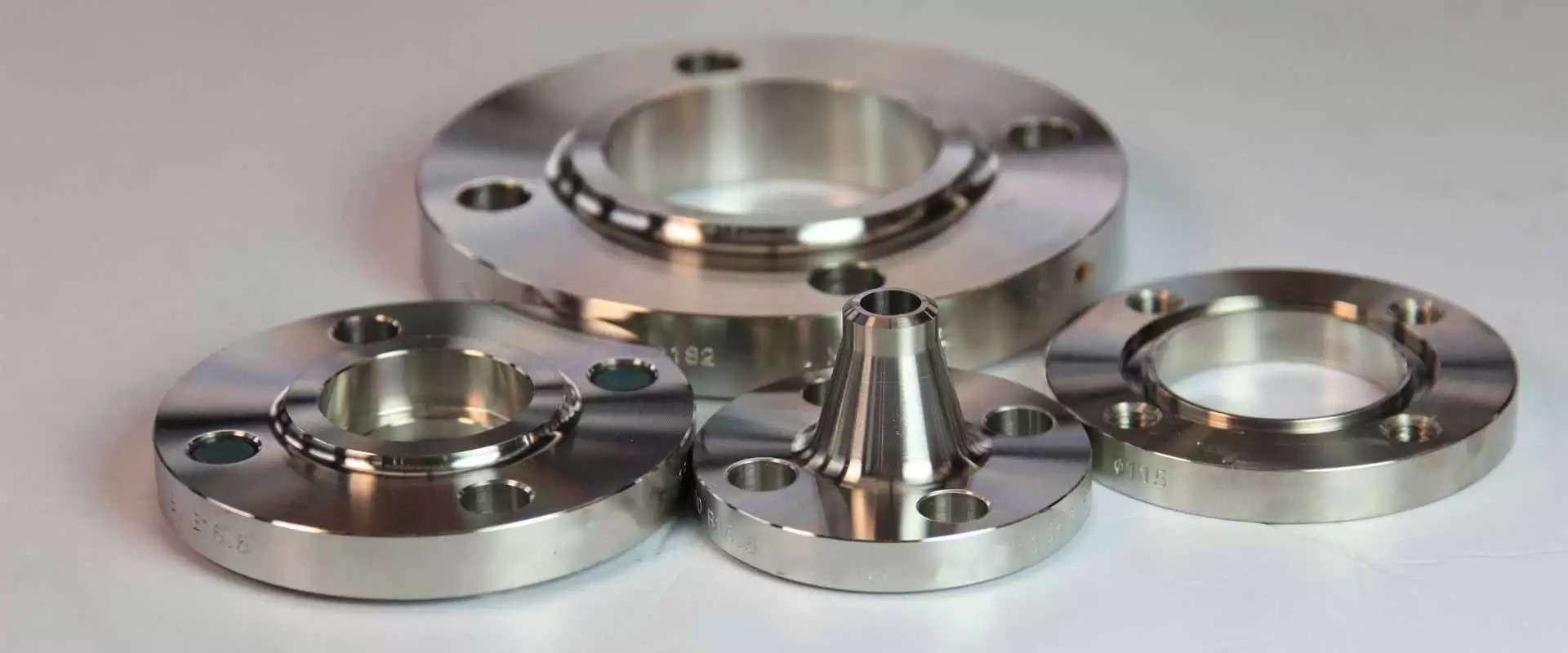
Hastelloy X (UNS N06002) Flanges
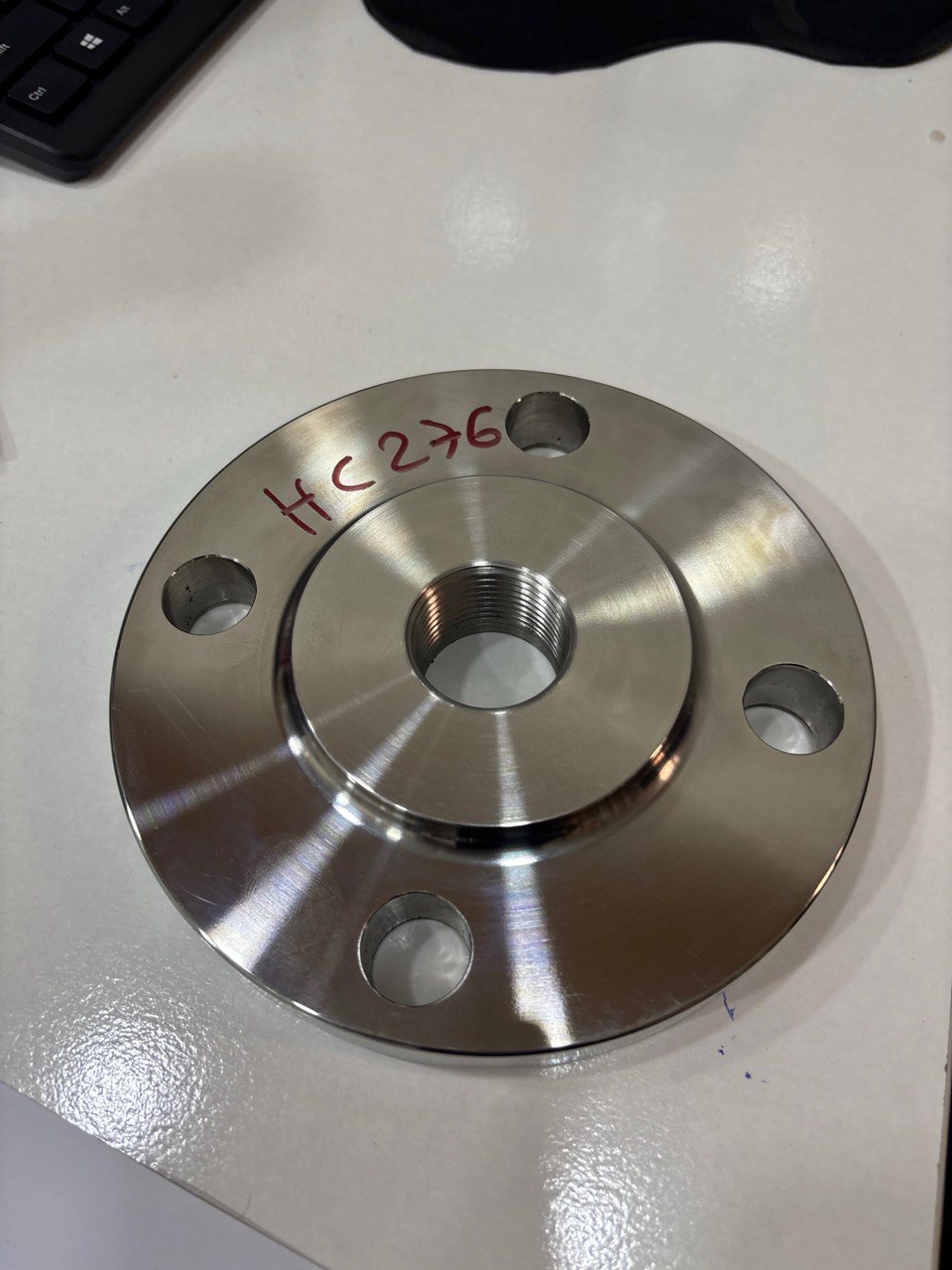
Hastelloy X Threaded Flange (Polished)
Tesco Steel & Engineering manufactures Hastelloy X flanges in all types from weld neck to orifice, Class 150 to 2500 — supplied with EN 10204 3.1 / 3.2 certification, PMI and third-party inspection on request. Explore the wider Hastelloy flange range, the wet-corrosion Hastelloy C276 flanges, and the flange dimension charts.
| Hastelloy X flanges are available in the following specifications: | |
|---|---|
| Material Grade | Hastelloy X / UNS N06002 / W.Nr. 2.4665 (NiCr22Fe18Mo) |
| Alloy Type | Nickel-chromium-iron-molybdenum high-temperature superalloy (solid-solution strengthened) |
| Size | 1/2″ NB to 24″ NB (DN 15 to DN 600); larger to ASME B16.47 |
| Class / Rating | 150#, 300#, 600#, 900#, 1500#, 2500# · 3000#, 6000#, 9000# (socket-weld / threaded) |
| Pressure Ratings | PN 6 – PN 400 (PN6, 10, 16, 25, 40, 64, 100, 160, 250, 320, 400) |
| Material Standards | ASTM B564, ASME SB564, AMS 5754 / AMS 5536; EN designation 2.4665 |
| Dimensional Standards | ASME B16.5, ASME B16.47 (Series A & B), MSS SP-44, DIN EN 1092-1 |
| Flange Types | Weld Neck (WNRF), Slip-On (SORF), Blind, Socket Weld (SWRF), Lap Joint, Threaded / Screwed, Spectacle Blind, Long Weld Neck, Orifice, Plate |
| Flange Faces | Raised Face (RF), Flat Face (FF), Ring Type Joint (RTJ), Tongue & Groove (T&G) |
| Weld Filler | ERNiCrMo-2 / ENiCrMo-2 (AWS A5.14 / A5.11) |
| Testing | PMI, hydrostatic, UT, MT/PT per spec; EN 10204 3.1 / 3.2 |
Hastelloy X balances chromium (oxidation resistance) with molybdenum and tungsten (solid-solution strengthening) on a nickel-iron base. This composition gives it the high-temperature strength, creep resistance and oxidation resistance that define the alloy, rather than the low-temperature acid resistance of the B/C grades.
| Element | Hastelloy X (UNS N06002) |
|---|---|
| Nickel (Ni) | Balance (~47%) |
| Chromium (Cr) | 20.5 – 23.0% |
| Iron (Fe) | 17.0 – 20.0% |
| Molybdenum (Mo) | 8.0 – 10.0% |
| Cobalt (Co) | 0.5 – 2.5% |
| Tungsten (W) | 0.2 – 1.0% |
| Carbon (C) | 0.05 – 0.15% |
| Manganese (Mn) | 1.0% max |
| Silicon (Si) | 1.0% max |
| Mechanical Property (solution annealed, room-temp typical) | Hastelloy X |
|---|---|
| Tensile Strength | 690 – 780 MPa (100–113 ksi) |
| Yield Strength 0.2% | 310 – 380 MPa (45–55 ksi) |
| Elongation | 40 – 50% |
| Max Oxidation-Resistant Temp | ~1200 °C (2200 °F) |
| Density | 8.22 g/cm³ |
| Melting Range | 1260 – 1355 °C |
| Standard | Hastelloy X Designation |
|---|---|
| UNS (USA) | N06002 |
| Werkstoff (Germany) | 2.4665 |
| EN designation | NiCr22Fe18Mo |
| ASTM / ASME | B564 / SB564 (forgings); B435, B572, B619, B622 (other forms) |
| AMS (aerospace) | 5754, 5536 |
| Common names | Hastelloy X, Alloy X, Nickel Alloy X |
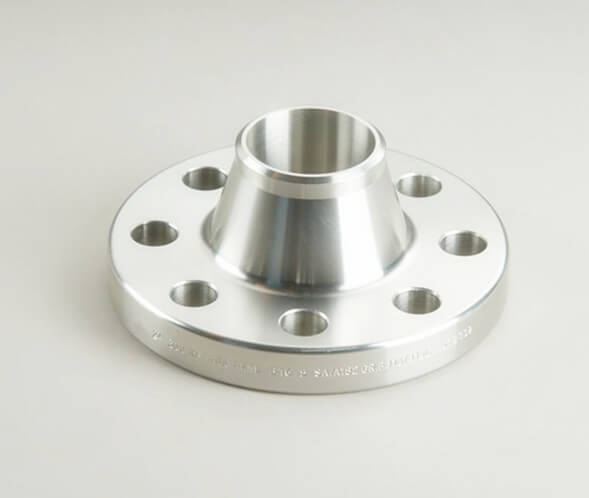
Hastelloy X Weld Neck Flange (WNRF)

Hastelloy X Slip-On Flange (SORF)
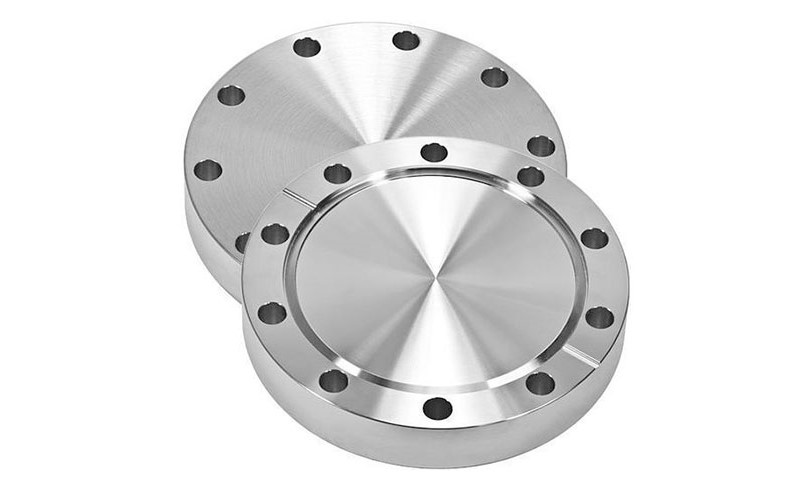
Hastelloy X Blind Flange
| Flange Type | Description & Hastelloy-X-Specific Use |
|---|---|
| Weld Neck (WNRF) | Tapered hub butt-welded to pipe for high-integrity, high-temperature ducting and combustion service; weld with ERNiCrMo-2 filler. |
| Slip-On (SORF) | Fillet-welded over the pipe; used in furnace and hot-gas piping at moderate pressure. |
| Blind | Seals pipe ends and vessel nozzles in furnace, reformer and turbine hardware. |
| Socket Weld (SWRF) | Small-bore (1/2″–2″) instrument and branch connections in high-temperature service. |
| Lap Joint (LJRF) | Used with a Hastelloy X stub end where frequent dismantling is required; economizes on alloy in the backing ring. |
| Threaded (TRFF) | Internal NPT/BSP threads for non-welded connections at lower pressure. |
| Spectacle Blind / Long Weld Neck / Orifice | Isolation spades, nozzle/long-neck and flow-metering flanges in Hastelloy X for furnace and turbine duty. |
| Property | X (N06002) | C276 (N10276) | B2/B3 (N10665/N10675) |
|---|---|---|---|
| Alloy family | Ni-Cr-Fe-Mo (high-temp) | Ni-Mo-Cr (wet-corrosion) | Ni-Mo (wet-corrosion) |
| Primary strength | Oxidation & strength to ~1200°C | Pitting / mixed-acid resistance | Hydrochloric / reducing acids |
| High-temperature use | Excellent | Limited | Limited |
| Wet-acid corrosion use | Limited | Excellent | Excellent (HCl) |
| Typical role | Turbines, furnaces, aerospace | Chemical-process corrosion | HCl & reducing-acid process |
Solid-solution strengthening gives outstanding tensile and creep strength at extreme temperature for hot-gas hardware.
Forms a protective chromium-rich oxide — excellent in hot air and combustion atmospheres up to ~1200°C.
Good resistance to carburizing and reducing atmospheres as well as stress-corrosion cracking.
Readily formed and welded with ERNiCrMo-2 filler — well suited to combustion cans and ducting fabrication.
| Industry | Typical Application |
|---|---|
| Gas Turbines & Aerospace | Combustion cans, transition ducts, flame holders, afterburners, tailpipes |
| Industrial Furnaces | Heat-treatment furnace, muffle and retort flanged connections |
| Petrochemical | High-temperature reformer, cracking and pyrolysis hardware flanges |
| Power Generation | High-temperature ducting and burner flanges |
| Nuclear | High-temperature gas-cooled reactor components |
| Heat-Treating & Sintering | Hot-zone fixtures, ducting and flanged joints |
Made from certified Hastelloy X with PMI verification of Cr, Fe and Mo — full chemistry confirmed on the MTC.
Manufactured to ASTM B564 / ASME B16.5 (AMS on request) in the solution-annealed condition for optimum high-temperature properties.
WNRF, SORF, blind, socket-weld, threaded, lap-joint, spectacle, LWN, orifice and plate — in RF, FF, RTJ and T&G.
EN 10204 3.1 / 3.2 MTC, heat/lot traceability, hydrostatic and third-party inspection on request.
Hastelloy X flange prices reflect the high nickel, chromium and molybdenum content plus forging and machining — it is a premium high-temperature superalloy for turbine, furnace and aerospace service. Tesco Steel & Engineering offers competitive ex-works pricing from Mumbai with full export documentation and material traceability. Click Ask for Quote or message us on WhatsApp at +91 92233 66922 with flange type, size (NB), pressure class, quantity and documentation requirements.
Q1. What is a Hastelloy X flange?
A Hastelloy X flange is a pipe flange made from the nickel-chromium-iron-molybdenum high-temperature superalloy UNS N06002 (W.Nr. 2.4665) — about 47% nickel with ~22% chromium, ~18% iron, ~9% molybdenum and ~1.5% cobalt. Solid-solution strengthened, it offers an exceptional combination of oxidation resistance and high-temperature strength up to about 1200 degrees C, plus good fabricability. Flanges are forged to ASTM B564 and machined to ASME B16.5 / B16.47 dimensions.
Q2. What is the chemical composition of Hastelloy X?
Hastelloy X (UNS N06002) nominal composition: nickel balance (~47%), chromium 20.5–23%, iron 17–20%, molybdenum 8–10%, cobalt 0.5–2.5%, tungsten 0.2–1%, carbon 0.05–0.15%, with manganese and silicon limited. The balanced chromium, molybdenum and tungsten give both oxidation resistance and solid-solution strengthening for high-temperature service.
Q3. What temperature can Hastelloy X flanges handle?
Hastelloy X retains useful strength and outstanding oxidation resistance up to about 1200 degrees C (2200 degrees F), and is widely used for continuous service at 900–1150 degrees C. This high-temperature capability — not wet corrosion — is its defining strength, which is why it is a standard material for gas-turbine combustion hardware and industrial furnace components.
Q4. How is Hastelloy X different from Hastelloy C276 and the B grades?
Hastelloy X is a high-temperature alloy, optimized for oxidation resistance and strength in hot gas and air up to ~1200 degrees C. The C grades (C276, C22, C2000, C4) and B grades (B2, B3) are wet-corrosion alloys for acids and chloride solutions at much lower temperatures. So X is chosen for furnace, turbine and combustion service, while the B and C grades are chosen for chemical-process corrosion. They are not interchangeable.
Q5. What standards apply to Hastelloy X flanges?
Hastelloy X flanges are forged to ASTM B564 (UNS N06002) and machined to ASME B16.5 (1/2 inch to 24 inch) or ASME B16.47 / MSS SP-44 for larger sizes, with EN 1092-1 for PN-rated flanges. The European designation is W.Nr. 2.4665 / NiCr22Fe18Mo, and aerospace material is covered by AMS 5754 / AMS 5536. Material is supplied with EN 10204 3.1 / 3.2 certification.
Q6. Can Hastelloy X flanges be welded?
Yes. Hastelloy X has good weldability by GTAW (TIG), GMAW and SMAW using matching ERNiCrMo-2 / ENiCrMo-2 filler. It is readily fabricated and welded for combustion and furnace hardware. For service involving prolonged exposure at intermediate temperatures, welding procedures should control heat input to limit carbide precipitation.
Q7. Does Hastelloy X resist oxidation and carburization?
Yes. Hastelloy X has excellent resistance to oxidation in hot air and combustion atmospheres up to ~1200 degrees C, forms a protective chromium-rich oxide, and offers good resistance to carburizing and reducing atmospheres as well as to stress-corrosion cracking. This broad high-temperature atmospheric resistance is central to its use in turbines and furnaces.
Q8. What are the mechanical properties of Hastelloy X?
Typical Hastelloy X properties at room temperature in the solution-annealed condition: tensile strength about 690–780 MPa (100–113 ksi), yield strength about 310–380 MPa (45–55 ksi), elongation about 40–50%, density 8.22 g/cm³. Its real value, however, is the strength and creep resistance it retains at elevated temperature.
Q9. What industries use Hastelloy X flanges?
Hastelloy X flanges are used in gas-turbine engines (combustion cans, transition ducts, flame holders, afterburners), aerospace and aircraft components, industrial furnaces and heat-treatment equipment, petrochemical high-temperature reformer and cracking hardware, and nuclear and power-generation high-temperature ducting — anywhere strength and oxidation resistance at extreme temperature are required.
Q10. Are Hastelloy X flanges supplied with material test certificates?
Yes. Every Hastelloy X flange is supplied with EN 10204 3.1 (or 3.2) mill test certificates confirming chemistry, mechanical properties and heat/lot traceability, with PMI, hydrostatic testing and third-party inspection on request. Tesco Steel & Engineering is an ISO 9001:2015 certified manufacturer and exporter from Mumbai, India.