

'SHAPING INDUSTRIES WITH THE FINEST STEEL'
'SHAPING INDUSTRIES WITH THE FINEST STEEL'
Tesco Steel & Engineering manufactures 5 way (5-valve) instrumentation manifold valves with a coplanar direct-mount interface and twin-ferrule tube-fitting connections, built to isolate, equalize, vent and calibrate differential-pressure (DP) transmitters. Forged from SS316/316L and special alloys, rated up to 6000 psi, with NPT, BSP, socket-weld, flanged and compression tube ends. Each unit is hydro- and seat-tested, PMI-verified and traceable to EN 10204 3.1. Browse our full manifold valve range and instrumentation tube fittings. ISO 9001:2015 certified — made in Maharashtra, India and exported worldwide.
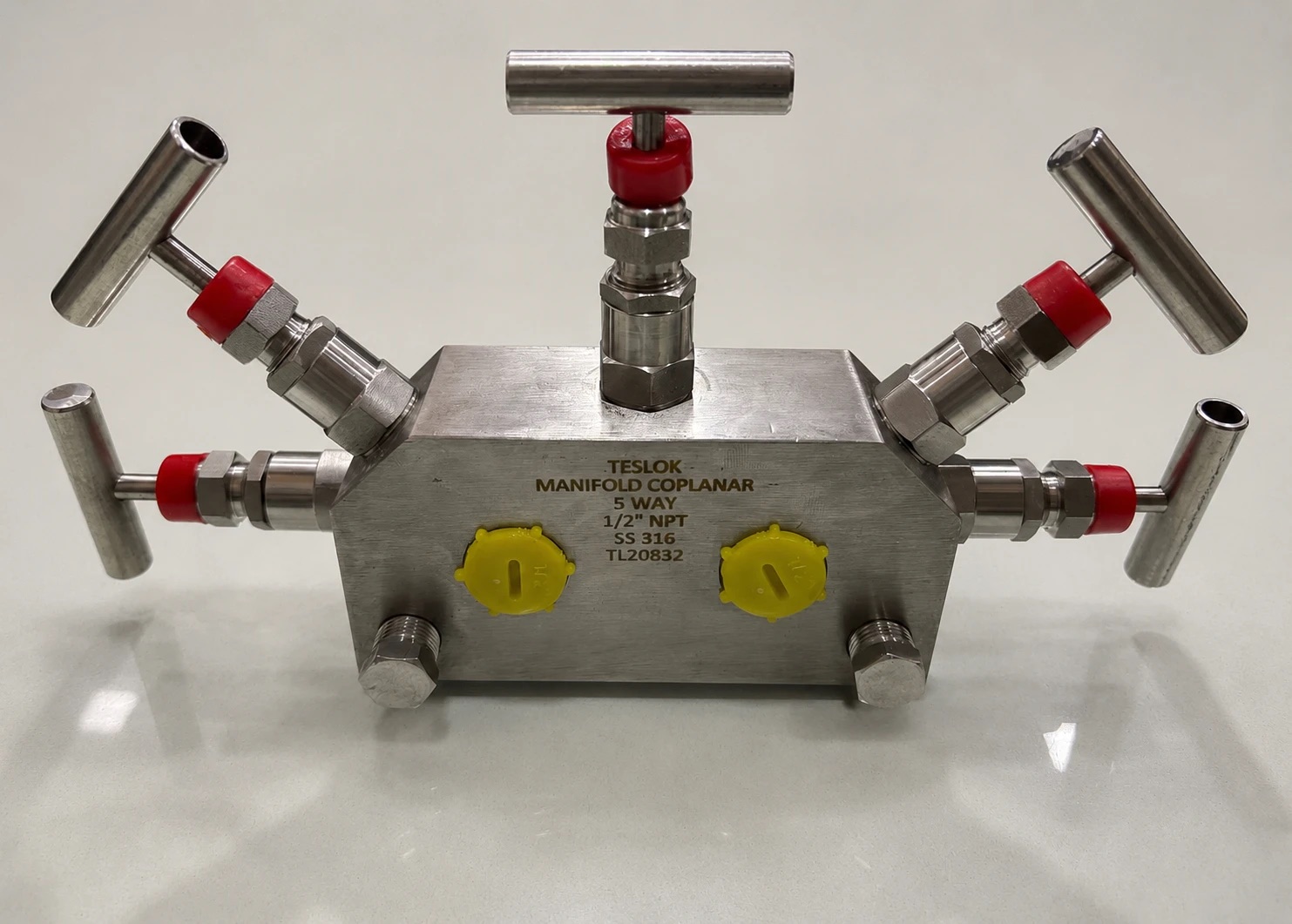
5-Way Coplanar Manifold Valve — SS 316, 1/2″ NPT (2 block + 1 equalize + 2 vent/calibration)
The 5 way manifold valve is the workhorse interface between a process impulse system and a differential-pressure transmitter. By integrating two isolation valves, one equalizing valve and two vent/calibration valves into a single forged body, it lets an instrumentation engineer commission, zero-check, vent, drain and calibrate a DP transmitter in place — without breaking impulse lines or removing the instrument. The coplanar configuration takes this further: the manifold bolts straight onto the transmitter’s coplanar process flange, eliminating impulse tubing between manifold and cell and cutting weight, leak paths and installation time.
Tesco’s TES-LOK manifolds are machined from forged SS316/316L bar (and special alloys) for full pressure integrity and traceability. They are specified by procurement managers, EPC contractors and instrumentation engineers across oil & gas, petrochemical, power and marine projects, and pair naturally with our needle valves, double block & bleed valves and instrumentation gauge valves.
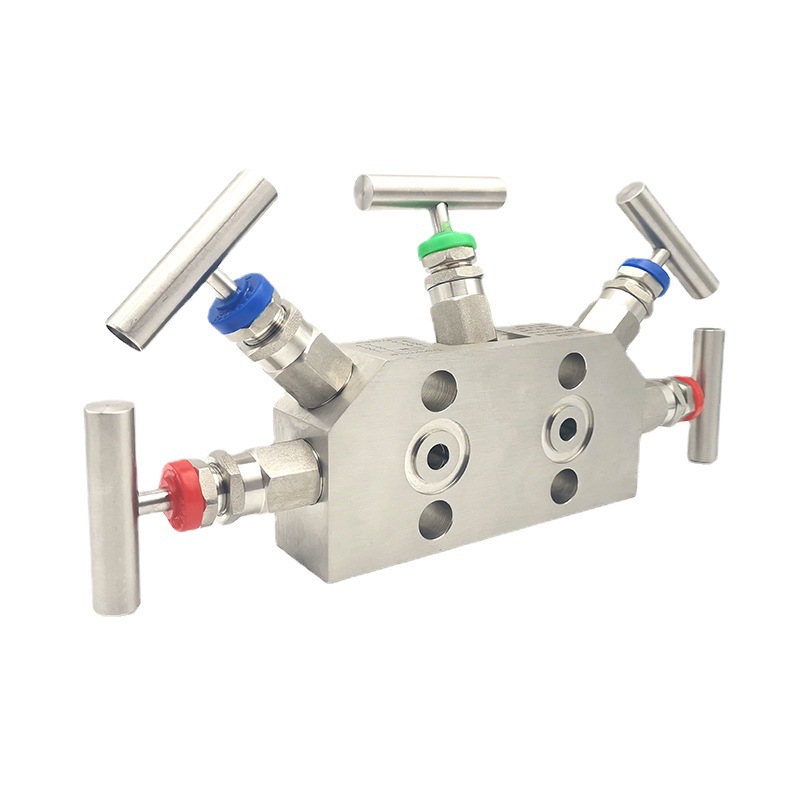
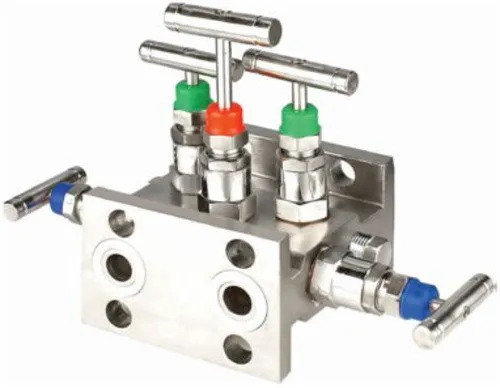
A DP transmitter measures the difference between a high-pressure (HP) and a low-pressure (LP) impulse line to infer flow, level or filter condition. The 5-valve manifold sits between those impulse lines and the transmitter cell and controls every connection to it:
| Valve | Function |
|---|---|
| HP block (isolate) | Isolates the high-pressure impulse line from the transmitter’s HP side. |
| LP block (isolate) | Isolates the low-pressure impulse line from the transmitter’s LP side. |
| Equalizing valve | Connects the HP and LP sides to give zero differential for zero-setting and to protect the cell from one-sided overpressure during start-up/shutdown. |
| HP vent / calibration valve | Vents or drains the HP side, or connects a calibration reference / test gauge. |
| LP vent / calibration valve | Vents or drains the LP side, or connects a calibration reference / test gauge. |
Coplanar (direct-mount) design: a coplanar manifold bolts directly to the coplanar process flange at the base of the transmitter using the IEC 61518 bolt pattern and port spacing. Because there is no impulse tubing between manifold and cell, the assembly is close-coupled, lighter, faster to install and has far fewer potential leak points than a remote, tube-connected arrangement. The process side accepts threaded or twin-ferrule tube-fitting connections to the impulse lines.
Following the correct valve sequence is essential to avoid one-sided overpressure on the DP cell:
| Parameter | Specification |
|---|---|
| Brand | TES-LOK (Tesco Steel & Engineering) |
| Valve Type | 5-valve instrumentation manifold (2 block + 1 equalize + 2 vent/calibration) |
| Body Design | Forged bar / block; coplanar direct-mount or remote (inline) mounting |
| Mounting | Coplanar direct-mount to DP transmitter per IEC 61518 (3-/4-bolt); remote/pipe-mount option |
| Material | SS 316 / 316L (standard), SS 304, Monel 400, Inconel 625/825, Hastelloy C276, Duplex 2205, Super Duplex 2507, Alloy 20, Carbon Steel (A105), Brass, Titanium |
| Pressure Rating | Up to 6000 psi (413 bar) for stainless steel at ambient; 300 / 1000 / 3000 psi classes for brass (derates with temperature) |
| Temperature Rating | PTFE packing: −40°C to +232°C (450°F); graphite / Grafoil packing for higher temperatures |
| Thread Standards | NPT (ASME B1.20.1), BSPT / R (ISO 7-1), BSPP / G (ISO 228) |
| Tube Size | 1/4″, 3/8″, 1/2″ OD (imperial); 6, 8, 10, 12 mm OD (metric) twin-ferrule compression |
| End Connection | NPT / BSP (female & male), socket weld, butt weld, flanged, coplanar flange + tube fittings |
| Stem | Non-rotating ball-tip stem, rolled threads, back-seating, anti-blowout |
| Seat | Integral metal-to-metal or PTFE soft seat |
| Packing | PTFE (standard) or graphite / Grafoil (high temperature), adjustable gland |
| Bonnet | Bolted; OS&Y option |
| Testing Standard | Hydrostatic shell & seat test to API 598 / BS EN 12266 / MSS SP-99 |
| Applicable Standards | IEC 61518, ASME B1.20.1, ISO 228 / ISO 7-1, ASTM A182 / A479, NACE MR0175 / ISO 15156, PED 2014/68/EU |
| Available Ports | 1/4″ and 1/2″ process & instrument connections (typical) |
| Certification | EN 10204 3.1 MTC, PMI, ISO 9001:2015; NACE, PED & third-party on request |
| Customization | Material, port layout, mounting, packing, seat, NACE sour service, O₂ cleaning, tagging |
Material is selected for corrosivity, pressure, temperature and any sour-service requirement. Every body and trim item is supplied with mill traceability (EN 10204 3.1) and PMI on request:
| Material | Typical Grade / UNS | Best suited to |
|---|---|---|
| Stainless 316 / 316L | UNS S31600 / S31603, ASTM A182 F316 | Default — chloride & general corrosion, offshore, NACE option |
| Stainless 304 / 304L | UNS S30400 / S30403 | General, non-chloride service; lower cost |
| Monel 400 | UNS N04400 | Seawater, hydrofluoric acid, marine |
| Inconel 625 / 825 | UNS N06625 / N08825 | High temperature, sour & chloride media |
| Hastelloy C276 | UNS N10276 | Aggressive acids, chemical & process plants |
| Duplex / Super Duplex | 2205 (S31803/S32205), 2507 (S32750) | High strength + chloride resistance, offshore |
| Alloy 20 | UNS N08020 | Sulphuric acid & chemical service |
| Carbon Steel | ASTM A105 | Non-corrosive utility service |
| Brass | CW617N / CZ132 | Low-pressure pneumatic & utility lines |
| Titanium | Gr. 2 (UNS R50400) | Seawater, chlorine, highly oxidising media |
The transmitter side mounts to the coplanar / flanged interface; the process side accepts threaded, welded or compression tube-fitting connections to suit the impulse lines and panel:
| Connection | Standard / Size | Use |
|---|---|---|
| NPT (F / M) | ASME B1.20.1 · 1/4″, 1/2″ | Most common process & instrument thread |
| BSPT (R) / BSPP (G) | ISO 7-1 / ISO 228 · 1/4″, 1/2″ | European & export instrument threads |
| Twin-ferrule tube fittings | 1/4″, 3/8″, 1/2″ / 6, 8, 10, 12 mm OD | Gas-tight, vibration-proof impulse-line connections |
| Socket weld / Butt weld | To pipe schedule | Permanent, high-integrity process tie-in |
| Flanged | To project spec | Larger / high-pressure process connections |
| Coplanar flange (transmitter) | IEC 61518 (3-/4-bolt) | Direct-mount to DP transmitter |
| Standard | Scope / relevance |
|---|---|
| IEC 61518 | Mating dimensions between DP / pressure transmitters and flanged manifolds — ensures coplanar mount compatibility |
| ASME B1.20.1 | NPT taper pipe threads |
| ISO 7-1 / ISO 228 | BSPT (taper) and BSPP (parallel) pipe threads |
| ASTM A182 / A479 | Stainless forgings and bar for valve bodies and trim |
| NACE MR0175 / ISO 15156 | Materials & hardness limits for sour (H₂S) service |
| MSS SP-99 | Instrument (gauge / manifold) valves |
| API 598 / BS EN 12266 | Valve pressure (shell) and seat-leak testing |
| PED 2014/68/EU | European Pressure Equipment Directive — CE marking for EU export |
| EN 10204 3.1 | Material test certificate with traceable heat / lot numbers |
| Feature | 3-Way (3-valve) | 5-Way (5-valve) |
|---|---|---|
| Valves | 2 block + 1 equalize | 2 block + 1 equalize + 2 vent/calibration |
| In-place calibration | No dedicated vent/test ports | Yes — vent, drain & calibrate without removing the transmitter |
| Venting / draining | External | Built-in vent valves on both sides |
| Typical use | Basic DP isolation & zero-check | DP service needing on-line calibration & test connections |
| Size / cost | Smaller, lower cost | Larger, more functionality |
See our matching 3-way coplanar manifold and 2-way manifold valve for lighter-duty isolation.
| Feature | Coplanar Direct-Mount | Conventional / Remote |
|---|---|---|
| Mounting | Bolts to transmitter coplanar flange (IEC 61518) | Pipe / tube mounted, remote from transmitter |
| Impulse tubing | Eliminated between manifold & transmitter | Required |
| Leak points | Fewer | More joints & fittings |
| Weight / footprint | Compact, close-coupled | Bulkier installation |
| Install time | Faster | Slower |
| Best for | Space, weight & reliability | High-temperature or vibration isolation |
| Aspect | Needle Valve | Manifold Valve |
|---|---|---|
| Function | Single isolation / fine throttling point | Integrated multi-valve block (block / equalize / vent) |
| Ports | One inlet / one outlet | Multiple ports in one forged body |
| Typical job | Gauge isolation, flow regulation | DP transmitter isolation, equalizing & calibration |
| Replaces | — | Several discrete valves, nipples & fittings |
For single-point isolation see our needle valves and high-pressure needle valves.
| Aspect | Twin-Ferrule Tube Fittings | Threaded (NPT / BSP) |
|---|---|---|
| Seal | Mechanical twin-ferrule grip, gas-tight | Thread + sealant |
| Vibration | Excellent resistance | Can loosen over time |
| Make / break | Easily re-made, reusable | Reusable; thread wear over cycles |
| Best for | Impulse lines & instrument tubing | Process connections |
5-way coplanar manifolds are used wherever differential pressure is measured for flow, level or filtration:
| Industry | Typical DP service |
|---|---|
| Oil & Gas (upstream / midstream) | Wellhead & separator DP flow, orifice metering, level on vessels |
| Petrochemical & Chemical | Column / reactor DP, filter & strainer monitoring, flow control |
| Power Generation | Boiler drum level, feedwater & condensate DP flow |
| Marine & Offshore | Platform & ship instrument panels, NACE / duplex sour service |
| Hydrogen & LNG | Cryogenic & high-purity DP measurement, leak-tight tube ends |
| Water & Wastewater | Filter DP, flow & level transmitters |
| Instrumentation Panels / Automation | Skid-mounted DP loops, close-coupled transmitter packages |
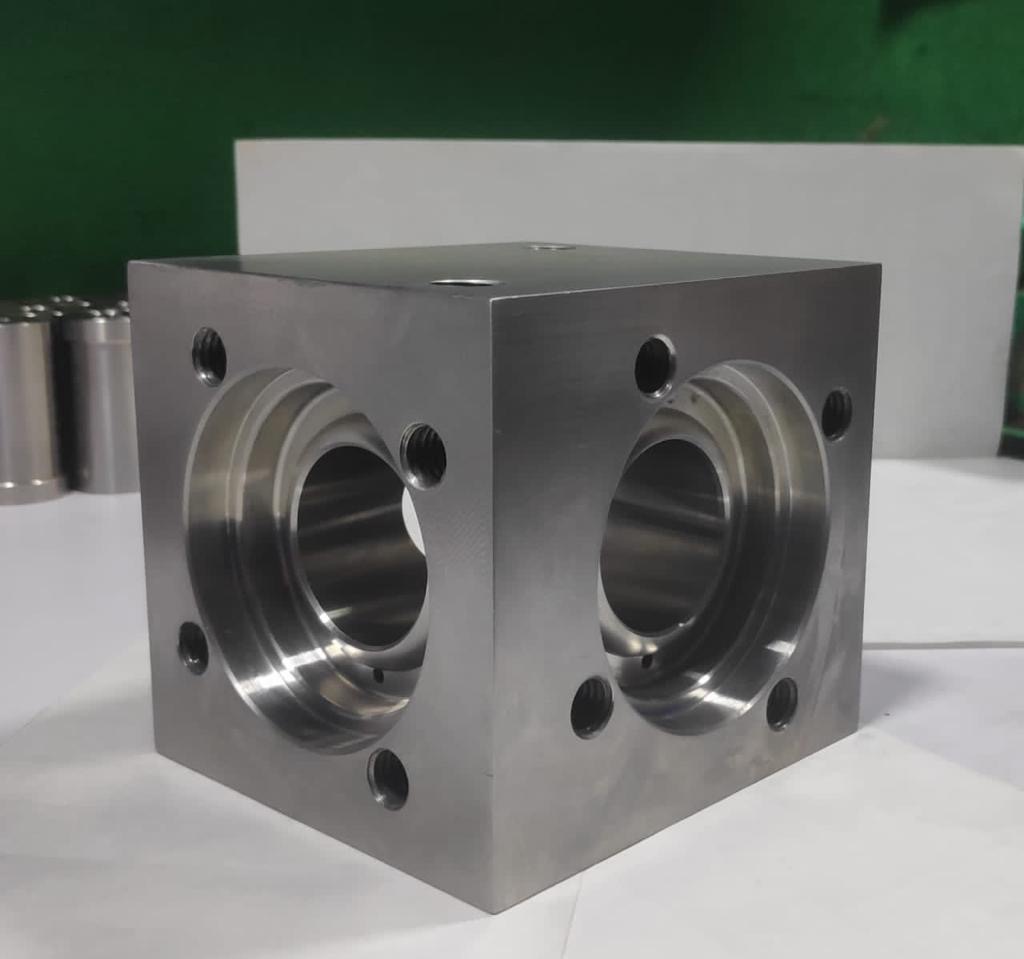
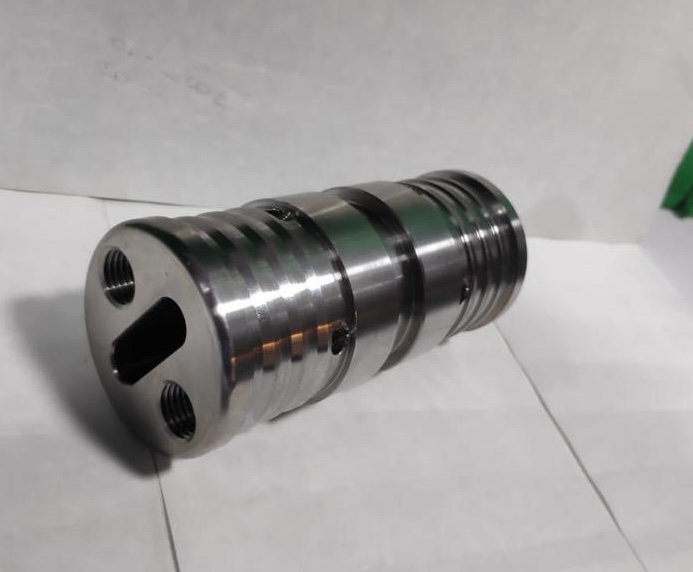
Every 5-way manifold is inspected and tested before despatch. Our quality system is ISO 9001:2015 certified, with full material traceability and third-party inspection welcomed:
To turn your enquiry around quickly and accurately, please include:
As an established manifold valve manufacturer and exporter from Mumbai, India, Tesco Steel & Engineering ships to oil & gas, petrochemical, power and marine projects worldwide — the Middle East, Europe, Africa, South-East Asia and the Americas. We offer custom manufacturing to drawing, NACE and special-alloy builds, oxygen-service cleaning, project tagging and documentation, and private-label / OEM supply for valve brands and instrument packagers. Sea-worthy export packing and consolidated shipments are standard.
2/3/5-way manifolds, needle, gauge and block & bleed valves — engineered for DP transmitter and impulse-line service.
Bodies machined from forged bar with 3.1 traceability and PMI — SS316, Monel, Inconel, Hastelloy, duplex, Alloy 20 and more.
Hydrostatic shell and seat-leak testing on every unit, NACE option, and third-party inspection (LR/BV/DNV/SGS/TÜV/IBR) welcomed.
Made to drawing, private-label/OEM supply, project tagging and sea-worthy export packing — ISO 9001:2015, from Mumbai, India.
What is a 5-way manifold valve?
A 5-way (5-valve) manifold valve is a compact instrument manifold that integrates five valves in a single forged block: two block/isolation valves, one equalizing valve and two vent/calibration valves. It isolates a differential-pressure (DP) transmitter from the process, equalizes the high and low sides for zero-setting, and lets the transmitter be vented, drained or calibrated in place. It replaces several separate valves and fittings, cutting leak paths, weight and installation time.
How does a coplanar manifold work?
A coplanar manifold bolts directly onto the coplanar process flange at the base of a DP transmitter, so there is no impulse tubing between the manifold and the instrument. The two block valves connect the high- and low-pressure impulse lines to the cell, the equalizing valve links both sides, and the vent/calibration valves allow venting and test connections. Direct mounting follows IEC 61518 spacing and gives a close-coupled, leak-tight, low-weight assembly.
What is the difference between a 3-way and 5-way manifold?
A 3-way manifold has three valves — two block valves and one equalizing valve — enough to isolate a DP transmitter and equalize it for zero-setting. A 5-way manifold adds two vent/calibration valves, so the transmitter can be vented, drained and calibrated in place without disturbing the impulse lines or removing the instrument. Choose a 3-way for basic isolation and a 5-way when on-line calibration and venting are required.
Why use a 5-valve manifold instead of separate valves?
Integrating five functions in one forged block removes multiple threaded joints, tube fittings and pipe nipples, which are the usual leak and emission points in an impulse system. It saves weight and panel space, speeds installation, and gives a repeatable, factory-tested assembly. For DP measurement it also enforces the correct isolate-equalize-vent sequence, protecting the transmitter cell from one-sided overpressure during start-up and shutdown.
What does each valve on a 5-way manifold do?
On a typical 5-valve manifold, the high-pressure and low-pressure block valves isolate the transmitter from the two impulse lines; the equalizing valve connects the high and low sides to give zero differential for zero-checking and to protect the cell; and the two vent/calibration valves let each side be vented, drained or connected to a calibration reference or test gauge. Exact configurations can vary by design.
What is the correct operating sequence for a DP transmitter manifold?
To put a DP transmitter into service, start with both block valves closed and the equalizing valve open. Open the high-pressure block valve slowly to pressurise both sides of the cell, then close the equalizing valve, then open the low-pressure block valve — the transmitter now reads true differential pressure. To remove it, open the equalizing valve first, then close the low- and high-pressure block valves and vent. This protects the cell from one-sided overpressure.
What pressure ratings are available?
Stainless-steel 5-way manifolds are commonly rated up to 6000 psi (about 413 bar) at ambient temperature, with brass versions in lower 300, 1000 and 3000 psi classes. The allowable working pressure derates as temperature rises and depends on body material, seat and packing. Exact ratings are confirmed against the body material and service conditions on each order, and higher classes are available depending on design and application.
What temperature range do 5-way manifolds handle?
Temperature capability is set mainly by the packing and seat. Standard PTFE packing suits roughly −40°C to +232°C (450°F); graphite/Grafoil packing extends service to higher temperatures for steam and hot hydrocarbon duties. Soft (PTFE) seats give bubble-tight shut-off at moderate temperatures, while metal seats suit higher temperatures. The correct packing and seat are selected for your process temperature.
Why choose SS316 for manifold valves?
SS316/316L is the default because its molybdenum content gives strong resistance to chloride pitting, offshore and marine atmospheres, and a wide range of process media, while keeping good strength and weldability. It carries EN 10204 3.1 traceability and can be supplied to NACE MR0175 for sour service. For more aggressive media, higher alloys such as Monel, Inconel, Hastelloy, duplex or Alloy 20 are used.
What materials are available?
Bodies and trim are available in SS316/316L (standard) and SS304, plus Monel 400, Inconel 625/825, Hastelloy C276, duplex 2205 and super duplex 2507, Alloy 20, titanium, carbon steel (A105) and brass. Material is selected for the corrosivity, pressure, temperature and any sour-service (NACE MR0175/ISO 15156) requirement, and supplied with 3.1 material test certificates and PMI on request.
What end connections and tube sizes are offered?
Process and instrument connections are available as NPT, BSPT (R) and BSPP (G) threads — male or female — and as socket-weld, butt-weld or flanged ends, plus twin-ferrule compression tube fittings in 1/4″, 3/8″ and 1/2″ OD and 6, 8, 10 and 12 mm OD tube. The transmitter side mounts to the coplanar/flanged interface per IEC 61518. Connection type and size are made to your impulse-line and transmitter requirements.
What standards apply to manifold valves?
Relevant standards include IEC 61518 for the mating dimensions between DP/pressure transmitters and manifolds, ASME B1.20.1 for NPT threads, ISO 7-1/ISO 228 for BSP threads, ASTM A182/A479 for stainless forgings and bar, NACE MR0175/ISO 15156 for sour service, MSS SP-99 for instrument valves, and API 598 / BS EN 12266 for pressure testing. CE/PED 2014/68/EU compliance is available for European export.
Are 5-way manifolds suitable for sour (NACE / H2S) service?
Yes. For wet H₂S (sour) service the manifold is supplied to NACE MR0175 / ISO 15156, using qualified materials and controlled hardness (typically not exceeding 22 HRC for 316), with hardness testing and 3.1 certification. This is standard for upstream oil and gas, offshore and refinery DP measurement where hydrogen sulphide is present.
How are manifold valves tested?
Every manifold is hydrostatically shell-tested for body strength and seat-leak tested for tightness, typically to API 598 / BS EN 12266. Inspection also covers positive material identification (PMI), dimensional and thread/port gauging, hardness (including NACE), surface finish and functional operation of each valve. Material traceability is by EN 10204 3.1 certificates and heat-number marking, and third-party inspection (LR, BV, DNV, SGS, TÜV, IBR) is welcomed.
Can the manifold direct-mount to a Rosemount / coplanar transmitter?
Yes. Coplanar 5-way manifolds are designed to bolt directly to coplanar-style DP transmitters — for example the Rosemount 3051C and equivalent coplanar instruments — using the IEC 61518 bolt pattern and process spacing. This eliminates the impulse tubing between manifold and transmitter and creates a compact, close-coupled assembly. Confirm the transmitter make, model and flange pattern when ordering.
What is the difference between coplanar and remote mounting?
A coplanar (direct-mount) manifold bolts straight onto the transmitter flange, removing the tubing between manifold and instrument, cutting leak points and weight and speeding installation. A conventional remote (inline/pipe-mounted) manifold sits away from the transmitter and is joined by impulse tubing, which adds joints, weight and measurement lag. Direct-mount coplanar is preferred where space, weight and reliability matter; remote mounting suits high-temperature or vibration isolation needs.
Tube fittings or threaded ends — which should I choose?
Twin-ferrule compression tube fittings give a gas-tight, vibration-resistant, easily re-made connection that suits instrument impulse tubing, while tapered NPT/BSP threads with sealant are common for process connections. Tube fittings reduce the risk of leaks under vibration and thermal cycling; threaded ends are simple and widely standardised. Many manifolds combine a threaded process side with tube-fitting instrument connections.
Which industries use 5-way coplanar manifolds?
5-way coplanar manifolds are used wherever differential pressure is measured for flow, level or filtration: oil and gas (upstream, refining, pipelines), petrochemical and chemical plants, power generation, marine and offshore platforms, hydrogen and LNG, water and wastewater treatment, and instrumentation panels and process-automation skids. They suit any DP transmitter installation needing isolation, equalizing and in-place calibration.
Can you customize or private-label (OEM) manifolds?
Yes. Manifolds are made to order — body material, port arrangement, mounting pattern, thread and tube sizes, seat and packing, NACE compliance, oxygen-service cleaning, special tagging and certification are all configurable. We also manufacture to customer drawings and offer private-label / OEM supply for valve brands and instrument packagers, with consistent quality and traceability.
What information do you need to quote, and do you export?
To quote we need the manifold type (3/5-valve) and mounting (coplanar or remote), the transmitter make/model and flange pattern, body material and any NACE requirement, the process and instrument connection types and sizes, the service pressure and temperature, packing/seat preference, quantity, tagging and certification (3.1, NACE, PED) and any third-party inspection. Tesco Steel & Engineering is ISO 9001:2015 certified and exports worldwide.