

'SHAPING INDUSTRIES WITH THE FINEST STEEL'
'SHAPING INDUSTRIES WITH THE FINEST STEEL'
Tesco Steel & Engineering manufactures WNRF flanges (weld neck raised face flanges) from 1/2″ NB to 56″ NB — the flange of choice for high-pressure, high-temperature and critical piping. We forge and machine to ASME B16.5 Class 150–2500, ASME B16.47, EN 1092-1 Type 11, DIN, BS, JIS and API 6A, in every material family we stock: carbon steel A105, LTCS, stainless steel, 254 SMO, 904L, duplex & super duplex, alloy steel F1–F91, Monel, Inconel, Hastelloy, titanium, copper nickel and bimetal clad. Bores matched to your pipe schedule, EN 10204 3.1/3.2 certified. ISO 9001:2015, made in Mumbai, India — exported worldwide.
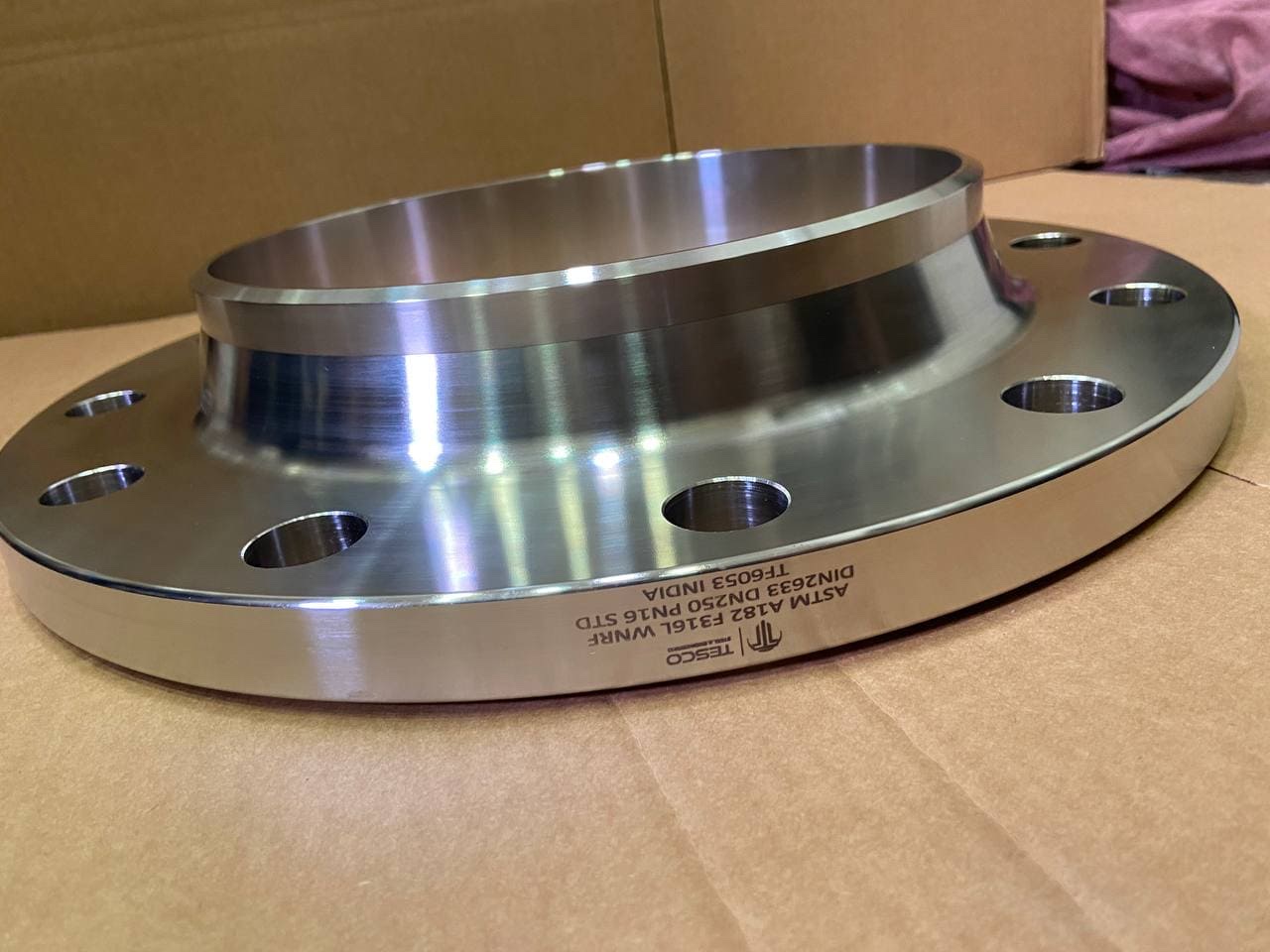
Stainless Steel A182 F316L WNRF Flange — DN250 PN16 (DIN 2633), Laser-Marked
Two design features do the work. The tapered hub transfers pressure and bending stress gradually from the flange ring into the pipe wall, instead of dumping it at a single weld line — which is why weld neck flanges outlast every other type under fatigue, vibration and thermal cycling. And because the bore is machined to match the mating pipe schedule, flow passes through the joint with no step, no turbulence and no erosion pocket, and there is no high stress concentration at the base of the hub.
The raised face (RF) itself is a machined pad, serrated with a concentric or spiral groove, that stands 1.6 mm proud of the flange face on Class 150 and 300, and 6.35 mm on Class 400 through 2500. Compressing the gasket over this smaller, controlled area multiplies the seating stress the bolts can generate — the reason RF facings hold pressures that a plain flat face cannot. The same body can alternatively be faced flat (WNFF) or grooved for a ring joint (WNRTJ); see our weld neck flanges overview for the full family.
| WNRF Flanges are available in the following specifications: | |
|---|---|
| Size | 1/2"NB to 56"NB |
| Class | 150#, 300#, 400#, 600#, 900#, 1500#, 2500# |
| Sch (Schedule) | XS, XXS, STD & Schedule 20, 40, 80, 160 |
| Pressure Ratings | PN 2.5 - PN 400 |
| Stainless Steel WNRF Flanges | ASTM A 182 F - 304 / 304H / 304L / 316 / 316H / 316L / 316Ti, 309, 310, 317L, 321, 347, 904L |
| Duplex Steel WNRF Flanges | ASTM A 182 - F 51, F 53, F 55 |
| Alloy Steel WNRF Flanges | ASTM A 182 - F5, F9, F11, F21, F22 & F91 |
| Carbon Steel WNRF Flanges | ASTM A 105 |
| Low Temp. Carbon Steel Flanges (LTCS WNRF Flanges) | A 350 LF2 |
| Copper Nickel (Cu-Ni) WNRF Flanges | C70600, 90/10, C71500, 70/30, C71640 |
| Nickel WNRF Flanges | UNS N02200, UNS N02201 |
| Monel WNRF Flanges | UNS N04400, UNS N05500, Alloy 20 |
| Inconel WNRF Flanges | UNS N06600, UNS N06601, UNS N06625, UNS N08800, UNS N08810, UNS N08825 |
| Hastelloy WNRF Flanges | UNS N10276, UNS N06022, UNS N10665, UNS N06455 |
| Titanium WNRF Flanges | Gr. 1, Gr. 2, Gr. 3, DTH 3.7035, DTH 3.7055 |
| Other Services | Hot Dip Galvanized (GI) WNRF Flanges Sand Blasting on WNRF Flanges Shot Peening on WNRF Flanges Epoxy Coating on WNRF Flanges FBE Coating on WNRF Flanges |
Under ASME B16.5 the raised face is 1.6 mm (1/16″) high on Class 150 and 300 and 6.35 mm (1/4″) high on Class 400, 600, 900, 1500 and 2500 — and take care when stacking dimensions, because published flange thickness includes the 1.6 mm face but excludes the 6.35 mm one. European EN 1092-1 Type 11 and DIN weld neck flanges carry a shallower raised face, typically 2 mm. We machine the face to the standard stock finish — a serrated concentric or spiral groove of Ra 3.2–6.3 µm (125–250 µin AARH) that bites into soft and spiral-wound gaskets — or to a smooth finish where your gasket type demands it.
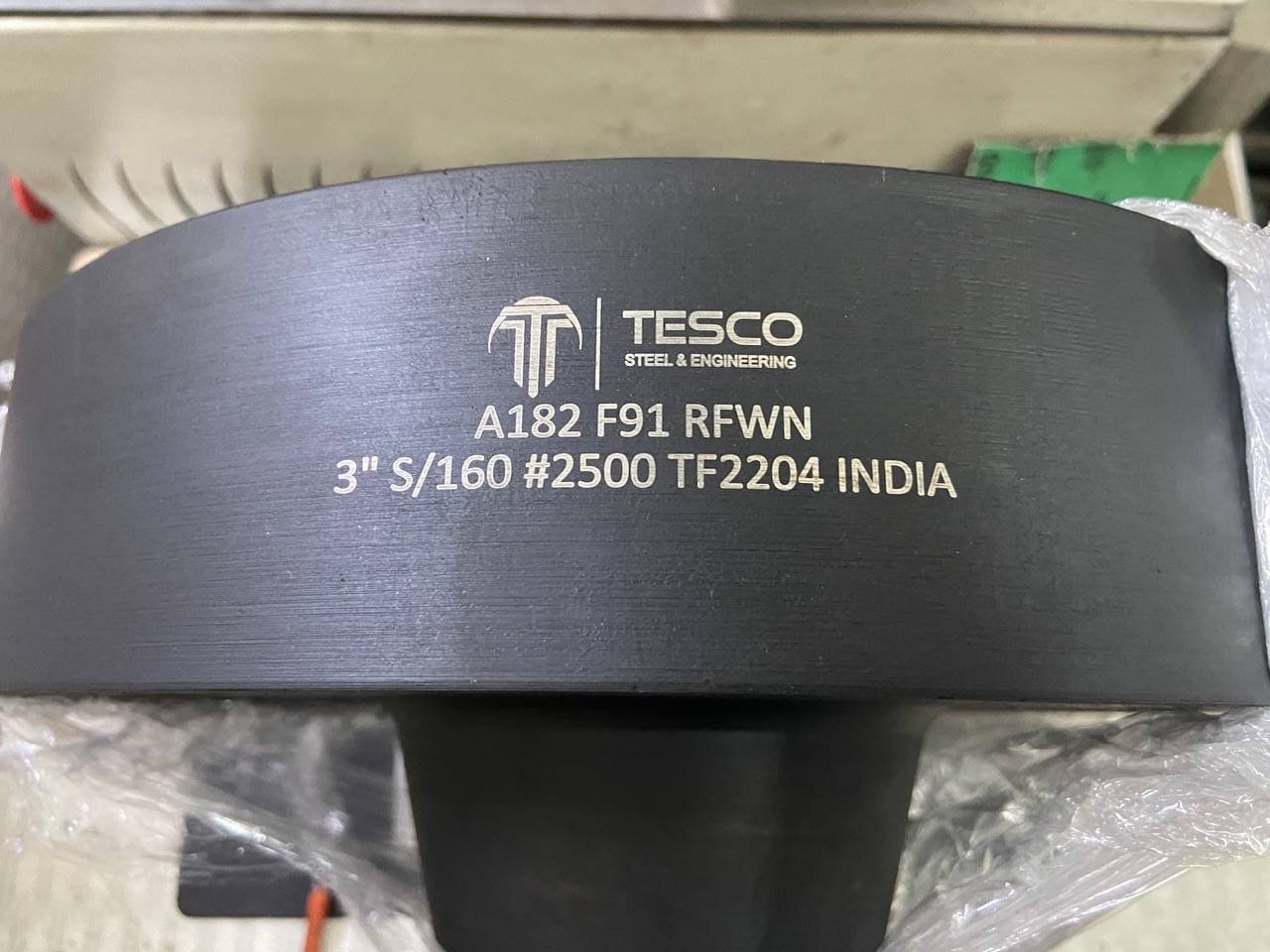
Alloy Steel A182 F91 RFWN Flange — 3″ Sch 160, Class 2500, Black-Coated
WNRF flanges are forged in every material family from our range. The grade is driven by the service — A105 for general hydrocarbon and steam, LF2 for sub-zero, 316L and duplex for chlorides, F11/F22/F91 for high-temperature steam, and nickel alloys where the chemistry gets aggressive:
| Material Family | Grades for WNRF Flanges |
|---|---|
| Carbon Steel | ASTM A105 |
| LTCS (Low-Temperature Carbon Steel) | ASTM A350 LF2, LF3 |
| Stainless Steel | ASTM A182 F304/304L, F316/316L, F321, F310, F347, F410 |
| 254 SMO | ASTM A182 F44 (UNS S31254) |
| 904L | UNS N08904 |
| Duplex & Super Duplex | F51/F60 (2205), F53/F55 (2507) |
| Alloy Steel | ASTM A182 F1, F5, F9, F11, F22, F91 |
| Monel | Monel 400, K500 |
| Inconel | Inconel 600, 625, 825 |
| Hastelloy | Hastelloy C276, C22 |
| Titanium | Gr. 1, Gr. 2, Gr. 3, Gr. 5 |
| Copper Nickel | 90/10 (C70600), 70/30 (C71500) |
| Bimetal / Clad | Carbon steel body + SS / nickel-alloy overlay |
Every WNRF flange starts as a certified forged blank — forging aligns the grain flow around the hub, exactly where the stress lives. Blanks are heat treated (normalized, quenched-and-tempered or solution annealed to suit the grade), then CNC-turned: the tapered hub profiled, the bore matched to your pipe schedule, the weld end bevelled to 37.5°, bolt holes drilled on the correct circle, and the raised face serrated to finish. Marking, final inspection and face protection close the loop before packing.
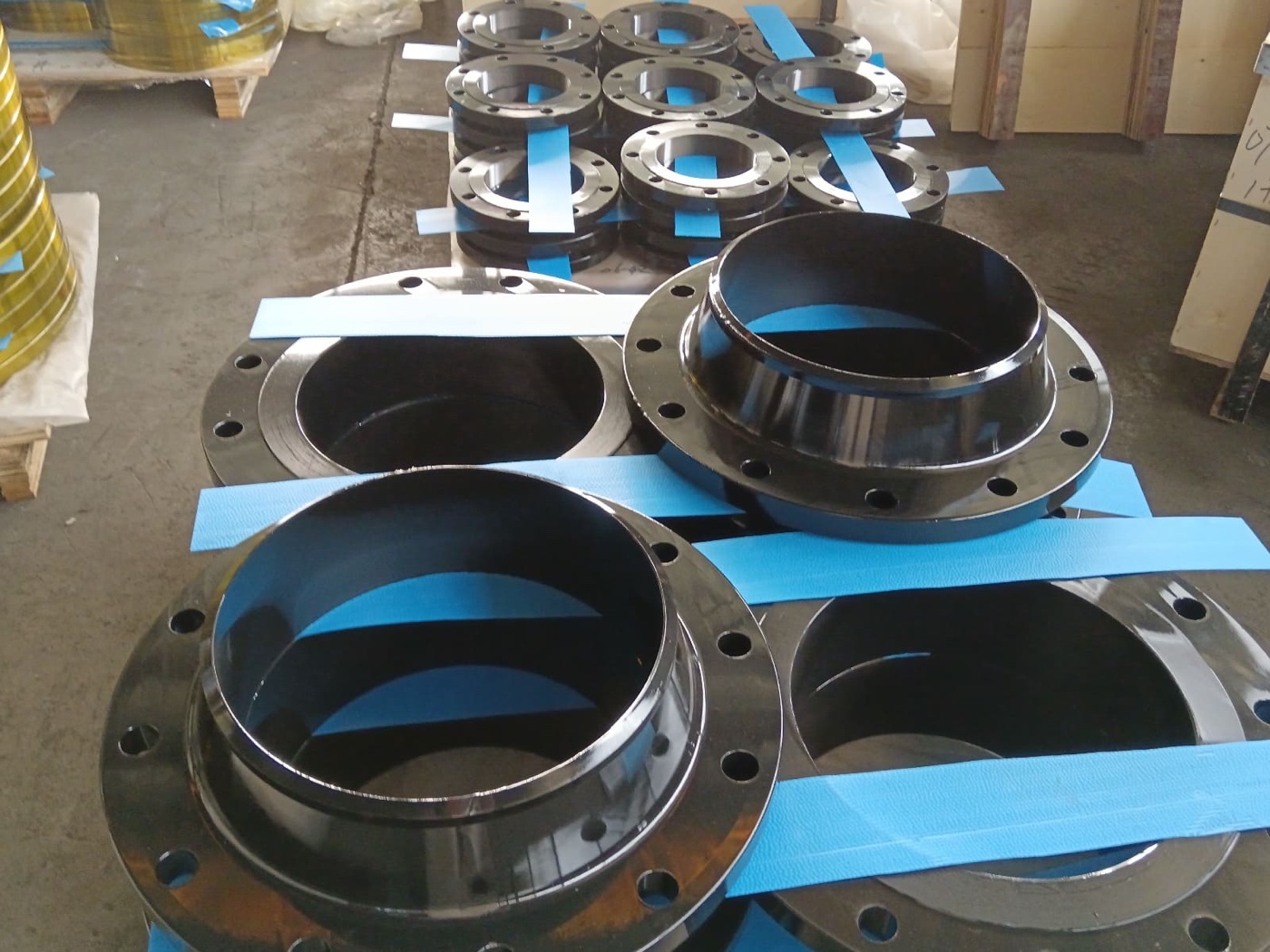
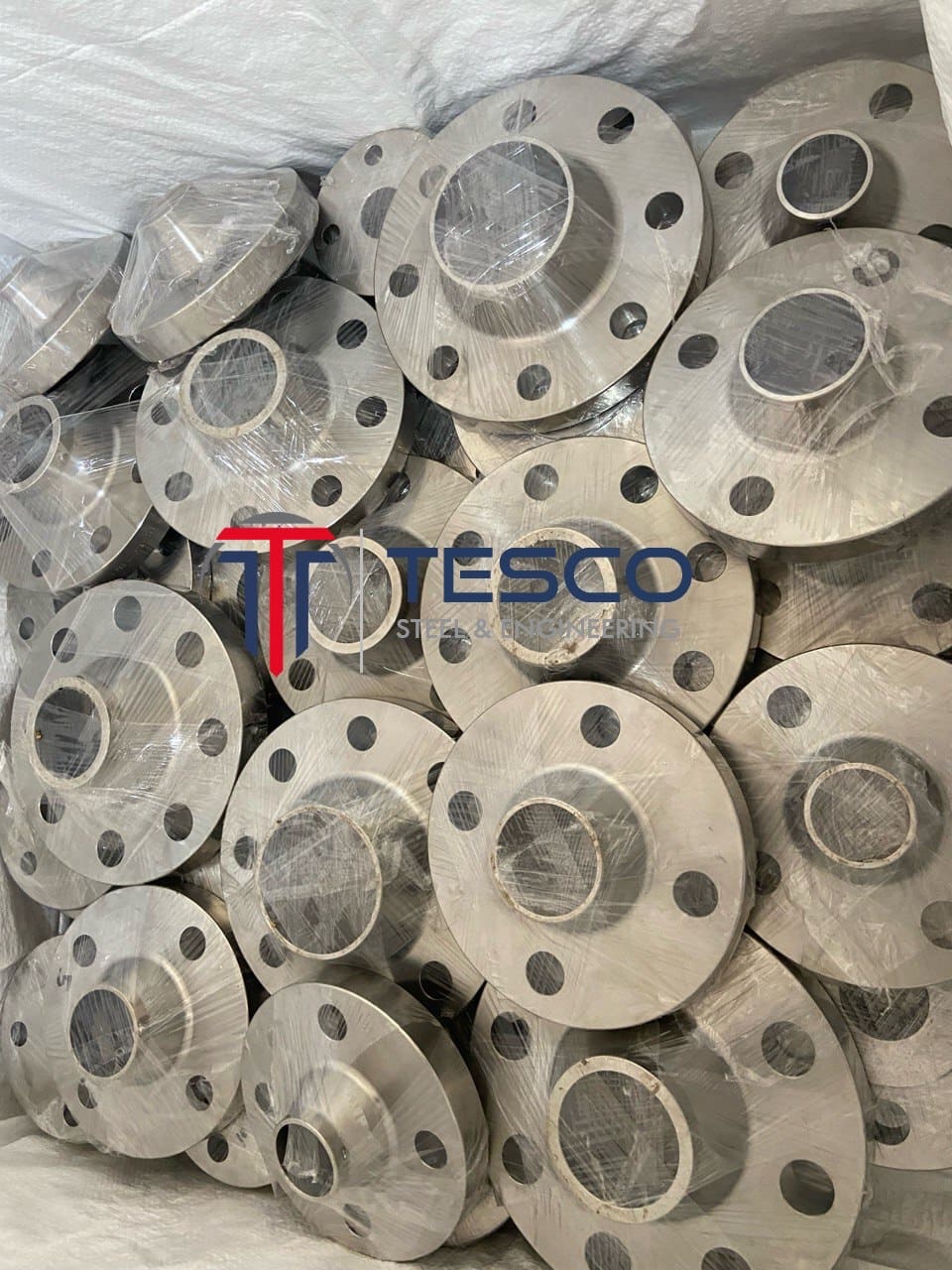
The butt weld between hub and pipe is a full-penetration joint that can be examined by radiography or ultrasonics — the only flange attachment whose integrity you can verify through the wall, which is why codes lean on weld necks for critical and lethal service.
The long tapered hub feeds pressure, bending and thermal stress gradually into the pipe wall instead of concentrating it at the weld toe, giving roughly twice the fatigue life of a slip-on joint under vibration and cyclic loading.
The bore is machined to the mating pipe schedule, so there is no step at the joint — no turbulence, no erosion pocket, no crevice for corrosion to start, and no unexplained pressure drop through the flange.
The raised face concentrates the full bolt load on a small, serrated gasket landing, generating the seating stress that spiral-wound and semi-metallic gaskets need to hold Class 600, 900, 1500 and 2500 pressures.
One geometry, thirteen material families and eight dimensional standards — the same WNRF flange is delivered in A105, 316L, duplex, F91 or Inconel 625, to ASME, EN, DIN, BS, JIS or API 6A, from one certified source.
Oil & gas takes the largest share — wellheads and flowlines, gathering stations, refinery process units and gas processing, where the provable butt weld and high pressure classes are non-negotiable. Chemical and petrochemical plants specify WNRF in 316L, duplex, Hastelloy and Inconel wherever the medium attacks ordinary steel. Power stations run F11, F22 and F91 WNRF flanges on high-temperature steam lines, while LNG and cryogenic plants use A350 LF2/LF3. Shipbuilding and offshore lean on copper nickel 90/10 and 70/30 for seawater, and water treatment, fertilizer, pharmaceutical and food processing plants round out the range in stainless grades. If the line is hot, pressurized, cycling or hazardous, a WNRF flange is the default answer.
Full dimension charts — outside diameter, thickness, hub, bore, bolt circle, bolting and weights — are published for every ASME class:
European and other standards are covered on their own pages — EN 1092-1 Type 11 (PN 2.5–400), DIN 2631–2635, BS 4504, BS 3293, JIS B2220 30K/40K/63K and API 6A Type 6B/6BX.
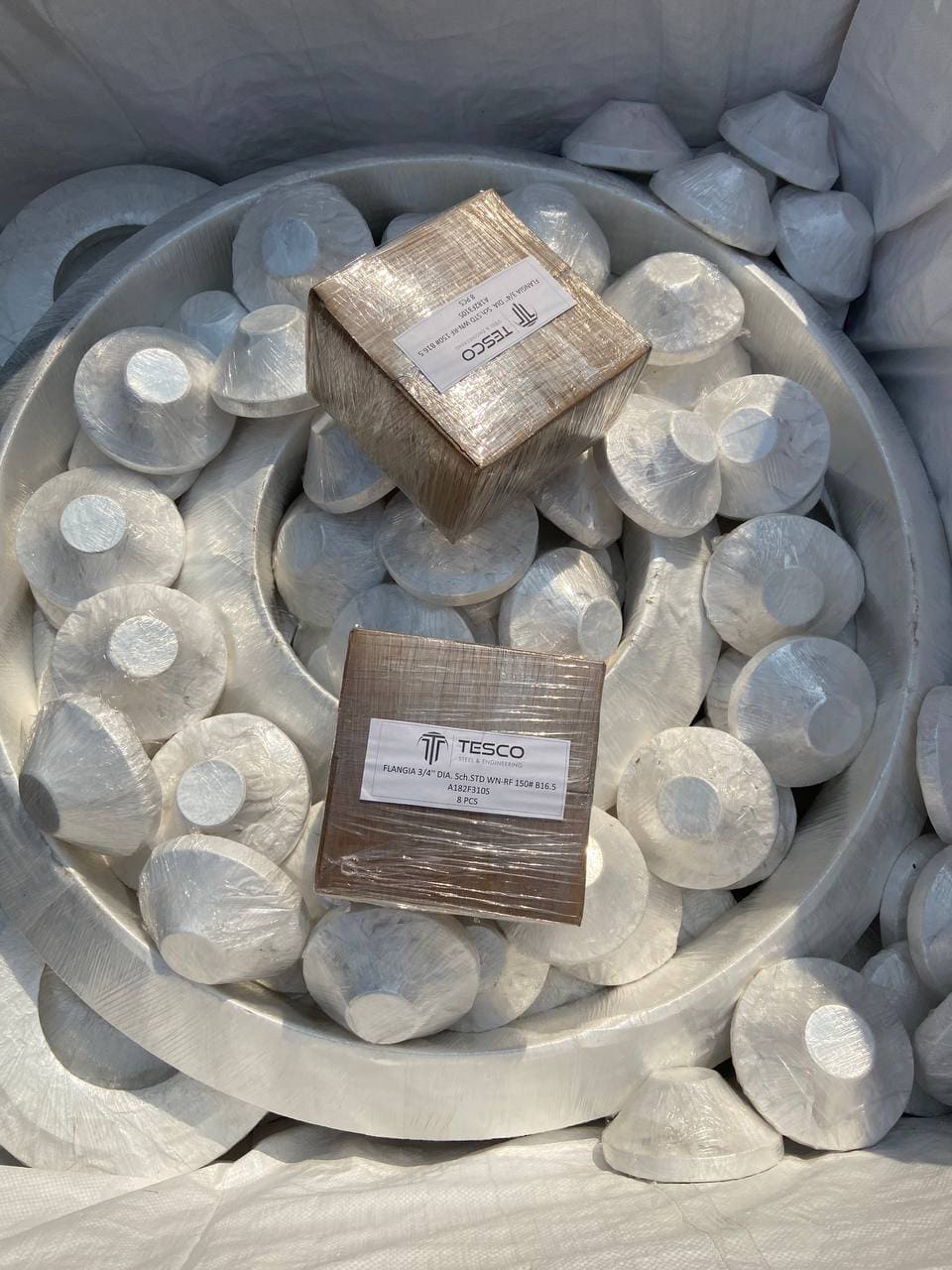
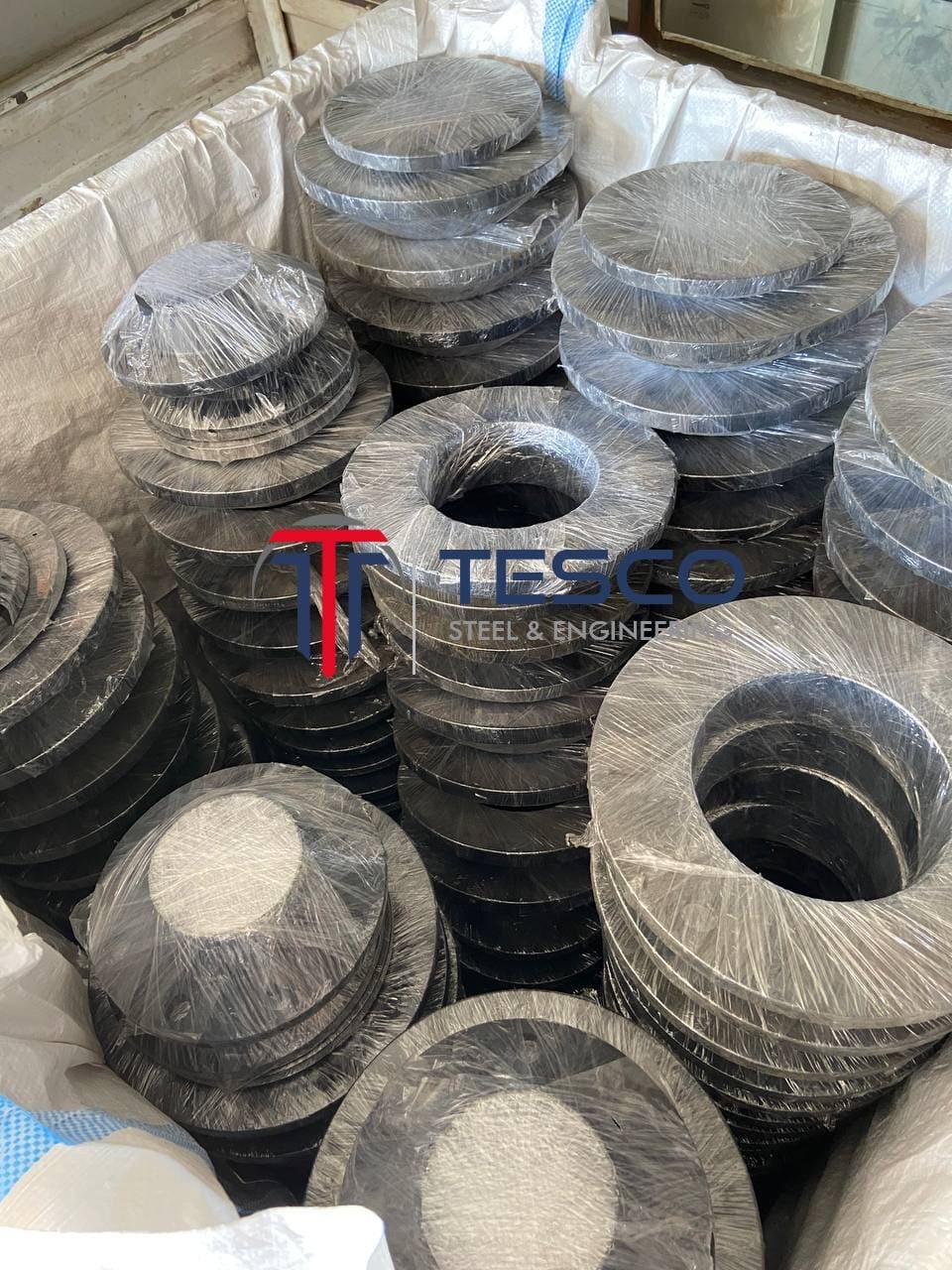
Faces and weld bevels are protected, small-bore flanges are individually wrapped and boxed with size, grade and heat number on the label, and larger flanges are strapped or crated in lined seaworthy packing. Coated carbon steel flanges ship wrapped against moisture; stainless ships pickled and passivated.
WNRF flange pricing depends on size, class, material grade and quantity — and moves with raw material markets, so we quote live rather than publish a static list. Standard carbon and stainless items ship from ready stock at highly competitive export prices. To get a firm quotation, usually within 24 hours:
What is the full form of WNRF flange?
What is the difference between a WN flange and a WNRF flange?
How high is the raised face on a WNRF flange?
What sizes and pressure ratings do you manufacture WNRF flanges in?
Which material grades can I order WNRF flanges in?
When should I use a WNRF flange instead of a slip-on flange?
What is the difference between WNRF and WNRTJ (ring type joint) flanges?
What surface finish is applied to the raised face?
How do I specify the bore of a WNRF flange?
Which dimensional standards do you cover for WNRF flanges?
Why are weld neck flanges preferred in critical and high-pressure service?
What testing and certification do you supply with WNRF flanges?
Can WNRF flanges be supplied with protective coatings?
Do you keep WNRF flanges in stock? What is the lead time?
What information should I include in a WNRF flange enquiry?
Do you export WNRF flanges outside India?