

Titanium Gr 7 Weld Neck Flanges | Titanium Gr 7 Blind Flanges | Titanium Gr 7 Slip On Flanges | Titanium Gr 7 Socket Weld Flanges | ASTM B381 Grade 7 Flanges | UNS R52400 Flanges | Ti-0.2Pd Flanges | Palladium-Doped Titanium Flanges | DIN 3.7235 Flanges | ASME B16.5 Titanium Gr 7
Titanium Grade 7 flanges (UNS R52400, ASTM B381 / ASME SB-381, commercially designated Ti-0.2Pd) are the most corrosion-resistant commercially pure titanium flanges available. Grade 7 is essentially Titanium Grade 2 with 0.12–0.25% palladium (Pd) added — a small but decisive alloying addition that unlocks outstanding resistance to reducing acid environments where all standard CP titanium grades actively corrode.
The palladium works through a cathodic depolarisation mechanism: as a platinum-group metal (PGM), Pd shifts the electrochemical potential of the titanium surface into the passive region in dilute hot hydrochloric acid (HCl), dilute hot sulphuric acid (H₂SO₄), hot phosphoric acid, formic acid, and other reducing media — environments that would rapidly destroy Grade 2 or Hastelloy C276 flanges in some concentrations. Tesco Steel & Engineering manufactures Titanium Grade 7 flanges in India to all ASME B16.5, ASME B16.47, and EN 1092-1 specifications, supplied with EN 10204 3.1 material test certificates and PMI verification.
Titanium Grade 7 is a near-commercially-pure titanium alloy classified as an alpha titanium. It belongs to the palladium-doped titanium family — a group of grades (7, 11, 16, 17) that add small quantities of palladium (0.04–0.25%) to commercially pure or alloy titanium bases to achieve enhanced reducing acid corrosion resistance. Grade 7 specifically uses Grade 2 as its base — the most widely used CP titanium grade — and adds the maximum effective Pd content (0.12–0.25%).
This grade occupies a unique position in the titanium selection chart: it provides the broadest corrosion resistance envelope of any commercially pure titanium grade, covering both oxidising environments (where Grades 1–4 excel) and reducing environments (where only Pd-doped grades succeed), while maintaining the same mechanical properties as Grade 2.
| Grade | UNS | Base Grade | Pd Content (%) | UTS Min (MPa) | Key Advantage |
|---|---|---|---|---|---|
| Grade 7 | R52400 | Grade 2 | 0.12–0.25 | 345 | Maximum reducing acid resistance; most common Pd grade |
| Grade 11 | R52250 | Grade 1 | 0.12–0.25 | 240 | Highest ductility; for complex formed components |
| Grade 16 | R52550 | Grade 2 | 0.04–0.08 | 345 | Lower Pd content — lower cost; moderate reducing acid service |
| Grade 17 | R52250 | Grade 1 | 0.04–0.08 | 240 | Low Pd, highest ductility; for mild reducing acid service |
Note: Grade 7 is the most widely stocked Pd-doped titanium grade for flanges. Grades 16 and 17 are less expensive alternatives for less severe reducing environments.
| Element | Limit (%) | Role |
|---|---|---|
| Palladium (Pd) | 0.12–0.25 (controlled range) | The critical addition — platinum-group metal that enables cathodic depolarisation in reducing acids, shifting corrosion potential into the passive zone |
| Oxygen (O) | 0.25 max | Interstitial strengthener (same limit as Grade 2); controls strength and ductility balance |
| Iron (Fe) | 0.30 max | Minor strengthener; kept low to avoid beta phase formation and intermetallic precipitates |
| Carbon (C) | 0.10 max | Carbide formation prevented by this limit; excessive C reduces ductility |
| Nitrogen (N) | 0.03 max | Strong interstitial strengthener; strictly controlled to preserve ductility |
| Hydrogen (H) | 0.015 max (forgings) | Hydrogen embrittlement risk; most tightly controlled element |
| Titanium (Ti) | Balance (≥ 98.9%) | Base metal |
The palladium addition does not alter the mechanical properties of Grade 7 versus Grade 2. Both grades share the same ASTM B381 minimum property requirements:
| Property | Grade 7 (ASTM B381 — Forgings, Annealed) | Grade 2 (for comparison) |
|---|---|---|
| Tensile Strength (UTS) — Minimum | 345 MPa (50 ksi) | 345 MPa (50 ksi) |
| Yield Strength (0.2% Offset) — Minimum | 275 MPa (40 ksi) | 275 MPa (40 ksi) |
| Elongation in 4D gauge — Minimum | 20% | 20% |
| Reduction in Area — Minimum | 30% | 30% |
| Hardness (typical) | 120–200 HB | 120–200 HB |
| Density | 4.50 g/cm³ | 4.51 g/cm³ |
| Elastic Modulus | ~103–105 GPa | ~105 GPa |
| Thermal Conductivity at 20°C | ~16 W/m·K | ~17 W/m·K |
| Max. Continuous Service Temp. (ASME) | ~316°C (Group 3.1) | ~316°C |
Grade 7 and Grade 2 are interchangeable mechanically. The decision to upgrade to Grade 7 is driven entirely by corrosion environment, not by strength.
Understanding the cathodic depolarisation mechanism of palladium is essential for correctly specifying Grade 7 flanges. Here is the step-by-step electrochemical explanation:
This mechanism requires only 0.12–0.25% Pd to be fully effective — one of the most potent and economical alloying additions in corrosion science. The palladium does not dissolve or deplete in service under normal conditions, making Grade 7 a permanent, maintenance-free solution for reducing acid piping.
| Acid / Environment | Titanium Grade 2 | Titanium Grade 7 | Notes |
|---|---|---|---|
| HCl — 1% at 25°C | Acceptable | Excellent | Grade 2 borderline; Grade 7 fully passive |
| HCl — 1% at boiling | Corrodes | Excellent | Grade 2 fails; Grade 7 resists |
| HCl — 5% at boiling | Severe corrosion | Good | Grade 7's key advantage |
| H₂SO₄ — 10% at 60°C | Corrodes | Excellent | Grade 7 fully passive |
| H₂SO₄ — 40% at 60°C | Severe | Acceptable | Grade 7 marginal; verify with corrosion data |
| Formic Acid — 90% at boiling | Corrodes | Excellent | Reducing organic acid; critical Grade 7 application |
| Oxalic Acid — all concentrations | Corrodes | Good | Grade 7 used in hydrometallurgy oxalate streams |
| H₃PO₄ — 30% at 60°C | Acceptable | Excellent | Both acceptable but Grade 7 offers wider margin |
| HNO₃ — all concentrations | Excellent | Excellent | Oxidising acid — both grades equally resistant |
| Seawater / NaCl solutions | Excellent | Excellent | Equal performance — no benefit from Grade 7 upgrade |
| Wet chlorine / NaOCl | Excellent | Excellent | Equal performance — Grade 2 sufficient |
| HF acid (any concentration) | Not resistant | Not resistant | Neither grade resists HF |
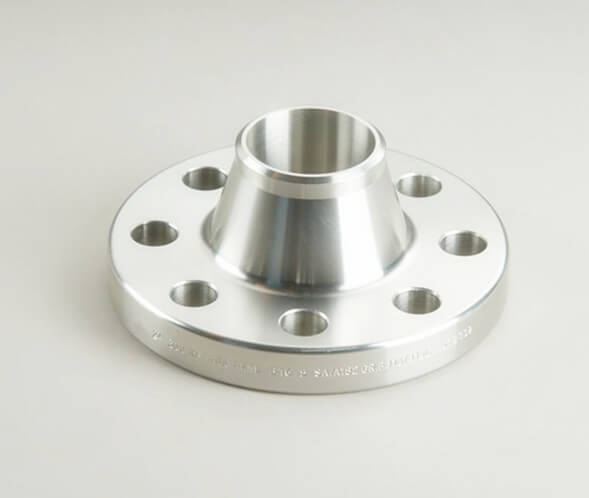

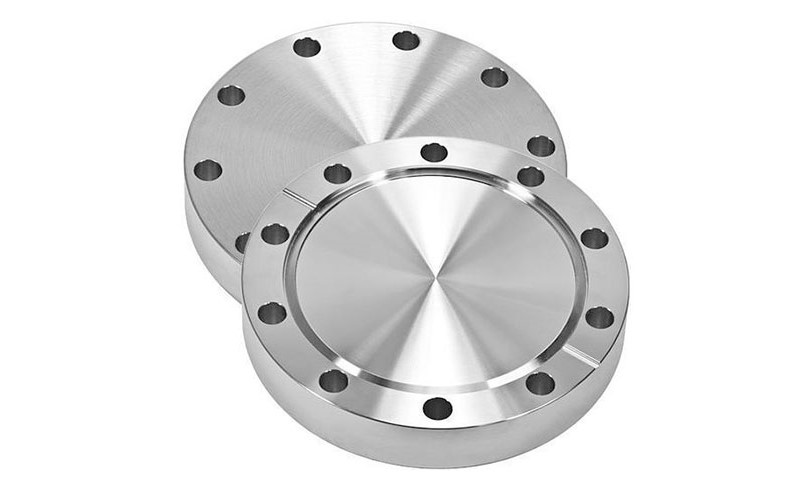
| Flange Type | Code | Standard | Typical Application in Reducing Acid Service |
|---|---|---|---|
| Weld Neck | WNRF | ASME B16.5 / B16.47 | High-integrity connection on acid reactor nozzles and process headers — preferred type for Grade 7 critical service |
| Slip On | SORF | ASME B16.5 | Moderate pressure acid lines; lower installation precision required |
| Blind | BL | ASME B16.5 / B16.47 | Closing acid pipe ends; inspection access on corrosive duty lines |
| Socket Weld | SWRF | ASME B16.5 | Small-bore (½″–2½″) high-pressure acid injection and sample lines |
| Threaded / Screwed | TH | ASME B16.5 | Instrument take-off points and vent connections on acid systems |
| Lapped Joint | LJ | ASME B16.5 | Used with Gr 7 stub ends — allows carbon steel or SS backing flanges for cost saving; frequent dismantling service |
| Long Weld Neck | LWN | ASME B16.36 / API | Pressure vessel nozzle connections; heat exchanger channels in acid service |
| Spectacle Blind | SB | ASME B16.48 | Positive isolation of acid lines for maintenance — Grade 7 avoids corrosion during standby |
| Orifice Flanges | ORF | ASME B16.36 | Flow measurement in corrosive acid streams |
| Ring Type Joint | RTJ | ASME B16.5 | High-pressure acid service requiring metal-to-metal seal integrity |
| Plate / Flat Flanges | PL / FF | Customer drawing | Equipment connections; Grade 7 plate flanges for tank nozzles in acid storage |
| Property | Grade 2 (UNS R50400) | Grade 7 (UNS R52400) | Grade 12 (UNS R53400) |
|---|---|---|---|
| Alloy Addition | None (CP) | 0.12–0.25% Pd | 0.2–0.4% Mo + 0.6–0.9% Ni |
| ASTM Standard | B381 Grade 2 | B381 Grade 7 | B381 Grade 12 |
| UTS Minimum | 345 MPa (50 ksi) | 345 MPa (50 ksi) | 480 MPa (70 ksi) |
| Yield Minimum | 275 MPa (40 ksi) | 275 MPa (40 ksi) | 345 MPa (50 ksi) |
| Reducing Acid Resistance | Poor (active corrosion) | Excellent (Pd mechanism) | Good (Mo/Ni mechanism) |
| Oxidising / Seawater Resistance | Excellent | Excellent | Excellent |
| Strength Advantage | Baseline | None vs Gr 2 | +40% UTS over Gr 2 |
| Weldability | Excellent | Excellent | Good |
| Relative Cost | Baseline | High (Pd premium) | Moderate (Ni/Mo cheaper than Pd) |
| Best For | General corrosion, seawater, oxidising acids | Reducing acid service — HCl, H₂SO₄, formic acid | Reducing acid + higher strength; cost-effective vs Gr 7 |
Decision rule: Specify Grade 7 when the reducing acid concentration and temperature exceed what Grade 2 resists AND when Grade 12's slightly lower reducing acid resistance is insufficient. For most hydrometallurgy and acid cleaning applications, Grade 12 offers substantial cost savings over Grade 7 — consult corrosion isocorrosion charts for the specific acid/concentration/temperature to make the final determination.
| Industry | Application | Why Grade 7? |
|---|---|---|
| Chemical Processing | HCl acid handling, pickling lines, acid regeneration units, sulphuric acid dilution systems | Only titanium grade that resists dilute hot HCl and H₂SO₄; eliminates rubber-lined or exotic alloy alternatives |
| Hydrometallurgy | Copper, zinc, nickel, gold leach circuits; pressure oxidation autoclaves; acid CCD (counter-current decantation) | Hot dilute H₂SO₄ environments that destroy Grade 2; Grade 7 provides long service life at zero corrosion allowance |
| Pharmaceutical | Organic acid reactors (formic, oxalic, lactic, citric acid); API synthesis vessels; product contact piping | Reducing organic acids attack Grade 2; Grade 7 resists while meeting biocompatibility and contamination-free requirements |
| Oil & Gas Refining | Alkylation unit (HF and H₂SO₄ processes); hydrotreating effluent; acid gas treating | Mixed reducing environments; Grade 7 handles mild HF-contaminated streams and acid condensate conditions |
| Electrochemical / Electrolytic | Electroplating tank hardware, electrolysis cells, anodes and cathode frames, electrowinning piping | Anodic polarisation in acid electrolytes keeps Grade 7 firmly in passive region; long service life in acid baths |
| Flue Gas Desulphurisation (FGD) | Absorber tower internals, slurry piping flanges, spray nozzle headers in SO₂ scrubbers | H₂SO₄ and H₂SO₃ condensate from flue gas; Grade 7 resists these reducing sulphur acid streams |
| Pulp & Paper | Kraft pulp digesters (white and black liquor nozzles); bleach plant chlorine dioxide lines; acid stage washers | Reducing conditions in kraft processes; Grade 7 resists sulphide-rich black liquor where Grade 2 may be marginal |
| Marine & Offshore | Seawater piping in acid cleaning service; offshore chemical injection of H₂SO₄-based scale inhibitors | Dual resistance: seawater corrosion + periodic acid cleaning service in the same system |
| Food & Beverage | Acid CIP (clean-in-place) systems; citric and phosphoric acid cleaning loops; product-contact piping | Grade 7 resists food-grade acids at elevated temperature; inert surface meets FDA purity requirements |
Titanium Grade 7 is welded using identical procedures to Grade 2 — the palladium addition does not change welding characteristics. The critical requirement is complete atmospheric protection from oxygen, nitrogen, and hydrogen contamination during welding and cooling:
| Welding Parameter | Requirement for Titanium Grade 7 |
|---|---|
| Process | GTAW (TIG) — primary process; GMAW (MIG) and plasma arc for automated production |
| Shielding Gas | Argon or helium, 99.995% purity minimum — cover pass and root pass |
| Trailing Shield | Required — protects the weld and HAZ until temperature drops below 400°C |
| Root Purge | Full argon purge inside the pipe until O₂ level <50 ppm (oxygen analyser mandatory) |
| Filler Wire | AWS A5.16 ERTi-7 (Gr 7 filler — must match base grade to preserve Pd content in weld); ERTi-2 acceptable for non-critical joints |
| Weld Colour Acceptance | Silver (bright) = fully protected ✓ | Straw/gold = light contamination (evaluate) | Blue = contaminated ✗ | Grey/white = severely contaminated ✗ |
| Post-Weld Heat Treatment | Not required; stress relief at 480–595°C in vacuum or argon optional for highly restrained assemblies |
| Preheat | Not required; weld at ambient temperature |
| Important Note | To preserve Grade 7's reducing acid resistance, ERTi-7 filler must be used for joints in acid service. Using ERTi-2 filler creates a weld zone with no Pd — a potential corrosion weak point in reducing acid environments |
| Standard | Scope |
|---|---|
| ASTM B381 / ASME SB-381 | Titanium and titanium alloy forgings — primary material standard for Grade 7 flanges (Grade F-7) |
| ASTM B265 | Titanium strip, sheet and plate — Grade 7 (for plate flanges) |
| ASME B16.5 | Pipe flanges, NPS ½–24, Classes 150–2500 — titanium is Material Group 3.1 with dedicated P-T tables |
| ASME B16.47 | Large diameter flanges NPS 26–60 (Series A: MSS SP-44; Series B: API 605) |
| ASME B16.36 | Orifice flanges, NPS 1–16 |
| ASME B16.48 | Line blanks — spectacle blinds and paddle blanks |
| EN 1092-1 | European flange standard — PN rated (PN 6 to PN 400) |
| DIN 2527 / 2631–2638 | German DIN flanges — DIN designation 3.7235 |
| JIS B2220 | Japanese Industrial Standard — titanium-grade pipe flanges |
| AWS A5.16 | Titanium welding rods and electrodes — ERTi-7 for Grade 7 welds |
| ASME Section IX | Welding and brazing qualification — WPS/PQR for titanium GTAW |
| AMS 4959 | Aerospace Material Specification for Titanium Grade 7 sheet, strip, and plate |
| EN 10204 3.1 / 3.2 | Material test certificates — 3.1 standard, 3.2 third-party on request |
| Titanium Grade 7 Flanges — Available Specifications | |
|---|---|
| Material Grade | Titanium Grade 7, UNS R52400, DIN 3.7235, Ti-0.2Pd |
| Material Standard | ASTM B381 / ASME SB-381 Grade F-7 |
| Size Range | ½″ NB to 56″ NB (DN 15 to DN 1400) |
| Pressure Class (ASME) | 150#, 300#, 600#, 900#, 1500#, 2500# |
| Pressure Rating (PN) | PN 6, PN 10, PN 16, PN 25, PN 40, PN 64, PN 100, PN 160, PN 250, PN 320, PN 400 |
| Schedule | STD, XS, XXS, Sch 10, 20, 40, 80, 120, 160 |
| Flange Types | Weld Neck (WNRF), Slip On (SORF), Blind (BL), Socket Weld (SWRF), Threaded (TH), Lapped Joint (LJ), Long Weld Neck (LWN), Spectacle Blind (SB), Orifice (ORF), Ring Type Joint (RTJ), Plate Flanges, Flat Flanges |
| Flange Face | Raised Face (RF), Flat Face (FF), Ring Type Joint (RTJ), Male-Female (MF), Tongue & Groove (T&G) |
| Facing Finish | 125–250 AARH stock finish (ASME B16.5); smooth for PTFE gaskets; RTJ grooves per ASME B16.20 |
| Dimensional Standards | ASME B16.5, ASME B16.47 Series A & B, EN 1092-1, DIN 2527/2631–2638, JIS B2220, AWWA, BS 4504 |
| Test & Inspection | Chemical analysis, mechanical testing, PMI (Portable Metal Identification for Pd verification), dimensional inspection, hydrostatic test, visual inspection, EN 10204 3.1 / 3.2 MTC |
| Additional Services | Third-party inspection (Bureau Veritas, SGS, Lloyd's, DNV, TÜV), Radiography (RT), Ultrasonic testing (UT), Pickling & passivation, Marking per MSS SP-25 (grade, size, heat number, pressure class) |
Every Grade 7 titanium flange is documented from raw material heat certificate to final PMI report and dimensional inspection — full traceability throughout.
Grade 7 and Grade 2 are visually identical. We perform XRF Positive Material Identification to confirm 0.12–0.25% Pd on every Grade 7 order before despatch.
We supply Grade 7 titanium flanges to chemical plants, hydrometallurgy operations, pharmaceutical facilities, and offshore platforms worldwide.
Grade 7 flanges manufactured to your piping datasheet, P&ID, or dimensional drawing — any type, any face, any size, any pressure class.
3.1 certificates as standard. Third-party 3.2 inspection available with your nominated TPIA — Bureau Veritas, SGS, DNV, Lloyd's, TÜV.
Standard Gr 7 sizes available from stock for fast despatch. Custom sizes manufactured on priority. Competitive pricing for bulk and project orders.
Titanium Grade 7 (UNS R52400, ASTM B381 Grade F-7, DIN 3.7235, Ti-0.2Pd) is a palladium-doped titanium alloy consisting of commercially pure Grade 2 titanium base with 0.12–0.25% palladium (Pd) added. The palladium enables outstanding corrosion resistance in reducing acid environments — particularly dilute hot HCl and H₂SO₄ — where standard CP titanium grades (Grades 1–4) actively corrode. It is the most corrosion-resistant of all titanium flange grades in terms of the breadth of chemical environments it resists.
Titanium Grade 7 is designated UNS R52400. The ASTM forging standard is ASTM B381 Grade F-7 / ASME SB-381. Sheet and plate: ASTM B265 Grade 7. AMS specification: AMS 4959. DIN designation: 3.7235. Commercial designation: Ti-0.2Pd (indicating approximately 0.2% palladium content).
Palladium acts as a cathodic depolariser. In reducing acids, CP titanium corrodes because its passive TiO₂ film becomes unstable — the corrosion potential falls into the active corrosion zone. Palladium, as a platinum-group metal (PGM), has high catalytic activity for the hydrogen evolution reaction (2H⁺ + 2e⁻ → H₂). It acts as a local cathode on the titanium surface, consuming electrons from the anodic titanium dissolution reaction and shifting the mixed corrosion potential upward (noble-ward) into the passive region. With only 0.12–0.25% Pd, this effect is fully established, making the TiO₂ film thermodynamically stable even in dilute hot reducing acids.
Grade 7 is Grade 2 with 0.12–0.25% palladium added. Both grades have identical mechanical properties (UTS 345 MPa, yield 275 MPa, elongation 20%). The sole difference is corrosion resistance: Grade 2 corrodes actively in dilute hot HCl (above ~0.5% at 70°C) and dilute hot H₂SO₄ (above ~5% at ambient), while Grade 7 resists these same environments. In oxidising environments, seawater, wet chlorine, and nitric acid, both grades perform identically — there is no corrosion benefit to specifying Grade 7 over Grade 2 in those environments.
Grade 12 (UNS R53400, Ti-0.3Mo-0.8Ni) uses molybdenum and nickel instead of palladium to achieve reducing acid resistance. Key differences: Grade 12 has higher strength (UTS 480 MPa vs 345 MPa), is significantly less expensive (Mo and Ni cost far less than Pd), and resists a broad range of reducing acids. Grade 7 has slightly broader corrosion resistance due to palladium's superior cathodic depolarisation efficiency — particularly at higher acid concentrations and temperatures. For most hydrometallurgy and acid cleaning applications, Grade 12 is a cost-effective alternative to Grade 7 — engineering corrosion isocorrosion data should be consulted for the specific service conditions.
Grade 7 resists: dilute hot HCl up to approximately 5% at boiling (Grade 2 fails above 0.5% at 70°C); dilute hot H₂SO₄ up to approximately 40% at 60°C; hot formic, oxalic, lactic, and citric acids; hot phosphoric acid up to moderate concentrations; seawater, wet chlorine, sodium hypochlorite (equal to Grade 2); and nitric acid at all concentrations. Grade 7 does not resist HF acid, concentrated hot HCl (>10%), concentrated hot H₂SO₄ (>70%), or dry chlorine gas.
Per ASTM B381 (forgings, annealed): Tensile Strength minimum 345 MPa (50 ksi); Yield Strength minimum 275 MPa (40 ksi); Elongation minimum 20%; Reduction in Area minimum 30%. These are identical to Grade 2. Density: 4.50 g/cm³. Elastic modulus: ~103–105 GPa. The palladium addition does not alter mechanical properties.
Yes. Grade 7 is welded identically to Grade 2 using GTAW (TIG) with full argon shielding — cover gas, trailing shield, and root purge to <50 ppm O₂. Filler wire: AWS A5.16 ERTi-7 must be used for joints in reducing acid service to preserve Pd content in the weld zone. Using ERTi-2 filler creates a Pd-free weld — a potential corrosion weak point. Weld quality acceptance: silver/bright = good; straw/gold = caution; blue/grey = reject (contaminated by oxygen/nitrogen).
Titanium Grade 7 and Grade 2 are visually and dimensionally identical — they cannot be distinguished by any physical inspection. Only XRF (X-ray fluorescence) Positive Material Identification can confirm the presence of palladium (0.12–0.25%) that defines Grade 7. If Grade 2 is accidentally installed instead of Grade 7 in a reducing acid service, rapid corrosion failure will result. PMI testing before installation is therefore critical and strongly recommended. Tesco Steel provides XRF PMI reports with every Grade 7 shipment as standard.
Grade 7 is used wherever reducing acid environments are present and Grade 2 fails: chemical plants handling hot dilute HCl or H₂SO₄; hydrometallurgy leach circuits (copper, zinc, nickel, gold acid leaching); pharmaceutical plants using formic or oxalic acid; FGD absorber systems with sulphurous acid condensate; electroplating and electrolysis cells; oil refinery alkylation and acid treating units; pulp and paper bleach plants; and any process where occasional reducing acid exposure occurs alongside seawater or oxidising environments.
Titanium Grade 7 Flanges — Manufacturer / Supplier / Stockist in: Kuwait, UAE, Germany, Saudi Arabia, West Africa, Iraq, Congo, Mexico, Bahrain, Canada, Philippines, Thailand, Kenya, Oman, Malaysia, Turkey, Qatar, Sudan, Netherlands, Nigeria, Lithuania, Gabon, Russia, Vietnam, Angola, Bolivia, Indonesia, UK, Yemen, Italy, United States, Venezuela, Spain, Iran, Estonia, Kazakhstan, Algeria, Jordan, Ecuador, Portugal, Colombia, Libya, Chile, Peru, South Africa, Namibia, Afghanistan, Israel, Zambia, Morocco, Denmark, Taiwan, Norway, Belarus, North Macedonia, Lebanon, Sri Lanka, Bulgaria, Ukraine, Belgium, Finland, Slovakia, Romania, France, Brazil, Trinidad & Tobago, Fiji, Tunisia, Gambia, Hungary, Zimbabwe, Mongolia, Ghana, Egypt, Czech Republic, Azerbaijan, Poland, Greece, Costa Rica, New Zealand, Croatia, Puerto Rico, Tanzania, Somalia, Singapore, Australia, Japan, South Korea, Bangladesh, China.
Major Exporting Cities: Dubai, Abu Dhabi, Sharjah, Riyadh, Jeddah, Al Jubail, Al Khobar, Dammam, Kuwait City, Manama, Doha, Muscat, Tehran, Ahvaz, Lagos, Nairobi, Johannesburg, Moscow, Atyrau, Istanbul, London, Houston, Los Angeles, New York, Dallas, Toronto, Calgary, Montreal, Singapore, Kuala Lumpur, Bangkok, Jakarta, Ho Chi Minh City, Hanoi, Seoul, Busan, Tokyo, Sydney, Melbourne, Perth, Cairo, Casablanca, Algiers, Karachi, Mumbai, Chennai, Pune, Vadodara, Colombo, Aberdeen.

