

'SHAPING INDUSTRIES WITH THE FINEST STEEL'
'SHAPING INDUSTRIES WITH THE FINEST STEEL'
Tesco Steel & Engineering manufactures EN 1092-1 Type 11 (weld neck) flanges in PN 63 — the first high-pressure class of the EN series — in DN 10 to DN 400 (chart to DN 1200), with Form B1 / B2 facings and with the bore matched to your pipe. This page is the complete reference for the class: the full dimension chart in mm with approximate weights in kg and lbs, metric bolting and PCD, facing guidance and every material grade we produce — from A105 / P250GH and A350 LF2 to SS 316, duplex and Inconel. ISO 9001:2015 certified, made in Mumbai, India — exported worldwide.
EN 1092-1 is the European counterpart to ASME B16.5: it defines steel flanges by DN size, PN class, flange type number and facing form. Type 11 is the weld neck — the construction chosen when joint integrity matters, because the tapered hub and full-penetration butt weld give the connection the strength of the pipe itself, the weld can be examined by radiography, and the matched bore removes turbulence and crevices at the joint.
PN 63 bridges the standard process class PN 40 and the high-pressure PN 100: when 40 bar is not enough but 100 bar hardware would be over-specified, PN 63 carries the line at sensible weight. Its dedicated dimension series begins at DN 50; below that the standard uses the PN 100 dimensions, as the chart shows. In duty it sits between ASME Class 300 and Class 600.
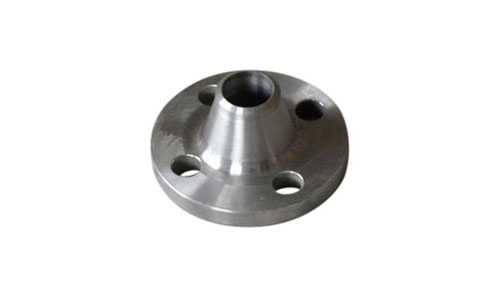
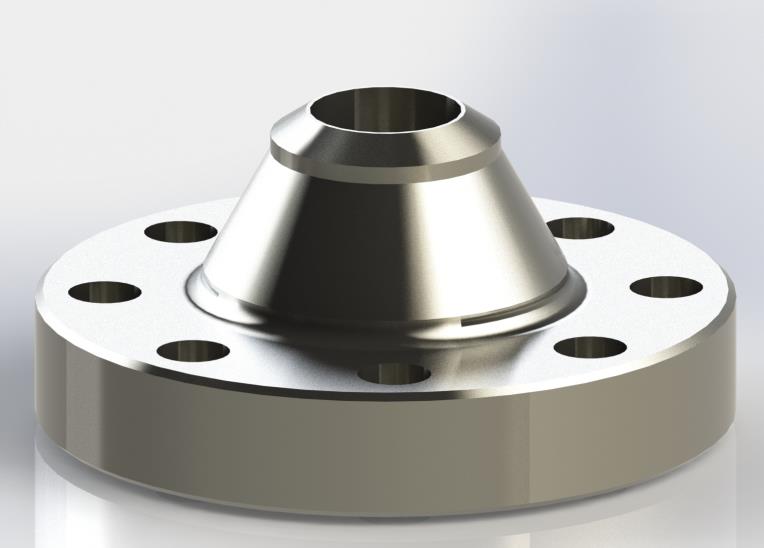
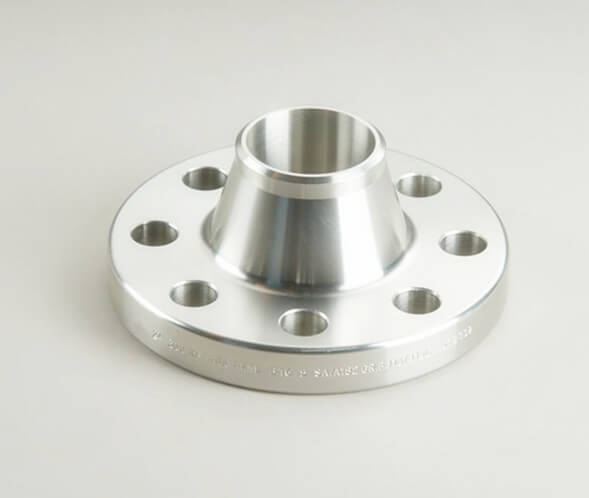
PN (“Pression Nominale”) is the nominal pressure class of the EN system. A PN 63 flange is rated for a maximum working pressure of about 63 bar at room temperature; the exact allowable pressure depends on the material group and falls as temperature rises, per the pressure–temperature tables in EN 1092-1. The full series is PN 2.5 · 6 · 10 · 16 · 25 · 40 · 63 · 100 · 160 · 250 · 320 · 400.
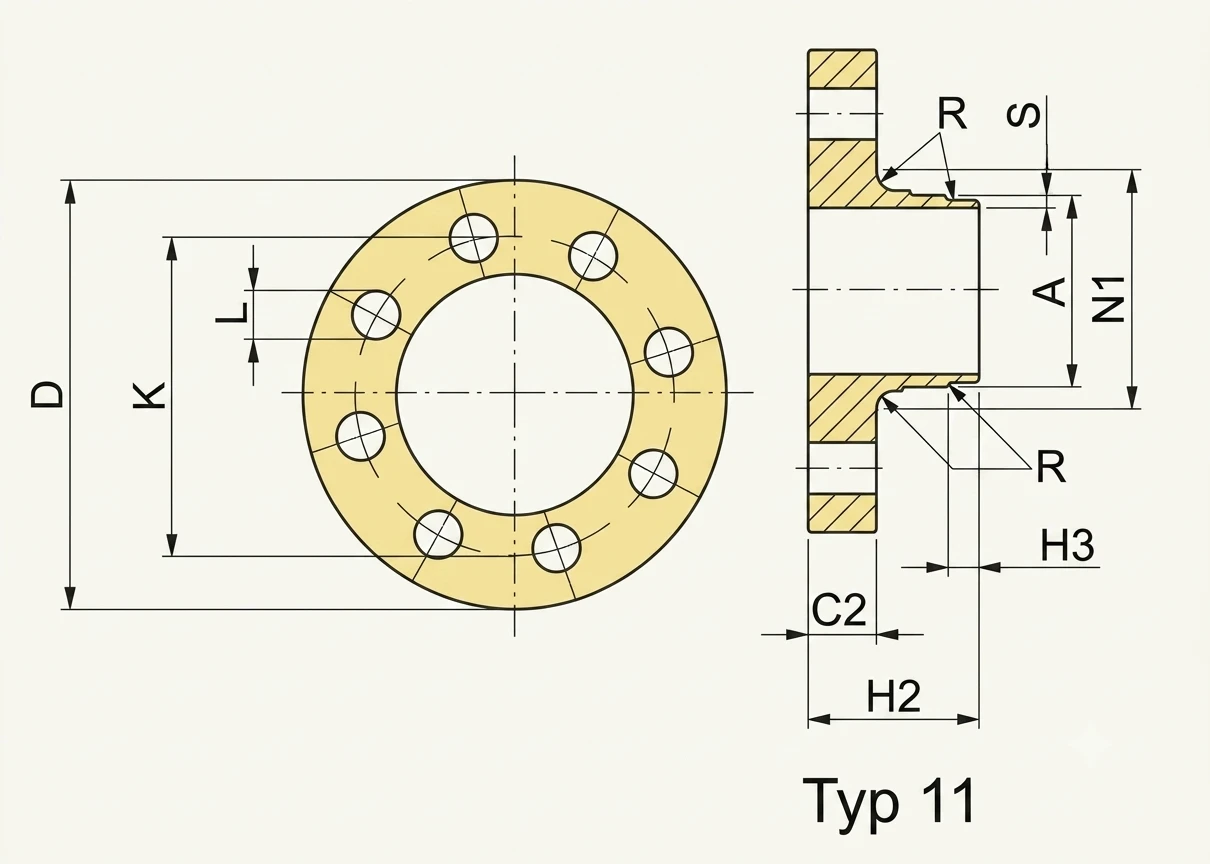
All dimensions in mm. This chart lists only the dimensions applicable to the Type 11 weld neck: the D / K / L mating dimensions with bolting, neck OD A, flange thickness C2, lengths through hub H2 and neck end H3, neck diameter N1, corner radius R and neck wall S — matching the lettered drawing above. The two right-hand columns give the approximate Type 11 weight in kg and lbs (carbon steel, standard bore).
EN 1092-1 PN 63 Flange Dimension Reference
| D: Outside Diameter K: Diameter of Bolt Circle L: Diameter of Bolt Hole |
A: Outside Diameter of Neck C2: Flange Thickness H2: Length Through Hub |
H3: Straight Neck Length N1: Neck / Hub Diameter R: Corner Radius S: Neck Thickness (preferred value) |
| DN | Mating dimensions | A Neck OD |
C2 Thickness |
H2 Length |
H3 | N1 Neck Dia |
R | S Neck Wall |
Approx Wt (kg) |
Approx Wt (lbs) |
||||
|---|---|---|---|---|---|---|---|---|---|---|---|---|---|---|
| D | K | L | No | Size | ||||||||||
| 10 | DN 10–40 PN 63 flanges use the PN 100 dimensions — see the PN 100 weld neck flange chart | |||||||||||||
| 15 | ||||||||||||||
| 20 | ||||||||||||||
| 25 | ||||||||||||||
| 32 | ||||||||||||||
| 40 | ||||||||||||||
| 50 | 180 | 135 | 22 | 4 | M20 | 60.3 | 26 | 62 | 10 | 82 | 6 | 2.9 | 4.9 | 11 |
| 65 | 205 | 160 | 22 | 8 | M20 | 76.1 | 26 | 68 | 12 | 98 | 6 | 3.2 | 6.1 | 13 |
| 80 | 215 | 170 | 22 | 8 | M20 | 88.9 | 28 | 72 | 12 | 112 | 8 | 3.6 | 7.1 | 16 |
| 100 | 250 | 200 | 26 | 8 | M24 | 114.3 | 30 | 78 | 12 | 138 | 8 | 4 | 9.8 | 22 |
| 125 | 295 | 240 | 30 | 8 | M27 | 139.7 | 34 | 88 | 12 | 168 | 8 | 4.5 | 15 | 34 |
| 150 | 345 | 280 | 33 | 8 | M30 | 168.3 | 36 | 95 | 12 | 202 | 10 | 5.6 | 23 | 50 |
| 200 | 415 | 345 | 36 | 12 | M33 | 219.1 | 42 | 110 | 16 | 256 | 10 | 7.1 | 36 | 79 |
| 250 | 470 | 400 | 36 | 12 | M33 | 273 | 46 | 125 | 18 | 316 | 12 | 8.8 | 50 | 111 |
| 300 | 530 | 460 | 36 | 16 | M33 | 323.9 | 52 | 140 | 18 | 372 | 12 | 11 | 71 | 155 |
| 350 | 600 | 525 | 39 | 16 | M36 | 355.6 | 56 | 150 | 20 | 420 | 12 | 12.5 | 102 | 225 |
| 400 | 670 | 585 | 42 | 16 | M39 | 406.4 | 60 | 160 | 20 | 475 | 12 | 14.2 | 135 | 297 |
| 500 | 800 | 705 | 48 | 20 | M45 | - | - | - | - | - | 12 | - | – | – |
| 600 | 930 | 820 | 56 | 20 | M52 | - | - | - | - | - | 15 | - | – | – |
| 700 | 1045 | 935 | 56 | 24 | M52 | - | - | - | - | - | 15 | - | – | – |
| 800 | 1165 | 1050 | 62 | 24 | M56 | - | - | - | - | - | 18 | - | – | – |
| 900 | 1285 | 1170 | 62 | 28 | M56 | - | - | - | - | - | 18 | - | – | – |
| 1000 | 1415 | 1290 | 70 | 28 | M64 | - | - | - | - | - | 18 | - | – | – |
| 1200 | 1665 | 1530 | 78 | 32 | M72 | - | - | - | - | - | 18 | - | – | – |
EN 1092-1 PN 63 weld neck flanges are produced in every material family from our range, with ASTM and EN/Werkstoff designations, EN 10204 3.1 mill certificates, heat-number traceability and PMI on request:
| Material Family | Typical Grades (ASTM / EN) | Best suited to |
|---|---|---|
| Carbon Steel | A105 / P250GH (1.0460) | General water, utility & hydrocarbon service |
| LTCS | A350 LF2 / LF3 | Low-temperature service, impact tested |
| Stainless Steel | 304/L (1.4301/1.4307), 316/L (1.4401/1.4404), 321 (1.4541), 310, 347, 410 | Corrosive process & hygienic service |
| 254 SMO | F44 (1.4547) | Seawater & high-chloride service |
| 904L | N08904 (1.4539) | Sulphuric & phosphoric acid service |
| Duplex / Super Duplex | 2205 (1.4462), 2507 (1.4410) | High strength + chloride resistance, offshore |
| Alloy Steel | A182 F1, F5, F9, F11, F22, F91 | High-temperature steam & refinery lines |
| Monel | 400 (2.4360) / K500 | Seawater, HF acid, marine |
| Inconel | 600 (2.4816), 625 (2.4856), 825 (2.4858) | High temperature, sour & oxidising media |
| Hastelloy | C276 (2.4819), C22 (2.4602) | Severely corrosive chemical service |
| Titanium | Gr. 2 (3.7035) / Gr. 5 (3.7165) | Chlorides, seawater; ≈42% lighter |
| Copper Nickel | 90/10 (C70600), 70/30 (C71500) | Marine & seawater cooling systems |
| Bimetal / Clad | CS base + SS/alloy overlay | Corrosion resistance at carbon-steel cost |
Prices are competitive and standard sizes are held in ready stock — use the Ask for Quote button or the inquiry form for today’s price list and stock position.
| PN Class | Dimension Chart |
|---|---|
| PN 2.5 | EN 1092-1 Type 11 PN 2.5 Weld Neck Flange |
| PN 6 | EN 1092-1 Type 11 PN 6 Weld Neck Flange |
| PN 10 | EN 1092-1 Type 11 PN 10 Weld Neck Flange |
| PN 16 | EN 1092-1 Type 11 PN 16 Weld Neck Flange |
| PN 25 | EN 1092-1 Type 11 PN 25 Weld Neck Flange |
| PN 40 | EN 1092-1 Type 11 PN 40 Weld Neck Flange |
| PN 63 | EN 1092-1 Type 11 PN 63 Weld Neck Flange (this page) |
| PN 100 | EN 1092-1 Type 11 PN 100 Weld Neck Flange |
| PN 160 | EN 1092-1 Type 11 PN 160 Weld Neck Flange |
| PN 250 | EN 1092-1 Type 11 PN 250 Weld Neck Flange |
| PN 320 | EN 1092-1 Type 11 PN 320 Weld Neck Flange |
| PN 400 | EN 1092-1 Type 11 PN 400 Weld Neck Flange |
Related references: Weld Neck Flanges overview · Long Weld Neck Flanges · All Flange Dimension Charts · Flange Weight Chart · ASME B16.5 Class 600 Chart.
The tapered hub and full-penetration butt weld give the joint the strength and fatigue life of the pipe itself, and the weld is easily examined by radiography — the reason Type 11 is specified where joint reliability matters.
The bore follows the pipe ID, so there is no flow step, turbulence or crevice at the joint — important wherever erosion, deposits or crevice corrosion start at discontinuities.
PN 63 carries roughly 63 bar cold — between ASME Class 300 and Class 600 in duty — giving feedwater and HP steam lines a sensible step before full PN 100 hardware.
Boiler feedwater and HP steam, gas processing and compression, refinery units, hydraulic systems and offshore process duty — on pumps, exchangers and vessel nozzles built to European piping classes.
What is an EN 1092-1 Type 11 PN 63 flange?
It is a weld neck flange made to the European standard EN 1092-1 in nominal pressure class PN 63. In EN 1092-1, “Type 11” is the designation for the weld neck (welding neck) flange — a flange with a long tapered hub that is butt-welded to the pipe. PN 63 is rated for roughly 63 bar at room temperature, and the chart on this page covers DN 10 to DN 1200.
What does PN 63 mean?
PN stands for “Pression Nominale” — the nominal pressure class. A PN 63 flange is rated for a maximum working pressure of about 63 bar at room temperature, with the exact allowable pressure depending on the material group and falling as temperature rises, per the pressure-temperature tables in EN 1092-1. The PN series runs 2.5, 6, 10, 16, 25, 40, 63, 100, 160, 250, 320 and 400.
Where are PN 63 weld neck flanges used?
PN 63 is specified where PN 40 runs out: boiler feedwater trains, high-pressure steam and condensate, gas compression and processing, hydraulic circuits and refinery units in the 40–63 bar band. It carries these duties at meaningfully lower weight and bolting than PN 100, which is why feedwater systems in particular are ordered class-for-class in PN 63.
Which columns of the EN 1092-1 chart apply to Type 11?
EN 1092-1 gives each flange construction a type number — plate (01), loose (02/04), blind (05), hubbed slip-on and threaded (12/13), integral (21) and collars (32/34) — but the chart on this page is edited down to the weld neck alone. It lists the D, K and L mating dimensions with bolting, which are shared by every type of the class, plus the Type 11 columns: neck OD A, thickness C2, lengths H2 and H3, neck diameter N1, radius R and neck wall S.
How does PN 63 compare with ASME B16.5 flanges?
PN 63 sits between ASME Class 300 (roughly 51 bar cold for A105) and Class 600 (roughly 102 bar) in duty. The systems are dimensionally unrelated: EN 1092-1 uses DN sizes, metric bolting and its own facings, ASME B16.5 uses NPS sizes and imperial bolting — the two never bolt together at the same nominal size.
What sizes does EN 1092-1 PN 63 cover?
The Type 11 weld neck series in PN 63 runs from DN 10 to DN 400 (DN 10–40 per the PN 100 dimensions). The chart also lists mating dimensions — D, K, L and bolting — up to DN 1200, but the weld-neck-specific columns end at DN 400; larger high-pressure weld necks are quoted case-by-case as special forgings.
How much does an EN 1092-1 PN 63 weld neck flange weigh?
From the weight columns in our chart: A DN 50 about 4.9 kg (11 lbs), a DN 100 about 9.8 kg (22 lbs), a DN 200 about 36 kg (79 lbs), a DN 300 about 71 kg (155 lbs). These are approximate carbon-steel weights calculated from the standard dimensions with a standard bore — actual weight varies with the bore and material.
What facings are available on PN 63 flanges?
Form B1 raised face (standard) and Form B2 smooth raised face; tongue/groove and spigot/recess (Forms C–F) on request for positive gasket location. State the form required — and the gasket it must suit — on your enquiry.
What bore is supplied on a Type 11 weld neck flange?
The bore is machined to match the inside diameter of the mating pipe so the joint has a smooth, unrestricted flow path and a clean butt weld. State the pipe wall thickness or internal diameter (or the pipe standard and series) with your order — the chart's S column gives the preferred neck wall thickness for each size.
What materials and grades are available for EN 1092-1 PN 63 flanges?
We manufacture them in carbon steel A105/P250GH and low-temperature A350 LF2, stainless steel 304/L (1.4301/1.4307), 316/L (1.4401/1.4404), 321 (1.4541), 310, 347 and 410, 254 SMO (1.4547), 904L (1.4539), duplex 2205 (1.4462), super duplex 2507 (1.4410), alloy steel F1–F91, Monel 400/K500, Inconel 600/625/825, Hastelloy C276/C22, titanium Gr. 2/5, copper nickel 90/10 and 70/30, and bimetal/clad — all with EN 10204 3.1 certificates.
How many bolts does a PN 63 flange take?
It rises with size — the chart's bolting columns give the exact count and metric thread per DN: a DN 50 takes 4 × M20, a DN 200 takes 12 × M33, a DN 600 takes 20 × M52 and a DN 1200 takes 32 × M72. Bolt holes (column L) and the bolt circle (column K) are also tabulated, so gasket and fastener take-offs can be made straight from this page.
Which gasket is used with PN 63 flanges?
spiral wound gaskets (EN 1514-2) are the norm at PN 63; kammprofile (EN 1514-6) for exchanger and high-temperature joints. Always match the gasket to the facing form and PN class of both flanges.
Why choose a weld neck (Type 11) over other flange types?
The tapered hub and full-penetration butt weld make the joint as strong and fatigue-resistant as the pipe itself, the weld is easy to examine by radiography or UT, and the matched bore eliminates turbulence and crevice corrosion at the joint. Cheaper constructions have their place in undemanding services, but Type 11 is the engineering choice for process lines, temperature cycling and critical media.
When should I step up from PN 63 to PN 100?
When the line's design pressure (at design temperature, for your material group) exceeds the PN 63 rating of roughly 63 bar — remembering the temperature derating: a 55-bar line at 350 °C may already need PN 100. Surge, water hammer and test pressures should be included in the check. See the PN 100 Type 11 chart linked on this page.
How are your EN 1092-1 flanges tested and certified?
Every batch is dimensionally inspected against EN 1092-1, marked with size, PN class, material grade and heat number, and supplied with EN 10204 3.1 mill test certificates. PMI verification, ultrasonic and magnetic-particle examination, impact testing for low-temperature grades, NACE MR0175 compliance and third-party witness inspection by LR, BV, DNV, SGS, TÜV or IBR are available on request.
Can you make custom or non-standard PN 63 flanges?
Yes. Besides standard EN 1092-1 dimensions we machine special bores, extended hubs and long weld neck versions, special facings and drilling, and flanges to customer drawings — including sizes outside the standard series as special forgings, quoted case-by-case. Send the drawing or datasheet and we will quote to it.
Which industries buy EN 1092-1 PN 63 weld neck flanges?
Power generation (feedwater and HP steam), refineries and gas processing, chemical and fertiliser plants, hydraulic system builders and offshore process systems — any European-specification project in the 40–63 bar band. EPC contractors ordering to EN piping classes specify PN 63 Type 11 flanges on the high-pressure units of the plant.
What information should I send with a PN 63 flange enquiry?
Size (DN) and quantity, standard and type (EN 1092-1 Type 11), PN class, facing form, pipe wall thickness or bore, material grade, any impact-test or NACE requirement, and the certification and inspection you need. Tesco Steel & Engineering is an ISO 9001:2015 certified flange manufacturer and exporter in Mumbai, India, shipping worldwide with sea-worthy packing.