

C71500 Flanges | CuNi 70/30 Flanges | 2.0882 / CuNi30Fe1Mn | C71500 vs C70600 | ASTM B151 / B171 | Naval & Offshore | ERCuNi Welding


Actual UNS C71500 (70/30 CuNi) flanges manufactured and stocked at Tesco Steel & Engineering, Mumbai. All flanges are machined to ASME B16.5 dimensional tolerances and supplied with EN 10204 3.1 Mill Test Certificates.
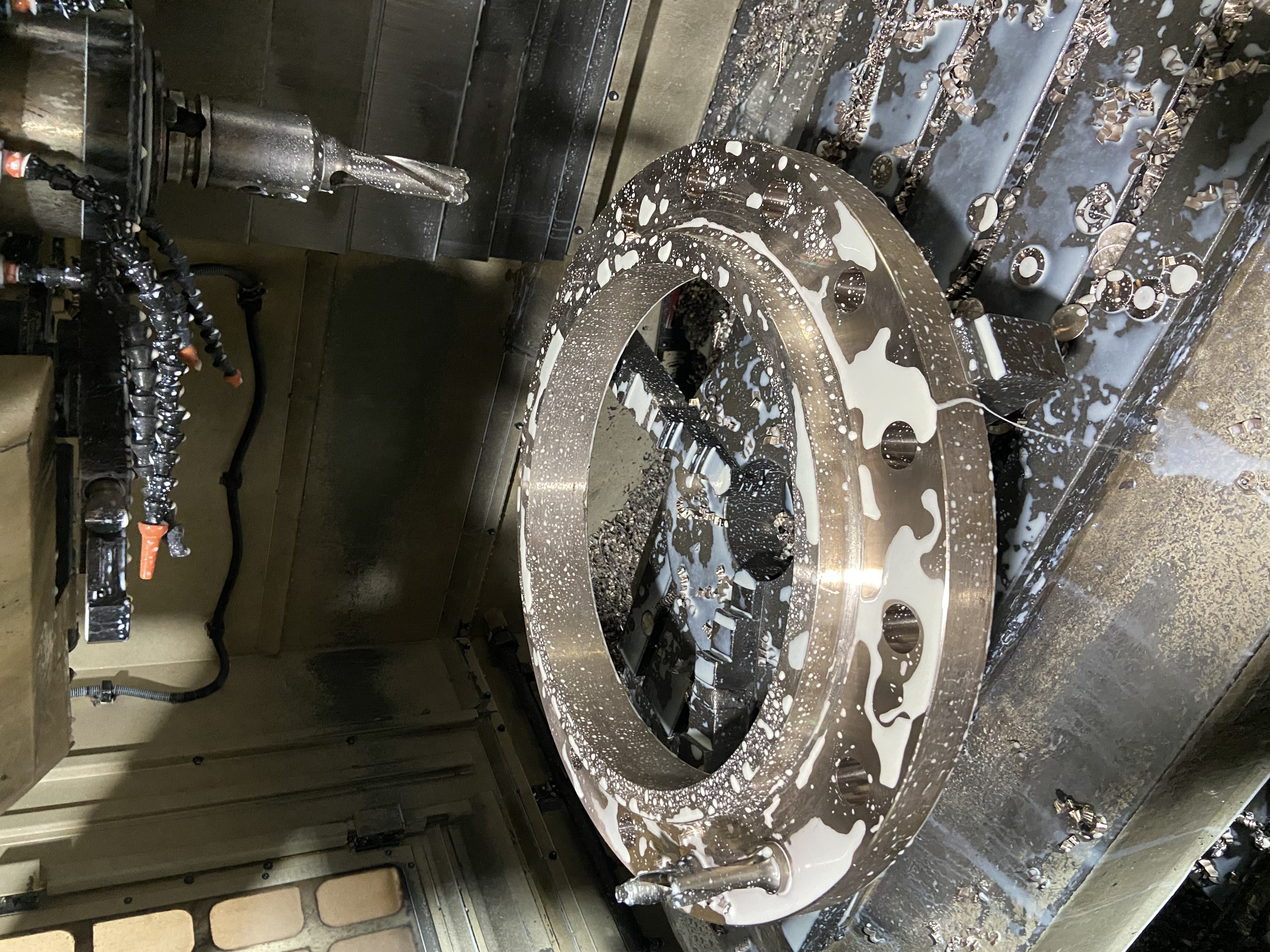
Large bore C71500 CuNi 70/30 flanges — machined face
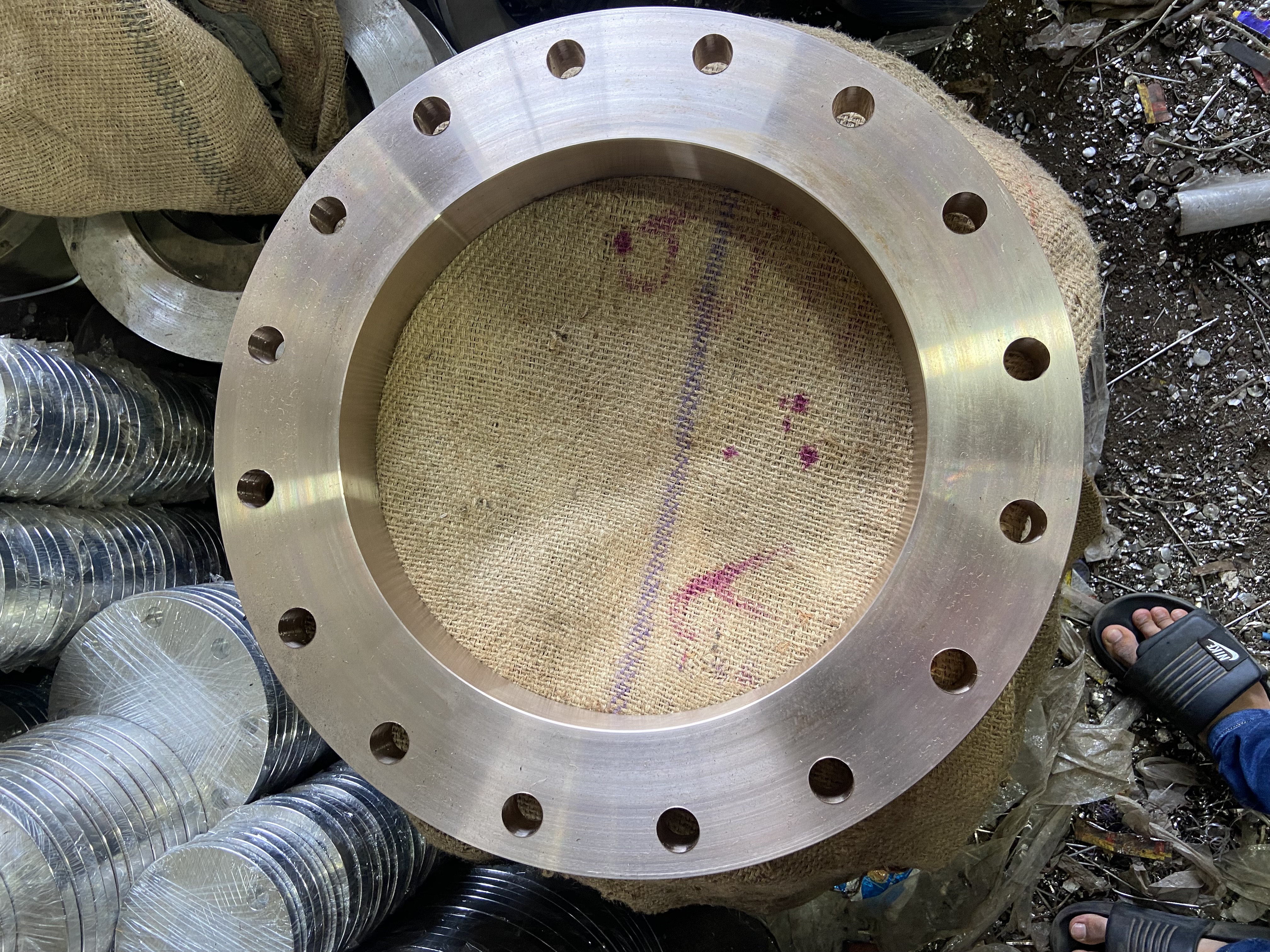
C71500 flanges packed and ready for export
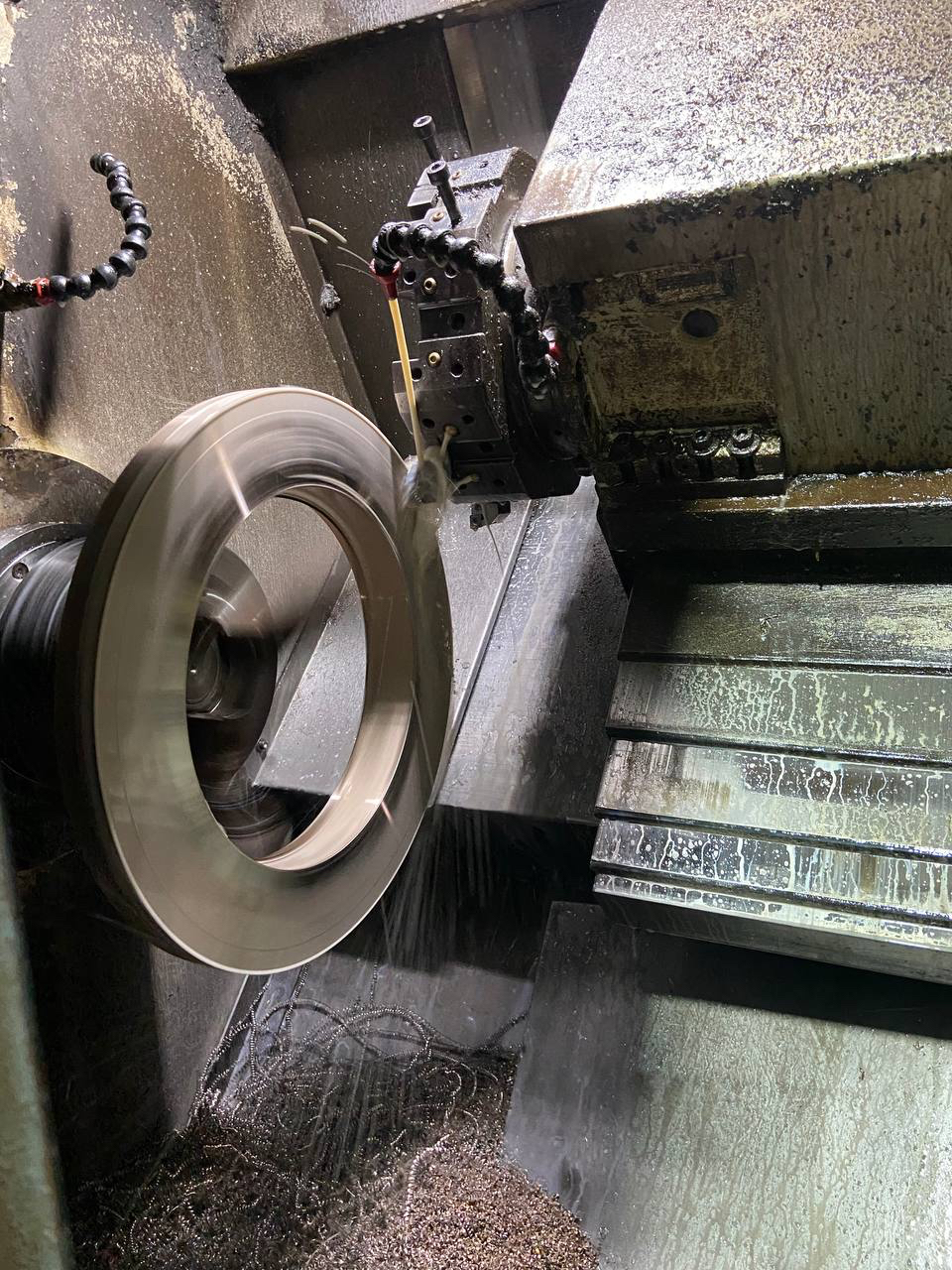
C71500 slip-on raised face flange — ASME B16.5
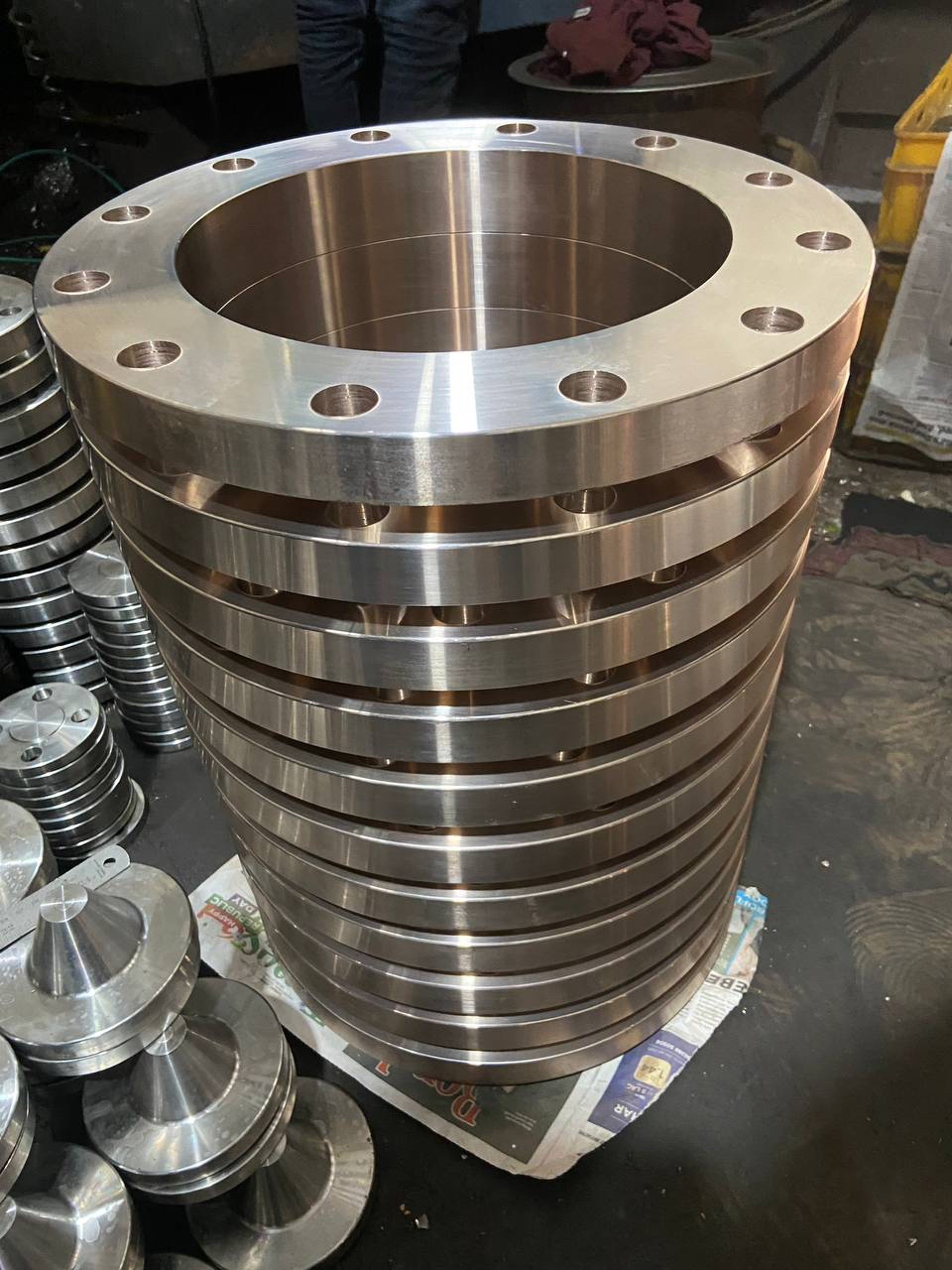
C71500 flanges — finished machining, in stock Mumbai
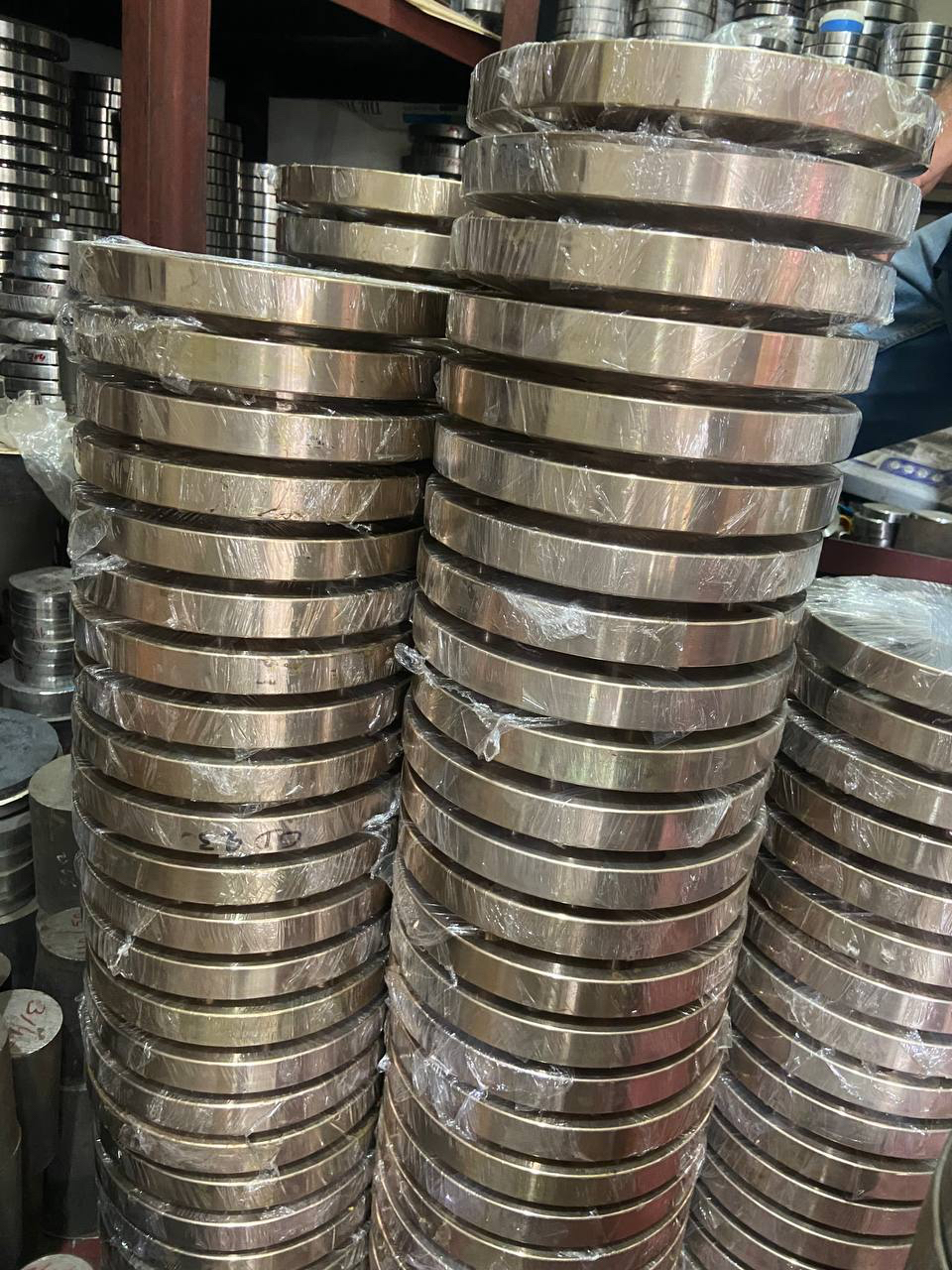
C71500 CuNi flanges — bulk stock for naval & offshore projects
UNS C71500 is the designation for Copper Nickel 70/30 — a copper-nickel alloy containing nominally 30% nickel along with controlled additions of iron and manganese. It is the premium grade within the commercial CuNi alloy family, offering higher strength and superior seawater corrosion resistance compared to the more common C70600 (90/10 CuNi).
The alloy is also designated DIN 2.0882, EN CuNi30Mn1Fe, CW352H (EN 12163/12167), and historically CN107 (BS). It is the standard material for the highest-integrity seawater service — naval condenser tube sheets, offshore heat exchanger headers, desalination multi-stage flash (MSF) evaporator tube plates, and nuclear power plant secondary coolant flanges.
Tesco Steel & Engineering manufactures C71500 flanges per ASTM B151 (rod/bar) and ASTM B171 (plate for heat exchanger applications), dimensioned to ASME B16.5, in all types from Weld Neck to Blind to Socket Weld, Class 150 to 2500, ½″ to 24″ NB. All supplied with EN 10204 3.1 Mill Test Certificates.
| Element | C71500 (70/30 CuNi) — % | Role in Alloy |
|---|---|---|
| Copper (Cu) | Balance (~65–70%) | Base matrix — provides ductility, thermal conductivity, anti-biofouling property |
| Nickel (Ni) | 29.0 – 33.0% (nominal 30%) | Solid solution strengthener; primary contributor to seawater corrosion resistance and protective film stability |
| Iron (Fe) | 0.40 – 1.00% | Critical additive — iron enriches the surface film, dramatically improving resistance to seawater erosion-corrosion and impingement attack |
| Manganese (Mn) | 1.00% max | Deoxidiser; improves hot workability and cast soundness |
| Lead (Pb) | 0.05% max | Residual — kept very low to prevent dezincification analogue and maintain intergranular integrity |
| Zinc (Zn) | 1.00% max | Residual — low Zn prevents dezincification |
| Carbon (C) | 0.05% max | Residual — kept low to maintain ductility |
| Property | Value | Unit |
|---|---|---|
| Tensile Strength (UTS) | 380 min | MPa (55 ksi) |
| Yield Strength (0.2% offset) | 125 – 170 min (form-dependent) | MPa (18–25 ksi) |
| Elongation | 30 min | % |
| Hardness | ~80 max | HRB |
| Density | 8.94 | g/cm³ |
| Melting Point | ~1170 | °C |
| Modulus of Elasticity | 152 | GPa |
| Thermal Conductivity | 29 | W/m·K |
| Coefficient of Thermal Expansion | 16.2 | μm/m·°C (20–300°C) |
| Electrical Conductivity | ~4.6% IACS | — |
| Property | C70600 (90/10 CuNi) | C71500 (70/30 CuNi) |
|---|---|---|
| Nominal Ni content | 10% | 30% |
| UTS (min) | 305 MPa (44 ksi) | 380 MPa (55 ksi) |
| Max seawater velocity | 3.5 m/s | 4.5 m/s |
| Seawater corrosion rate | ~0.025 mm/yr (long-term) | ~0.010 mm/yr (long-term) |
| Thermal conductivity | 40 W/m·K | 29 W/m·K (lower — less ideal for HX) |
| Biofouling resistance | Good | Excellent |
| Resistance to warm seawater (>30°C) | Moderate | Superior |
| ASTM bar/rod standard | ASTM B151 (C70600) | ASTM B151 (C71500) |
| ASTM plate standard | ASTM B171 / B152 | ASTM B171 / B152 |
| DIN designation | 2.0872 / CuNi10Fe1Mn | 2.0882 / CuNi30Mn1Fe |
| Relative cost | Baseline | ~40–60% higher (3× more Ni) |
| Naval condenser tube sheets | Secondary use | Standard specification |
The corrosion protection mechanism of C71500 in seawater is unique among engineering alloys and is quite different from the passive film mechanism of stainless steels. Understanding it is important for correct specification and maintenance.
| Flange Type | Standard | Size Range | Pressure Class | Typical Application |
|---|---|---|---|---|
| Weld Neck | ASME B16.5 | ½″ – 24″ NB | 150 – 2500 | HP seawater cooling headers, offshore process piping |
| Slip-On | ASME B16.5 | ½″ – 24″ NB | 150 – 600 | Low-pressure seawater return lines, cooling water headers |
| Blind | ASME B16.5 | ½″ – 24″ NB | 150 – 2500 | Line isolation, condenser water box end closures |
| Socket Weld | ASME B16.5 | ½″ – 4″ NB | 150 – 2500 | Instrument taps, small-bore seawater instrument lines |
| Threaded | ASME B16.5 | ½″ – 4″ NB | 150 – 2500 | Gauge connections, non-weld maintenance joints |
| Lapped Joint | ASME B16.5 | ½″ – 24″ NB | 150 – 2500 | Naval and offshore piping requiring frequent dismantling |
| Long Weld Neck | ASME B16.5 / B16.47 | ½″ – 24″ NB | 150 – 2500 | Heat exchanger nozzle flanges, condenser water box nozzles |
| Spectacle Blind | ASME B16.48 | ½″ – 24″ NB | 150 – 1500 | Seawater line isolation in naval and offshore systems |
| Tube Sheet Flange | ASME VIII Div. 1 / TEMA | Custom | Per design | Condenser and heat exchanger tube sheet flanges — primary C71500 application |
C71500 is readily weldable using standard CuNi filler metals. Cleanliness is the most critical factor — sulphur contamination from grease, paint, or lubricants can cause hot cracking in CuNi welds.
| Parameter | Recommendation for C71500 |
|---|---|
| Filler wire (GTAW/GMAW) | ERCuNi (AWS A5.7) — 70%Cu-30%Ni with Fe and Mn additions |
| Electrode (SMAW) | ECuNi (AWS A5.6) |
| Preferred welding process | GTAW (TIG) — highest quality; GMAW and SMAW also acceptable |
| Shielding gas | Pure Argon or Ar/He mix; back-purging with Argon mandatory for pipe root welds |
| Preheat | Not required for thickness ≤ 12 mm; 100°C for heavier sections |
| Max inter-pass temperature | 175°C (350°F) |
| Post-Weld Heat Treatment (PWHT) | Not normally required |
| Pre-weld cleaning | Critical: Degrease all joint surfaces and 50 mm either side with acetone; remove all paint, grease, and oils before welding — sulphur contamination causes hot cracking |
| Dissimilar metal welding (CuNi to SS) | Use ERNiCu-7 (Monel filler) as butter layer; avoid direct CuNi-to-SS fusion welding |
| Industry | Application | Why C71500 is Specified |
|---|---|---|
| Naval / Military | Condenser tube sheet flanges, heat exchanger water box nozzles, submarine cooling system flanges | US Navy MILHDBK-242 specifies CuNi for condenser service; C71500 for tube sheets where C70600 tubes are used |
| Offshore Oil & Gas | Seawater injection system flanges, cooling water header flanges, fire suppression piping | Withstands high-velocity warm seawater; biofouling resistant — eliminates chemical treatment costs |
| Desalination (MSF / MED) | Evaporator tube plate flanges, heat rejection section nozzles, brine heater connections | C71500 handles warm concentrated brine; performs better than C70600 in MSF flash chambers above 40°C |
| Power Generation | Condenser water box flanges, circulating water system headers, nuclear secondary coolant flanges | Long service life in once-through seawater cooling; nuclear plant standards specify C71500 for tube sheet flanges |
| Shipbuilding & Marine | Main engine seawater cooling flanges, ballast pump discharge headers, bilge system flanges | Marine classification societies (DNV, Lloyd's, ABS) approve C71500 for seawater service piping systems |
| Chemical Processing | Cooling water system flanges, heat exchanger nozzles in brine/chloride environments | Resistance to chloride environments without risk of SCC (unlike austenitic SS at elevated temperature) |
| Petrochemical / Refinery | Seawater-cooled heat exchanger flanges, overhead condenser nozzles | Compatible with saline cooling water; resists chloride-induced pitting at higher flow rates |
| Aquaculture / Mariculture | Seawater intake pipe flanges, fish farm filtration system connections | Anti-biofouling property reduces maintenance; non-toxic at trace Cu ion levels for fish at normal seawater dilution |
| Category | Standard | Scope |
|---|---|---|
| Flange Dimensions | ASME B16.5 | Pipe flanges Class 150–2500, ½″–24″ NB |
| Flange Dimensions | ASME B16.47 Series A & B | Large diameter flanges, NPS 26–60 |
| Flange Dimensions | ASME B16.24 | Cast copper alloy pipe flanges and fittings |
| Material — Rod/Bar | ASTM B151 (UNS C71500) | Copper-nickel alloy rod and bar — primary material for machined flanges |
| Material — Plate | ASTM B171 (UNS C71500) | Copper-nickel alloy plate for heat exchangers and pressure vessels |
| Material — Sheet/Strip | ASTM B122 / B152 | Copper-nickel alloy sheet and strip |
| Material — Tube | ASTM B466 / B467 | Seamless / welded C71500 tube for heat exchangers |
| Material — European | EN 12163 / CW352H | CuNi30Mn1Fe rod and bar |
| Material — DIN | DIN 17664 / 2.0882 | Cu-Ni alloy wrought products |
| Military | MIL-C-15726F | US Navy copper-nickel alloy specification |
| Marine Classification | DNV GL, Lloyd's, ABS | Approved material for seawater piping flanges in classified vessels |
| Weld Filler | AWS A5.7 ERCuNi | CuNi bare wire for GTAW/GMAW welding of C71500 |
| Weld Electrode | AWS A5.6 ECuNi | CuNi covered electrode for SMAW welding |
| Inspection | EN 10204 3.1 / 3.2 | Material test certificate — works (3.1) or TPI witness (3.2) |
| ASME Pressure Code | ASME Section II Part B | SB-151, SB-171 material allowable stresses for C71500 |
| Standard | Designation |
|---|---|
| UNS (USA) | C71500 |
| ASTM (USA) | Cu-Ni 70/30 per B151 / B171 |
| EN / DIN (Europe) | CW352H / DIN 2.0882 / CuNi30Mn1Fe |
| BS (UK — old) | CN107 / BS 2870 |
| ISO | CuNi30Fe1Mn (ISO 427) |
| JIS (Japan) | C7150 |
| US Military | MIL-C-15726F, Composition B |
| Common trade names | 70/30 Copper-Nickel, 70-30 CuNi, Copper Nickel 70-30 |
Countries we export to: Kuwait, UAE, Germany, Saudi Arabia, West Africa, Iraq, Mexico, Bahrain, Canada, Philippines, Thailand, Kenya, Oman, Malaysia, Turkey, Qatar, Netherlands, Nigeria, Russia, Vietnam, Angola, Indonesia, UK, Yemen, Italy, USA, Venezuela, Spain, Iran, Kazakhstan, Algeria, Colombia, Libya, Peru, South Africa, Denmark, Norway, France, Brazil, Poland, Greece, Egypt, New Zealand, Finland and 50+ more countries.
Domestic markets: Mumbai, Delhi, Bangalore, Hyderabad, Ahmedabad, Chennai, Kolkata, Surat, Pune, Jaipur, Gujarat, Maharashtra, Tamil Nadu, Telangana, Karnataka, Uttar Pradesh, West Bengal and all major Indian industrial hubs.
| Alloy | CuNi 70/30 |
| UNS | C71500 |
| DIN / EN | 2.0882 / CW352H |
| ASTM Bar | B151 |
| ASTM Plate | B171 |
| Ni Content | 29.0 – 33.0% |
| Fe Content | 0.40 – 1.00% |
| UTS | 380 MPa min |
| Max SW Velocity | 4.5 m/s |
| Weld Filler | ERCuNi (AWS A5.7) |
| Size Range | ½″ – 24″ NB |
| Pressure Class | 150 – 2500 |
| Cert | EN 10204 3.1 / 3.2 |