

Tesco Steel & Engineering manufactures aluminium flanges — lightweight, naturally corrosion-resistant flanges that weigh roughly a third of steel yet resist atmospheric and marine corrosion. Supplied in the popular structural grades 6061, 6063, 6082, and 7075 in weld neck, slip-on, blind, threaded, socket-weld, lap-joint, and plate styles to ASME B16.5 / B16.47. Class 150 to 9000 lbs and PN6 to PN25. Ideal for marine, shipbuilding, cryogenic, and weight-sensitive piping. ISO 9001:2015 certified. Made in India.
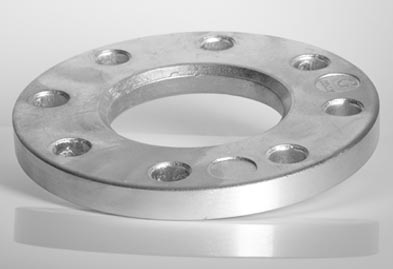
Aluminium Flanges
Aluminium flanges suit marine, shipbuilding, offshore topsides, cryogenic LNG, transport, and architectural piping. Tesco Steel & Engineering supplies all flange types in grades 6061, 6063, 6082, and 7075, dimensioned per the same standards as our steel weld neck, slip-on, and blind flanges — see the flange dimensions charts.
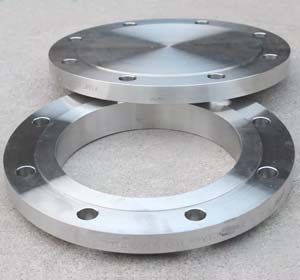
Aluminium Slip-On Flange
| Grade | Key Properties | Typical Use |
|---|---|---|
| 6061 | Best all-round: good strength, weldability & corrosion resistance | General piping, marine, structural — the most common flange grade |
| 6063 | Excellent finish & corrosion resistance, lower strength | Architectural, low-pressure & decorative piping |
| 6082 | Higher strength structural grade, good corrosion resistance | Structural & higher-load marine piping |
| 7075 | Very high strength (aerospace grade) | High-stress, weight-critical & aerospace applications |
| Type | Description | Use |
|---|---|---|
| Weld Neck | Tapered hub butt-welded to pipe | Higher-pressure / cyclic service |
| Slip-On | Slips over pipe, fillet-welded | Easy fit, lower-pressure lines |
| Blind | Solid disc, no bore | Closing off a line or vessel |
| Threaded (Screwed) | Tapered internal thread | No-weld & small-bore connections |
| Socket Weld | Pipe socketed & fillet-welded | Small-bore high-integrity lines |
| Lap Joint | Loose flange over a stub end | Frequent dismantling; saves alloy |
| Plate / Flat | Flat plate flange | Tanks & low-pressure vessels |
| Property | Aluminium Flange | Steel Flange |
|---|---|---|
| Weight | ≈1/3 of steel — light & easy to handle | Heavy |
| Corrosion | Self-protecting oxide; great in marine air | Needs coating / alloying |
| Sparking | Non-sparking | Can spark |
| Low temperature | Stays tough at cryogenic temps | Some grades embrittle |
| Pressure / temp rating | Lower (derated vs steel) | Higher |
Aluminium flanges follow the same B16.5/B16.47 dimensions as steel, but their pressure-temperature rating is lower, so the class is selected with that derating in mind.
| Parameter | Details |
|---|---|
| Product | Aluminium pipe flanges (all types) |
| Grades | 6061, 6063, 6082, 7075 |
| Types | Weld neck, slip-on, blind, threaded, socket-weld, lap-joint, plate/flat |
| Standards | ASME/ANSI B16.5, B16.47 (Series A/B); ASTM; EN 1092; DIN |
| Pressure Class | 150, 300, 600, 900, 1500, 2500, 3000, 6000, 9000 lbs; PN6, PN10, PN16, PN25 |
| Facing | RF (raised face), FF (flat face), RTJ on request |
| Size | 1/2" to 24" and larger (B16.47) |
| Temper | T6 / T651 and others as required |
| Certifications | ISO 9001:2015 | EN 10204 3.1 MTC on request |
About a third of the weight of steel, cutting structural load, transport cost, and handling effort on site and offshore.
The self-forming oxide layer resists atmospheric and seawater corrosion without coatings — ideal for marine and offshore service.
Aluminium stays tough at low temperatures, suiting LNG and cryogenic piping where some steels embrittle.
Non-sparking aluminium is favoured around flammable atmospheres and in many safety-critical installations.
Machined to ASME B16.5 / B16.47 (and EN/DIN) so they bolt up interchangeably with standard flanges and gaskets.
6061, 6063, 6082, and 7075 covering general, architectural, structural, and high-strength needs.
| Industry | Typical Use | Why Aluminium Flanges |
|---|---|---|
| Marine & Shipbuilding | Deck, ballast & utility piping | Light & seawater corrosion resistant |
| Offshore Topsides | Weight-sensitive piping | Cuts structural load; non-sparking |
| LNG & Cryogenic | Low-temperature lines | Tough at cryogenic temperatures |
| Transport & Automotive | Tanker & vehicle piping | Lightweight for payload/fuel saving |
| Chemical & Process | Compatible-media lines | Corrosion resistance without coating |
| Architectural | Decorative & low-pressure piping | 6063 finish & appearance |
| Food & Beverage | Hygienic light piping | Clean, corrosion-resistant |
| Aerospace & Defence | High-strength weight-critical lines | 7075 strength-to-weight |
Q1. What are aluminium flanges?
Aluminium flanges are pipe flanges machined from aluminium alloys instead of steel, chosen where low weight and natural corrosion resistance matter. They weigh about a third of steel, resist atmospheric and marine corrosion without coating, are non-sparking, and stay tough at low temperatures — made to the same ASME B16.5 / B16.47 dimensions as steel flanges.
Q2. Which aluminium grades do you supply?
6061, 6063, 6082, and 7075. 6061 is the best all-round flange grade (good strength, weldability, and corrosion resistance); 6063 gives the best finish for architectural/low-pressure use; 6082 is a higher-strength structural grade; and 7075 is a very high-strength aerospace grade for weight-critical, high-stress duty.
Q3. Do aluminium flanges meet the same standards as steel?
Yes. They are manufactured to the same dimensional standards — ASME/ANSI B16.5 and B16.47 (and EN 1092 / DIN) — so the bolt circle, holes, and facing match standard flanges and they bolt up interchangeably. The difference is the material and its lower pressure-temperature rating.
Q4. Can aluminium flanges handle the same pressure as steel?
No — for a given class, aluminium has a lower pressure-temperature rating than steel because the alloy is weaker, especially as temperature rises. The flange follows the same class dimensions but is derated, so the class is selected with aluminium's allowable rating in mind for the service.
Q5. How do I prevent galvanic corrosion when bolting aluminium to steel?
Isolate the joint: use an insulating gasket with isolating sleeves and washers, and compatible bolting (coated or appropriate stainless). This breaks the metal-to-metal/electrolyte path that would otherwise drive galvanic corrosion of the (less noble) aluminium when joined to steel in a wet or marine environment.
Q6. What flange types are available in aluminium?
Weld neck, slip-on, blind, threaded (screwed), socket-weld, lap-joint, and plate/flat flanges — the full range, in all four grades and in RF, FF, or RTJ facings. The type is chosen for the pressure, the connection method (welded/threaded), and whether the joint must be dismantled.
Q7. Why are aluminium flanges used in marine and offshore service?
Because they are light (cutting structural and topside weight), naturally resist seawater and salt-air corrosion without coatings, and are non-sparking. This combination makes them ideal for ship decks, ballast and utility lines, and weight-sensitive offshore piping.
Q8. Can aluminium flanges be supplied to our drawing and certified?
Yes. We supply aluminium flanges to ASME/EN/DIN standards or to your drawing — grade, type, class, size, facing, and temper — with EN 10204 3.1 material test certificates on request. Send your specification and service conditions for a recommendation and quote.